Today’s Sponsor
One of our most reliable indicators just triggered on a small-cap company operating quietly under the radar. We've seen this same setup before notable announcements, strategic shifts, and surges in institutional activity.
At Alpha Wire Daily, we've built our reputation on identifying these patterns early — before the rest of the market catches on. We've just released a new briefing detailing the company name, chart setup, and why this signal stands out. Timing is everything.
Get the Free Report + Alert Access*We encourage readers to perform their own research and due diligence on any information we provide. By clicking the link you will automatically be subscribed to the Alpha Wire Newsletter.

Axios was out this morning with a report that NASA's Artemis II mission successfully launched from Kennedy Space Center yesterday evening, marking America's return to lunar exploration after more than half a century.
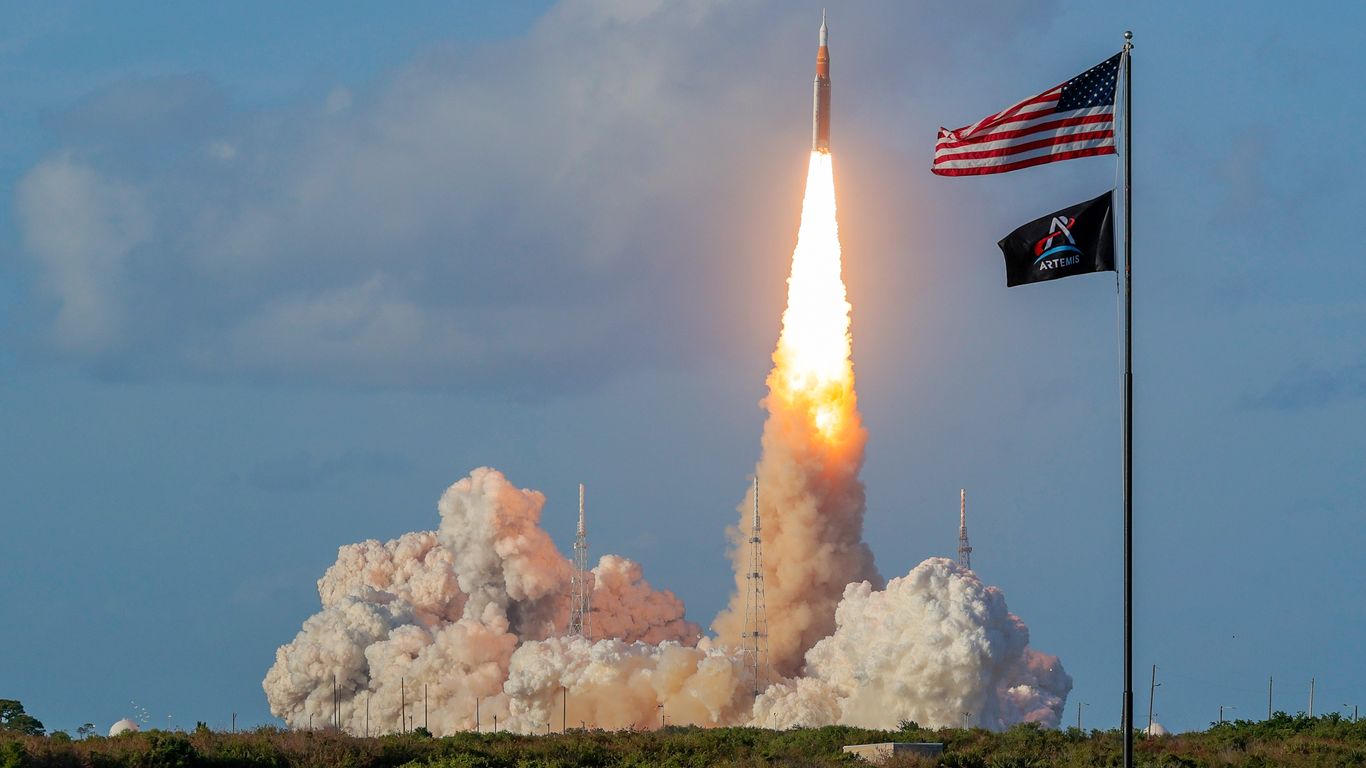
Image via Axios
America Returns to the Moon — Right on Schedule
The crewed mission lifted off at 6:35 PM Eastern time on Wednesday, carrying astronauts on humanity's first Moon-bound journey since Apollo 17 in December 1972. The launch represents a critical milestone in NASA's broader Artemis program, which aims to establish a sustainable human presence on the lunar surface and serve as a stepping stone for eventual Mars exploration. Unlike the Apollo missions of the 1960s and 70s, Artemis II is designed as part of a long-term strategy rather than a sprint to beat geopolitical rivals.
The mission comes at a time when space has once again become a arena of international competition, with China's rapid advances in lunar exploration and Russia's continued space ambitions despite terrestrial conflicts. NASA has emphasized that Artemis represents not just American leadership, but international cooperation, with key partnerships from European, Canadian, and Japanese space agencies providing critical components and expertise.
✍ My Take: We've been here before, and that's exactly why this matters so much. When John F. Kennedy announced the Apollo program in 1961, he wasn't just responding to Sputnik and Yuri Gagarin — he was asserting that free societies could achieve what authoritarian regimes thought they monopolized. The same dynamic is at play today, but with a crucial difference: we're building for permanence, not just prestige. The Apollo program, magnificent as it was, suffered from what historians call "flags and footprints" syndrome. We went, we proved we could do it, and then we walked away for fifty-four years. That shortsightedness cost us dearly — not just in scientific advancement, but in the kind of technological leadership that drives economic growth and national security. The innovations that flowed from Apollo gave us everything from miniaturized electronics to advanced materials, creating entire industries that kept America competitive through the latter half of the 20th century. What's encouraging about Artemis II is that it represents a more mature approach to space exploration. This isn't about beating the Soviets to the Sea of Tranquility; it's about establishing the infrastructure for American leadership in the next phase of human development. With China landing on the far side of the Moon and announcing their own crewed lunar missions, the stakes are clear: the nation that controls lunar resources and establishes the rules for space commerce will have decisive advantages in the 22nd century economy. The lesson from the Space Race era isn't just that America can do hard things — it's that we do our best work when we're building something lasting rather than just winning a contest. Apollo got us to the Moon first, but Artemis might actually keep us there.
Read the full story at Axios →
Yesterday's headlines, tomorrow's textbooks — making sense of the news through the lens of history.
— The Time Capsule Editor