Today’s Sponsor
Crypto markets are stabilizing below cycle highs — and institutional capital is positioning for the next phase. While others chase headlines, smart money is studying how regulatory clarity and selective capital deployment are reshaping the digital asset landscape. This isn't a replay of the last cycle — it's a complete reset.
Our new research report "The 2026 Crypto Reset" reveals why current price levels matter more than recent volatility, how institutional behavior is shifting, and three digital assets positioned for the next market phase. Don't miss the key risks and opportunities taking shape right now.
Get the Free Crypto Reset ReportBy accessing this report, you're opting in to receive updates from The Wealthiest Investor plus 2 free bonus subscriptions. Your privacy is important to us. You can unsubscribe anytime. See our privacy policy for details.

Curators at the Library of Congress reportedly identified a long-lost 1897 Georges Méliès film featuring one of the earliest on-screen “robots,” underscoring both the fragility of early cinema and how long audiences have been drawn to manufactured illusions.
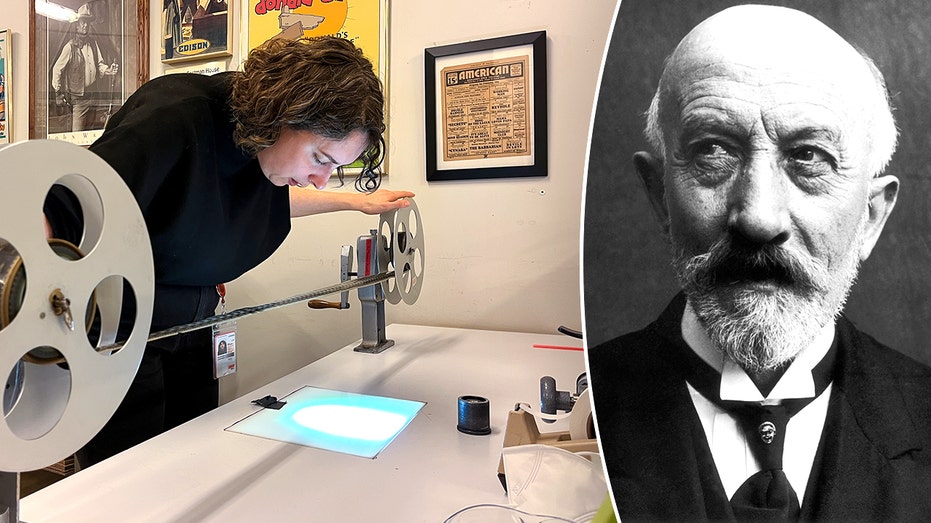
Image via Fox News
The Library of Congress Finds a Lost Méliès Film—and a Reminder That the Future Was Always a Little Mechanical
Fox News was out with a report that curators at the Library of Congress have discovered a long-lost 1897 film by Georges Méliès, the French magician-turned-filmmaker who basically wrote the first chapter of cinema’s special-effects playbook. The find, according to the piece, happened because someone spotted a “subtle clue”—the kind of archivist’s breadcrumb that looks like nothing until it suddenly looks like everything.
The newly identified short is notable for more than just the name attached to it. Fox reports it includes one of the earliest robots ever put on screen, in 1897—decades before the word “robot” even entered common language. Méliès is best known today for his trick photography and imaginative stagecraft (the moon-in-the-eye image is practically the logo of early film), but this recovery adds a fresh data point: from the very beginning, movies weren’t just recording reality. They were manufacturing it—using illusions to make audiences feel they’d glimpsed tomorrow.
The context here matters. Silent-era film is famously fragile and famously missing. Between nitrate decomposition, fires, careless storage, and plain indifference, a huge share of early cinema vanished. So when a public institution like the Library of Congress manages to pull a piece back from the void—especially a Méliès piece—it’s not just a neat museum anecdote. It’s a small victory for cultural memory, won the old-fashioned way: by people with patience, training, and enough respect for the past to notice that a tiny inconsistency might be a doorway.
✍ My Take: This is the sort of story that looks quaint until you realize it’s a live debate about the present. We spend our days arguing about “the future of media” as if it’s something we’re inventing from scratch—AI-generated video, synthetic actors, deepfakes, virtual worlds. And then a lost Méliès film turns up and taps you on the shoulder: we’ve been here before. The public has always been captivated by convincing illusions. The difference now is scale, speed, and how cheaply the illusion can be mass-produced and aimed. There’s also a lesson here about institutions. It’s fashionable to sneer at libraries and archives as if they’re dusty luxuries—nice to have, easy to trim when budgets get tight. But the ability to authenticate, preserve, and contextualize what’s real is becoming a strategic asset. In an era when any teenager can fabricate “historical footage” on a laptop, the boring work of custody, provenance, and metadata starts to look like national infrastructure. The Library of Congress didn’t “go viral” to find this film. It did what serious custodians do: it kept looking, kept cataloging, kept caring. What happens next is likely a mix of restoration, scholarly attention, and public exhibition—plus the predictable rush of commentary about robots, technology, and “how they saw it coming.” But the more interesting question is what we choose to do with the parallel. Méliès used mechanical marvels to delight audiences and expand imagination. Today’s tools can do that too—but they can also confuse, deceive, and launder falsehood with cinematic polish. If the 1897 robot reminds us that wonder is old, it should also remind us that discernment has to be practiced, not assumed.
Read the full story at Fox News →
Until tomorrow—keep one eye on the headlines, and the other on the footnotes.
— The Time Capsule Editor