Today’s Sponsor:
Fierce Investor's research team has spotted unusual activity on a NASDAQ stock flying under the radar — and their briefing drops in 48 hours. This could be one of the biggest potential breakout setups of the next 21 days.
Don't wait until it goes wide. Get the full briefing delivered straight to your inbox — before everyone else does.
Get the Free Briefing NowBy clicking the button above, you are automatically subscribing to Wealth Creation Investing in partnership with Fierce Investor. We respect your privacy. Unsubscribe at any time. Wealth Creation Investing Privacy Policy | Fierce Investor Privacy Policy
Neither Wealth Creation Investing nor Fierce Investor is a registered investment adviser or broker-dealer. This content is for informational purposes only and is not personalized investment advice. Past performance does not guarantee future results.

Three reminders that history isn’t just dates and battles. It’s diets that change within a lifetime, stories that keep recruiting new audiences, and even a philosopher’s body turned into a lesson about what we choose to preserve.
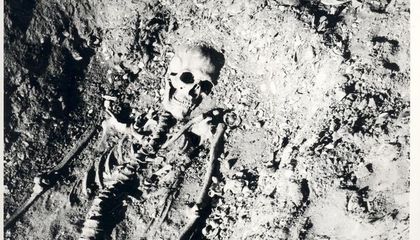
Image via Smithsonian Magazine
Meet the Danish Islander Who Lived Through the World-Changing Shift to Farming
We talk about the Neolithic Revolution like it was a switch flipped in a textbook: humans farm now, history begins, the end. But new analysis of the so-called Rødhals Man, who lived about 6,000 years ago on a small Danish island, paints a more human picture. His remains suggest he didn’t simply belong to either the old world of foraging or the new world of farming. He appears to have lived through the transition itself, with his own meals quietly recording the change.
Researchers looking at chemical clues from his body argue that he grew up eating largely foraged seafood, a classic coastal hunter-gatherer menu. Later in life, that signature shifts toward more land-based foods associated with farming communities. That kind of dietary pivot is more than a detail about what was on the plate. It hints at new routines, new neighbors, and new pressures: settled fields and livestock coming into reach, older foodways persisting, and a society negotiating what to keep and what to trade for stability. If you want to understand why human history speeds up after farming, it helps to start with a single person whose life bridged both tempos.
Source: Smithsonian Magazine
Read the full story at Smithsonian Magazine →
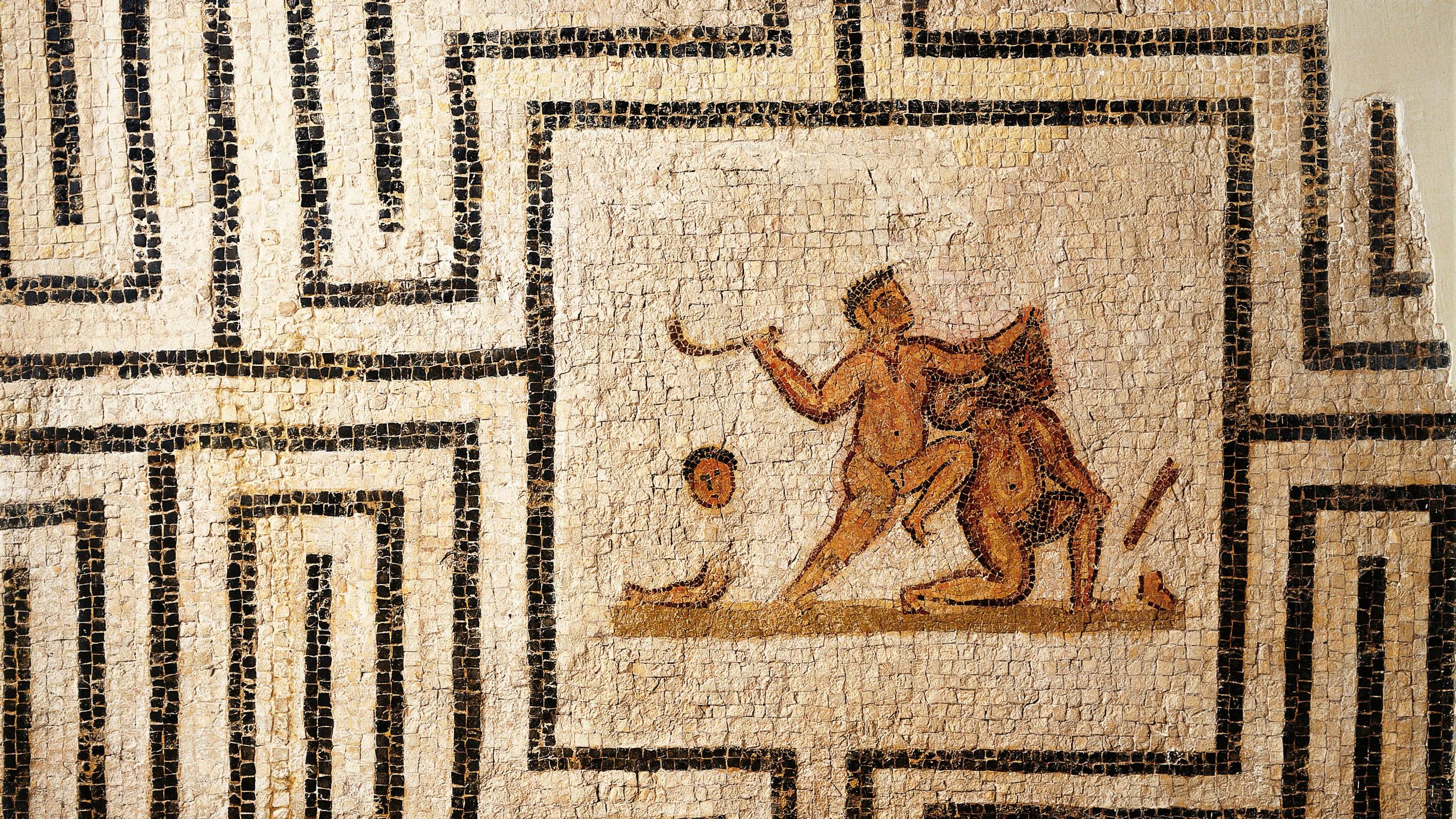
Image via Mental Floss
The Ancient Greek Story Hiding in The Hunger Games
Modern dystopias often feel like warnings aimed straight at our moment, but their DNA can be startlingly old. A Mental Floss look at The Hunger Games traces one of Suzanne Collins’s inspirations back to Greek myth, specifically the cycle of stories around the labyrinth at Knossos and the Minotaur. If you remember the outline: a terrifying creature, a maze designed to control and confuse, and young people sent in as a kind of payment. It’s an ancient blueprint for how power stages fear.
In the myth, Athens must send youths to Crete, where they face death in the labyrinth until the hero Theseus volunteers to go, intent on ending the cycle. Collins’s Capitol isn’t a labyrinth of stone corridors, but the arena functions the same way: an engineered space built by rulers, a spectacle that turns human lives into a lesson, and a ritualized submission demanded from a weaker population. The point isn’t that the novel is a direct retelling. It’s that the emotional logic of the story—hostages as policy, violence as theater, courage as contagion—has been haunting human politics for a very long time.
Source: Mental Floss
Read the full story at Mental Floss →
Jeremy Bentham’s Head Gets Another Chapter in a Very Bentham Story
Jeremy Bentham, the 19th-century English philosopher known for utilitarianism, has never been allowed a quiet exit. After his death, Bentham was preserved and displayed as an “auto-icon”—a final, provocative argument that a body could remain socially useful. This week’s report adds a new, strangely intimate layer: researchers have examined his head and found evidence of painful toothaches and arthritis in the lower jaw, a reminder that even the minds we treat as monuments lived inside bodies that hurt.
There’s something deeply Bentham about that blend of lofty ideas and stubborn physical reality. Philosophers often get packaged as pure intellect—a name, a theory, a quote on a poster. But the investigation suggests a daily life that included chronic discomfort, the kind that shapes mood, sleep, and patience. It’s also a window into an era when dentistry and pain management were a different world, and when the boundary between medical curiosity and public display was far looser than we might assume. Bentham wanted to be useful after death; history, in its odd way, keeps taking him up on it.
Source: Archaeology Magazine
Read the full story at Archaeology Magazine →
That’s the capsule for today. If you caught yourself thinking “we’re living through something unprecedented,” keep Rødhals Man in mind: history’s biggest revolutions often arrive as small changes you can taste, tell as a story, or even carry in your bones.
— Time Capsule Editorial