Today’s Sponsor
The biggest AI wins come from companies you don't hear about every day. Like the database provider now embedded into all three major cloud platforms with access to 90% of the market, or the chip giant holding 80% of the AI data center market.
Our 10 Best AI Stocks to Own in 2026 reveals these hidden winners plus a plucky challenger with 28% revenue growth forecasts, a multi-cloud operator with analyst targets near $440, and 6 other AI stocks set to explode. Get the complete list while it's still free.
Get the Free ReportBy clicking the link, you agree to join MarketBeat emails and unlock complimentary insights from select partners. Privacy Policy

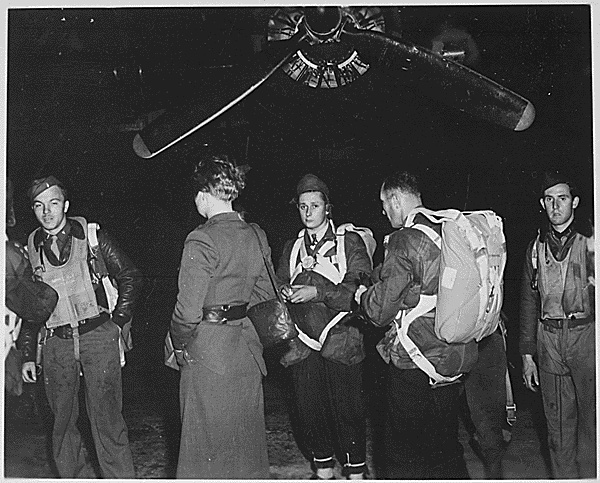
Image via HistoryNet
Celebrating the OSS at 82: When America Built a Spy Service From Scratch
Eighty-two years ago, the Office of Strategic Services (OSS) was the U.S. government’s wartime experiment in intelligence—part cloak-and-dagger, part research lab, part guerrilla-support operation. Under William “Wild Bill” Donovan, the OSS recruited an unlikely mix of lawyers, linguists, academics, artists, and soldiers, then asked them to do something the United States hadn’t institutionalized before: gather and analyze foreign intelligence in a coordinated way, and use it to shape battlefield outcomes.
The OSS didn’t just run agents behind enemy lines; it helped normalize a modern idea of intelligence work—where espionage, analysis, sabotage, and psychological operations could be planned together. After World War II, the OSS was dissolved, but its DNA lived on. Its personnel, methods, and ambitions fed directly into the postwar national security architecture, most famously the CIA, and more broadly the notion that intelligence would be a permanent feature of American statecraft rather than a temporary wartime tool.
Read the full story at HistoryNet →

Image via Atlas Obscura
A Creek That Changed the Map: Piute Creek and Fort Piute in the Mojave
In the Mojave Desert, water isn’t just life—it’s power. Piute Creek, a rare perennial stream in a region where surface water is famously scarce, became a geographic fact with political consequences. Where the land can’t reliably provide water, any place that can becomes a waypoint, a bargaining chip, and—eventually—a target worth guarding.
Fort Piute grew out of that logic. Built to protect travel and supply lines in a hard landscape, it reflects a recurring pattern in American expansion: infrastructure follows routes, routes follow resources, and resources demand protection. The fort’s remains are a quiet reminder that the West wasn’t only settled with maps and optimism—it was carved around springs, creeks, and the few dependable places where people and animals could drink.
Read the full story at Atlas Obscura →

Image via Popular Mechanics
The Viking Coinfield: 3,000 Silver Clues—and the Sense There’s More Below
Archaeologists in Norway have uncovered what’s being described as the largest Viking coin hoard ever found in the country—around 3,000 silver coins buried in a field, with indications that the find could expand. Hoards like this aren’t just “treasure” in a storybook sense; they’re snapshots of a moment when someone decided that burying wealth was safer than carrying it, spending it, or trusting a local authority to protect it.
The coins also speak to the Vikings’ wide connections. Currency—especially foreign or diverse coinage—can trace trade routes, raiding patterns, political alliances, and the reach of marketplaces that tied Scandinavia to the broader medieval world. And the possibility of more coins nearby hints at a larger story: not just one person’s emergency stash, but perhaps a site tied to repeated deposits, a local center of power, or a community living through instability.
Read the full story at Popular Mechanics →
Until tomorrow—keep one eye on the headlines, and the other on the long memory of history.
— Time Capsule Editorial