Today’s Sponsor
Markets are shifting — and most investors are missing it. The free Market Shift Report + Real-Time Watchlist breaks down exactly what's moving right now: policy impacts on economic trends, the return of supply-chain concerns, and what mixed consumer signals mean for the next quarter.
This complimentary report is only available for a limited time while these patterns are still developing. Don't get caught flat-footed — access it now before it's gone.
Get the Free Market Shift ReportWe encourage readers to perform their own research and due diligence on any information provided. By clicking the link above, you will automatically be subscribed to the Market Crux Newsletter. Privacy Policy

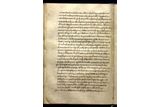
Image via Discover Magazine
A Rome manuscript hid a 1,300-year-old copy of Cædmon’s Hymn
Discover Magazine reports on a small scholarly jolt: an ancient manuscript in Rome has been identified as hiding a roughly 1,300-year-old copy of Cædmon’s Hymn, widely considered the earliest surviving poem in English. The twist isn’t just that another old text exists—it’s that the text was there all along, embedded in a manuscript far from England, and it took a mix of archival detective work and modern digitization to spot what earlier eyes missed.
The story turns on the poem’s status and transmission. In Bede’s account, Cædmon was an illiterate herdsman who, after leaving a feast because he couldn’t sing, had a revelatory dream commanding him to sing of creation and then awoke able to compose verse. Because the hymn circulated early and was copied by hand, surviving versions vary across manuscripts, dialects, and scribal habits—so each newly identified witness can refine readings and assumptions about how the poem traveled and how scribes adapted Old English.
Discover notes that the copy appears in a Rome manuscript, underscoring how medieval texts moved with scholars, churchmen, collectors, and institutions. The find is notable for how it was made: not by unearthing something new, but by re-examining existing holdings using digitized images and improved cataloging to compare handwriting, marginalia, and textual snippets across collections. The hymn seems to have been effectively camouflaged within a larger Latin context, the kind of thing easily missed when a manuscript is primarily described—and valued—as Latin.
The report frames this as part of a broader humanities trend where “new” discoveries increasingly come from access and visibility rather than excavation. As more archives put high-resolution scans online, scholars can search more widely, cross-compare faster, and catch patterns that are hard to see when materials are dispersed across countries and catalog systems. In this case, that process appears to add another version of Cædmon’s Hymn to the known family of copies—another data point for understanding how the earliest English literature was transmitted, remembered, and reshaped.
Read the full story at Discover Magazine →
Until tomorrow, keep a little room in your day for the past to surprise you.
— Time Capsule Editorial