Today’s Sponsor
One of our most reliable indicators just triggered on a small-cap company operating quietly under the radar. We've seen this same setup before notable announcements, strategic shifts, and surges in institutional activity.
At Alpha Wire Daily, we've built our reputation on identifying these patterns early — before the rest of the market catches on. We've just released a new briefing detailing the company name, chart setup, and why this signal stands out. Timing is everything.
Get the Free Report + Alert Access*We encourage readers to perform their own research and due diligence on any information we provide. By clicking the link you will automatically be subscribed to the Alpha Wire Newsletter.

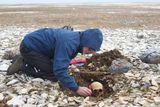
Image via Discover Magazine
DNA, Family Trees, and a Frozen Ledger: A Franklin Expedition Sailor Gets His Name Back
For 166 years, the Franklin expedition has sat in the public imagination as a kind of Arctic Rorschach test—heroism, hubris, tragedy, and unanswered questions locked in ice. This week, researchers used descendant DNA alongside careful archaeological work to identify four more sailors connected to HMS *Terror*, including resolving a long-debated mystery around the identity of one crew member. It’s the sort of breakthrough that feels modern—genetics, databases, collaboration across borders—but it’s also deeply old-fashioned: matching names to bodies so families (and history) can finally close the book properly.
In the 19th century, expeditions were documented in neat lists: crew rosters, pay books, promotion logs. But in disasters—especially in remote places—those paper certainties dissolve into rumor and partial remains. What makes this new identification effort striking is how it mirrors earlier eras of “forensic history,” like the post–Civil War work to identify battlefield dead or the long process of naming unknowns from past shipwrecks. The tools have changed; the impulse hasn’t. There’s a human need to make the anonymous legible again—to reattach a life story to a set of bones and a line in an archive.
Read the full story at Discover Magazine →
Ancient Engineering Under a Hot Sun: Australia’s Stone Tools Rewrite the Timeline
A reanalysis of stone tools from northern Australia suggests people were heat-treating stone—an intentional process that changes a material’s fracture properties—about 20,000 years earlier than previously thought. That’s not just a technical tweak; it’s a profound shift in how we date ingenuity. Heat treatment is planning and experimentation: you have to know that fire can do more than cook and warm—that it can improve a tool before you ever strike the first flake.
The bigger historical echo here is how often “advanced” technology gets associated with the wrong places and the wrong timelines. For generations, popular narratives treated innovation as a march from “simple” to “complex,” with certain regions cast as late adopters. Finds like these keep reminding us that ancient people were running their own research-and-development labs—patiently, locally, and for practical reasons. When we discover earlier dates, we’re not just moving a number; we’re restoring credit to communities whose sophistication was always there, even if outsiders didn’t think to look for it.
Read the full story at Archaeology Magazine →

Image via Atlas Obscura
The Desert’s Forgotten Factories: Nevada’s Wheeler Kilns and the Fuel Behind the West
Out in Pahrump, Nevada, the Wheeler Kilns sit like quiet punctuation marks from an age when the American West ran not only on silver dreams, but on charcoal. Smelting requires intense heat and carbon, and before modern industrial supply chains, that meant making fuel close to the mines—often by baking wood into charcoal in large kilns. The kilns are reminders that “mining” was never just about digging; it was about building an entire energy system in miniature.
It’s an easy part of Western history to overlook because it doesn’t fit the usual cast of characters. Yet charcoal production shaped landscapes, labor patterns, and settlement. In the 19th century, mining booms didn’t only extract ore—they extracted forests, too, moving wood into kilns and smoke into skies. Today, when we talk about energy transitions and the hidden infrastructure behind modern life, places like the Wheeler Kilns offer a blunt historical lesson: every era has its “invisible” fuel, and it always leaves a footprint.
Read the full story at Atlas Obscura →
Until tomorrow—keep one eye on the headlines, and the other on the long memory of history.
— Time Capsule Editorial