That "Trump Bump" Social Security raise? Already gone. Medicare premiums, gas, groceries — they've swallowed every penny before it hits your account. Meanwhile, your benefits have already lost 13.7% of their purchasing power since 2016, and the system would need to raise checks by 15.7% just to break even. You're getting $81. You needed $296.
Central banks have been quietly buying one specific asset at the fastest pace in 50 years — and JP Morgan now sees it hitting $8,000. Smart retirees aren't waiting on the next COLA. They're protecting what's left right now. Get the free guide and see the 3 steps disciplined retirees are using to outrun the inflation Washington can't stop.
Get the Free Wealth Preservation GuideThis is an advertisement from First Ballot. If you no longer wish to receive First Ballot promotionals, please let us know. Or write to: 5005 Lyndon B. Johnson Fwy. Suite 350, Dallas, TX 75244

Wednesday, October 7, 2026. Three reminders that history isn’t just what happened—it’s what survives, what disappears, and what people argue over long after the headlines fade.
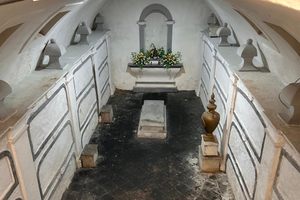
Image via Atlas Obscura
A Governor’s Tomb in Salvador, and the Quiet Architecture of Empire
In Salvador’s historic center, the Catedral Basílica de Salvador sits in the Terreiro de Jesus like a stone filing cabinet of Brazil’s earliest colonial chapters. Tucked inside is the tomb of Mem de Sá, a 16th-century Portuguese governor-general whose tenure coincided with the brutal consolidation of Portuguese power along the coast. If you’ve ever wondered how empires make themselves feel permanent, cathedrals are one answer—they don’t just host worship, they store the story a regime wants future generations to inherit.
Mem de Sá’s era was the era when Salvador became a colonial capital and when the sugar economy accelerated, tying land, labor, and the Atlantic slave trade into a single system. His burial place in a prominent religious building is a reminder that political authority and spiritual authority often traveled as a matched set in the early modern Atlantic world. We’re used to thinking of monuments as statues in plazas, but tombs do similar work: they teach visitors, wordlessly, who is meant to be remembered and revered.
Standing in Salvador today—a city shaped as much by African diaspora culture as by Portuguese design—you can feel the tension between official memory and lived memory. The tomb is not just an artifact; it’s a prompt. Who got placed inside the most durable buildings, and who was pushed outside the archive of stone? That question isn’t only Brazilian. It’s a theme that repeats anywhere colonial power tried to outlast itself by embedding its leaders into the landscape.
Source: Atlas Obscura
Read the full story at Atlas Obscura →
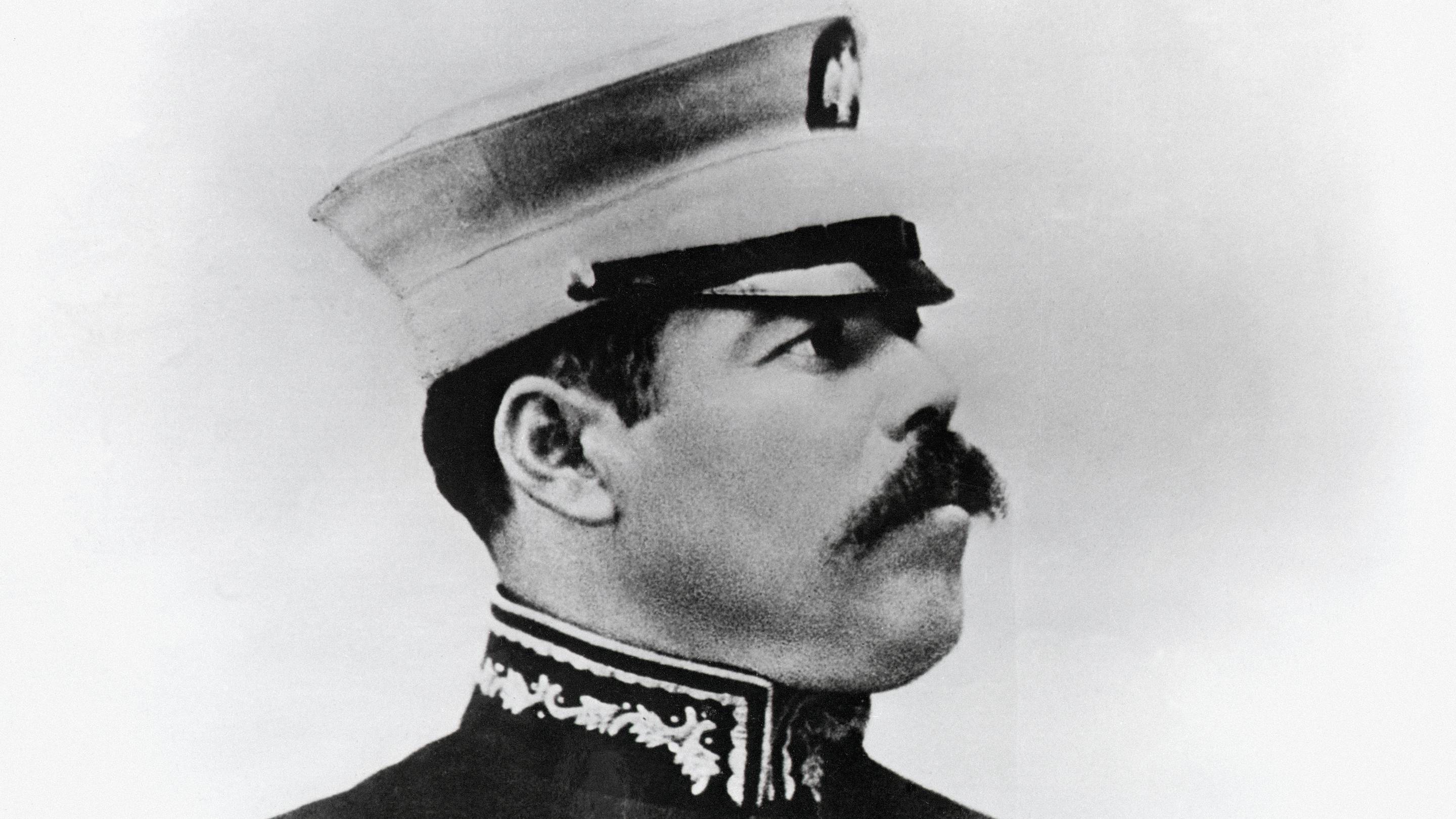
Image via Mental Floss
Pancho Villa’s Missing Skull and the Afterlife of Revolutionary Legends
Pancho Villa, one of the most mythologized figures of the Mexican Revolution, died in 1923—and not long after, his grave became the center of a mystery that refuses to stay buried. The story, as it’s been passed down in whispers and headlines, is that Villa’s skull was stolen from his tomb, sparking decades of speculation about who took it and why. Some theories reach for secret societies and collector intrigue; others point to the grim reality that famous bodies have long been treated as prizes.
This kind of tale has deep historical roots. In the 19th and early 20th centuries, grave-robbing wasn’t just the stuff of gothic novels; it was tied to medicine, museums, and a broader culture of treating human remains as objects of study or status. Political leaders weren’t immune. The bodies of the powerful have always been vulnerable in a strange way: once someone becomes a symbol, their remains can become a kind of political property—something to protect, steal, display, or leverage.
Villa’s missing skull endures as a reminder that revolutions don’t end cleanly. The struggle over memory continues long after the shooting stops. In the United States we’ve seen endless arguments over monuments, renamed bases, and contested textbooks; in Mexico, Villa’s legacy has its own tug-of-war. When a nation is still negotiating what a revolutionary meant, even a grave can become a battleground between myth, mourning, and power.
Source: Mental Floss
Read the full story at Mental Floss →

Image via Popular Mechanics
When a City Stops Needing Water: Nîmes, a Roman Aqueduct, and a Plague You Can Read in Stone
For centuries, the Roman aqueduct feeding the French city of Nîmes stood as a triumph of engineering—a long-distance promise of clean, steady water. What’s striking about the latest research is the conclusion that at some point the system seems to have fallen out of use not because it failed, but because the city stopped needing what it delivered. The clue wasn’t a dramatic inscription or a famous battle; it was physical evidence inside the aqueduct itself, a kind of accidental diary written by maintenance, neglect, and time.
The reason appears to connect to plague and population decline, suggesting a grim logic: fewer people meant less demand, and infrastructure that once served a thriving urban center became oversized for a diminished city. It’s an unnerving historical echo. We often picture ancient collapse as something loud—barbarians at the gates, flames on the horizon. But public health crises can hollow out a society quietly, leaving behind systems that look intact while the community they were built for is fundamentally altered.
There’s a modern lesson here that doesn’t require forcing the analogy. After COVID, many cities are still debating office vacancies, shifting tax bases, and what to do with infrastructure built for a different daily rhythm. The Romans built big and long-lasting, but even they couldn’t engineer their way out of demographic shock. Sometimes the most honest record of a crisis isn’t in a chronicle or a speech—it’s in whether the water kept flowing, and whether anyone was still there to need it.
Source: Popular Mechanics
Read the full story at Popular Mechanics →
That’s the capsule for today. If you find yourself walking past an old church, a famous grave, or a piece of infrastructure that still somehow works, pause for a second and ask: who was it built for, and what changed when they were gone?
— Time Capsule Editorial