August setups are already taking shape — and the biggest moves happen quietly, before the crowd notices. Are you entering early, or buying after the easy gains are gone?
GuyStocks delivers 100% free, real-time momentum alerts straight to your device — zero hype, pure data — so you're positioned in high-conviction trades before the broader market catches on.
Join GuyStocks Free TodayBy clicking the link above, you agree to receive emails from GuyStocks.com. You can opt out at any time. — Privacy Policy

Thursday, August 6, 2026. Three fresh finds from the ancient world remind us that people have always tried to anchor big questions—life, death, memory, and meaning—in the most everyday things: water, skywatching, and a carved stone set in the ground.
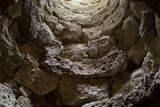
Image via Discover Magazine
An Etruscan Well That Started as a Gift to Water and Ended as a Grave
Archaeologists investigating a 2,500-year-old Etruscan well in Italy found a story layered like sediment: it appears to have begun as a sacred place marked by bronze offerings—two small statuettes and a bronze plate—before later becoming the resting place of two adult skeletons. The contrast is striking. What starts as devotion ends as disposal or burial, and the well itself becomes a time capsule of shifting community needs.
In Etruscan city-founding traditions, water wasn’t just infrastructure; it was legitimacy. A reliable source could mean survival, but it could also mean divine favor—a reason to believe a new settlement was meant to be. Depositing bronze into a watery place fits a long Mediterranean pattern: offering something durable and valuable to a force that feels both generous and unpredictable. The later presence of human remains complicates the scene. It raises questions about violence, crisis, social exclusion, or simply changing ritual practices over generations—reminding us that sacred places can be reinterpreted, repurposed, or even violated as power and circumstance change.
Source: Discover Magazine
Read the full story at Discover Magazine →
Why the Moon Got Baboons and Ibises in Ancient Egypt
New research highlighted by the University of St. Andrews revisits a wonderfully specific question with surprisingly big implications: why did ancient Egyptians connect baboons and ibises to the moon? At first glance it can sound like a quirky footnote, but it’s actually a window into how Egyptians organized knowledge—linking animal behavior, divine identities, and the rhythms of the sky into a single, working worldview.
Both animals carried heavy symbolic weight. Ibises were closely tied to Thoth, a deity associated with writing, calculation, and cosmic order—exactly the kind of divine specialist you’d want overseeing a celestial clock. Baboons also appear in Egyptian religious art in ways that suggest observation and ritual timing, and scholars have long noted that ancient peoples often watched animals for cues about seasonal change, light, and timekeeping. The moon, after all, is a public calendar you can see from anywhere. If a society is coordinating festivals, agriculture, taxes, and temple life, a lunar framework isn’t abstract astronomy—it’s administration, devotion, and daily scheduling wrapped together.
Source: Archaeology Magazine
Read the full story at Archaeology Magazine →
A Faroe Islands Runestone Adds a New Voice to the North Atlantic Middle Ages
A rare runestone has been discovered in the Faroe Islands at what may be the site of a medieval chapel, and its inscription might include the words “Here lies” or “Here rests.” Those two phrases, simple as they are, can carry a whole social world: a named individual, a community that wanted to remember them, and a shared religious and cultural vocabulary that reached even into remote Atlantic islands.
Runestones are more than artifacts; they’re public statements meant to last. In Scandinavia and its connected regions, they often marked graves, asserted family standing, or recorded acts of piety and patronage. Finding one in the Faroes matters because the islands sit at a crossroads of Norse expansion, Christianization, and maritime networks that stitched together places many modern maps make feel isolated. A chapel context hints at that Christian layer—memory anchored not just in kinship, but in a sacred landscape. Even if the full text remains uncertain, the stone’s very presence suggests a community confident enough to carve permanence into rock, in a place where wind and sea usually do the erasing.
Source: Medievalists.net
Read the full story at Medievalists.net →
That’s the Time Capsule for today. If you find yourself near a fountain, looking up at the moon, or reading names in a cemetery, you’re closer to the ancient world than you think—people have always tried to make the ordinary carry the weight of what they couldn’t afford to forget.
— Time Capsule Editorial