Today’s Sponsor:
The Fed held rates, inflation is still above target, and uncertainty is rising — that means the "buy anything AI" trade is over. Smart money is rotating fast toward the companies actually building AI infrastructure: chips, cloud capacity, and mission-critical data tools. Big Tech alone is projected to spend $635B–$665B on AI in 2026 — and not all of it is going where most investors are looking.
We've identified 9 AI stocks worth watching right now — including a lesser-known chip name tied to U.S. AI infrastructure, a cloud player with improving setup, and a data analytics company with government exposure. This isn't hype. It's about following where capital is actually being deployed.
Get the Free Report NowBy clicking the link above, you will receive this free report and a free subscription to the StockEarnings daily email newsletter. You are also agreeing to the terms of our Privacy Policy. Unsubscribe at any time.

Three reminders that history isn’t just dates and great men. It lives in stone walls, in what people could hunt and grow, and in the stubborn, everyday labor that kept whole societies moving.
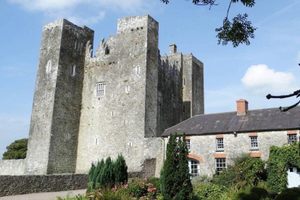
Image via Atlas Obscura
At Barryscourt Castle, the Past Doesn’t Feel Far Away
Just outside Carrigtwohill in County Cork, Barryscourt Castle sits with the kind of quiet confidence that only centuries can produce. It’s the sort of place where the landscape does half the storytelling: the walls don’t just mark property lines, they mark time. In Ireland, castles often read like punctuation in the countryside — a pause that asks you to remember who held power, who worked the land, and who lived within sight of the fortification but never within its protection.
Barryscourt is often associated with the Anglo-Norman world that took root in Ireland after the 12th century, but the deeper lesson is how layered these sites become. Castles were not just military hardware; they were administrative hubs, status symbols, and economic anchors. When we think of a castle as a single “er”, we miss how these buildings were continuously adapted to new threats, new technologies, and new politics — a useful reminder in our own age of repurposed institutions.
And there’s another, quieter connection to the present: places like Barryscourt show how heritage can be both intimate and contested. What gets preserved, what gets restored, and what gets told on the signboards isn’t neutral. Every generation edits the past a little as it decides what it wants to carry forward.
Source: Atlas Obscura
Read the full story at Atlas Obscura →
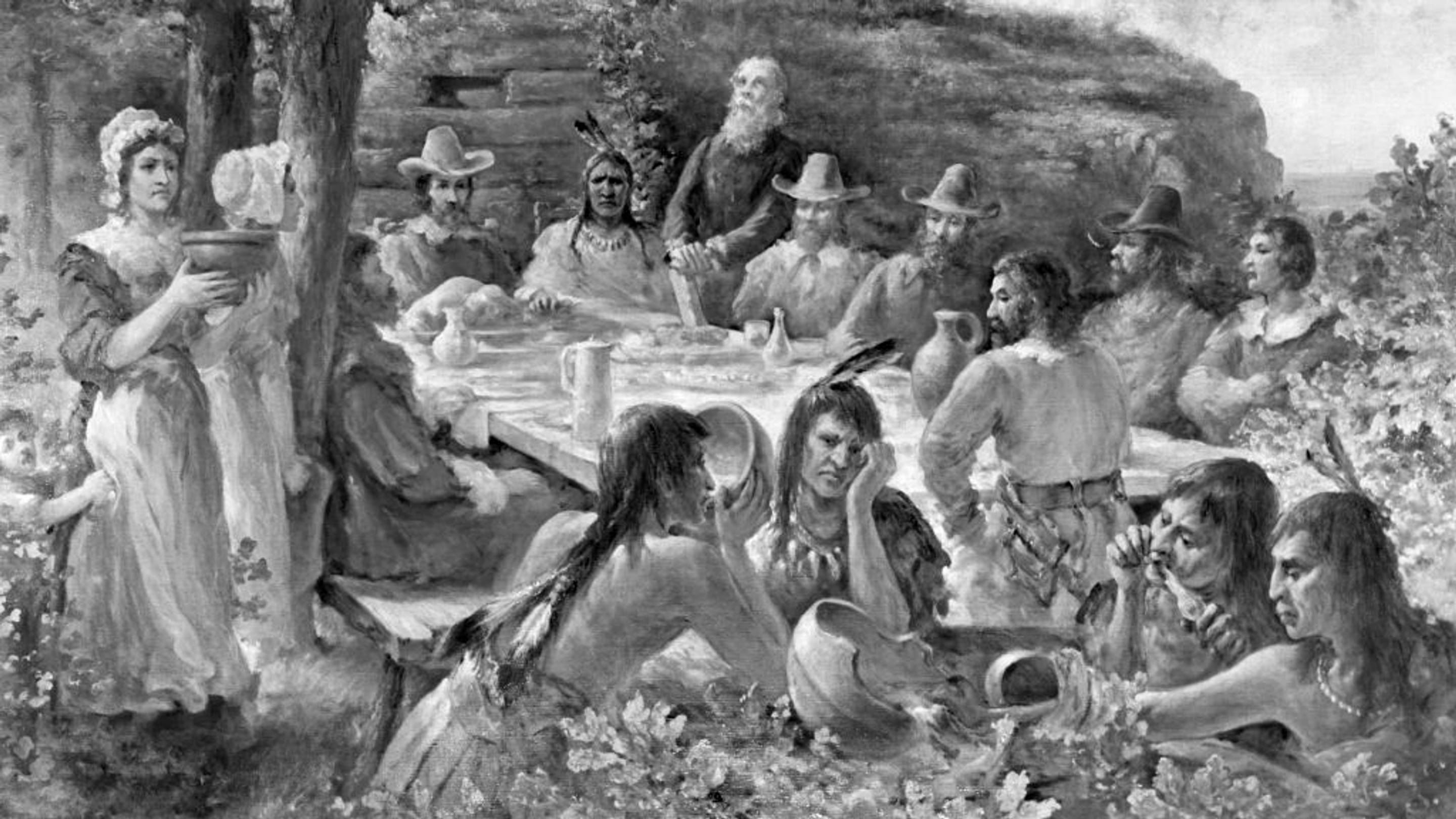
Image via Mental Floss
The First Thanksgiving Menu Wasn’t a Norman Rockwell Painting — It Was Survival
The familiar Thanksgiving script usually comes with a tidy cast and a predictable menu, but the earliest harvest feast in 1621 was shaped by something more basic than tradition: availability. What was on the table reflected local ecosystems, Indigenous knowledge of the region, and the hard arithmetic of getting through another year. The meal, as best historians can reconstruct it, wasn’t a fixed set of iconic dishes so much as a snapshot of what could be gathered, grown, traded, and preserved in that moment.
That matters because food is one of the quickest ways myth hardens into “fact.” Turkey becomes inevitable, cranberry sauce becomes eternal, and suddenly a complex, fragile encounter is reduced to a comforting holiday poster. But the reality is more historically instructive: this was a brief period of cooperation between English colonists and the Wampanoag, shaped by diplomacy and power calculations on both sides, taking place in a world where alliances could be practical one season and broken the next.
Looking at the menu forces us to look at the context. The early colony depended on Indigenous expertise to survive. The feast was not a founding promise, but a moment in a much longer, often brutal story about land, disease, expansion, and sovereignty. Remembering what people actually ate is a small way of remembering what they actually faced.
Source: Mental Floss
Read the full story at Mental Floss →

Image via HistoryExtra
The Medieval Donkey Wasn’t a Punchline — It Was Infrastructure
Medieval culture loved to joke about the ass as a symbol of foolishness, a comic stand-in for the supposedly stubborn or ignorant. But that stereotype hides a more practical truth: in the Middle Ages, donkeys were essential workers. They were strong, steady, comparatively inexpensive to keep, and well-suited to the everyday hauling and transport that made markets function and households endure.
When we talk about “the medieval economy,” we often jump to castles, cathedrals, and crusades. The donkey brings us back down to ground level, to the grain sacks, firewood bundles, field tools, and short-distance trade that sustained communities. A society doesn’t run on heroic moments; it runs on reliable logistics. In that sense, the donkey sits in the same historical category as the wagon wheel, the millstone, and the humble ledger: unglamorous, indispensable.
There’s also a lesson here about how status shapes memory. The people who wrote the jokes weren’t always the people doing the hauling. Animals, like laborers, can become invisible in history until you ask the simplest question: how did anything actually get done?
Source: HistoryExtra
Read the full story at HistoryExtra →
Thanks for opening the capsule with me today. If you find yourself near an old wall, an old recipe, or an overlooked workhorse of history, linger a moment — that’s usually where the real story starts.
— Time Capsule Editorial