Policy is already moving markets in 2026 — trade enforcement, regulatory shifts, and tax positioning are redirecting capital right now. Institutions reposition before the headlines catch up, and the window to act early is closing fast.
Our analysts identified 5 stocks showing real momentum tied directly to current administration policy themes — including the sectors benefiting most from domestic investment trends and regulatory tailwinds. Don't get left behind.
Get the Free Report Now(By following any of the links above, you're choosing to opt in to receive insightful updates from The Investment News Daily + 2 free bonus subscriptions! Your privacy is important to us. You can unsubscribe anytime. See our privacy policy for details.)

Three reminders from the past: crusaders who nearly won Egypt and lost it anyway, a Sumerian hymn that still echoes across millennia, and an Athenian democracy confident enough to put Socrates to death.

Image via History Extra
The Fifth Crusade and the Almost-Conquest of Egypt
When people picture the Crusades, they often imagine knights clashing around Jerusalem. But one of the most consequential crusading gambles aimed somewhere else entirely: Egypt. During the Fifth Crusade (1217–1221), crusader leaders realized that controlling Egypt’s wealth and strategic waterways could be the key to controlling the wider region. The campaign surged with a kind of momentum that can feel shocking in hindsight—they captured the vital port city of Damietta and, for a moment, it looked as if a European coalition might actually crack open the heart of Ayyubid power.
That “almost” is doing heavy work. The same story that contains bold planning and battlefield success also contains friction, miscalculation, and the timeless problem of leadership pulled in too many directions. Negotiations, rivalries, and competing authorities complicated decision-making, while local geography and logistics turned into unforgiving adversaries. The crusaders advanced, stalled, and then found themselves exposed—a reminder that taking a city is not the same as governing a landscape, and that a campaign can be lost by timing as much as by combat.
The Fifth Crusade is a clean historical lesson in how ambition can outrun cohesion: a coalition can get surprisingly far on shared purpose, then unravel when it has to decide what victory actually means and who gets to define it. The campaign’s drama isn’t just in the battles, but in the narrow windows where different choices might have produced a radically different map.
Source: History Extra
Read the full story at History Extra →
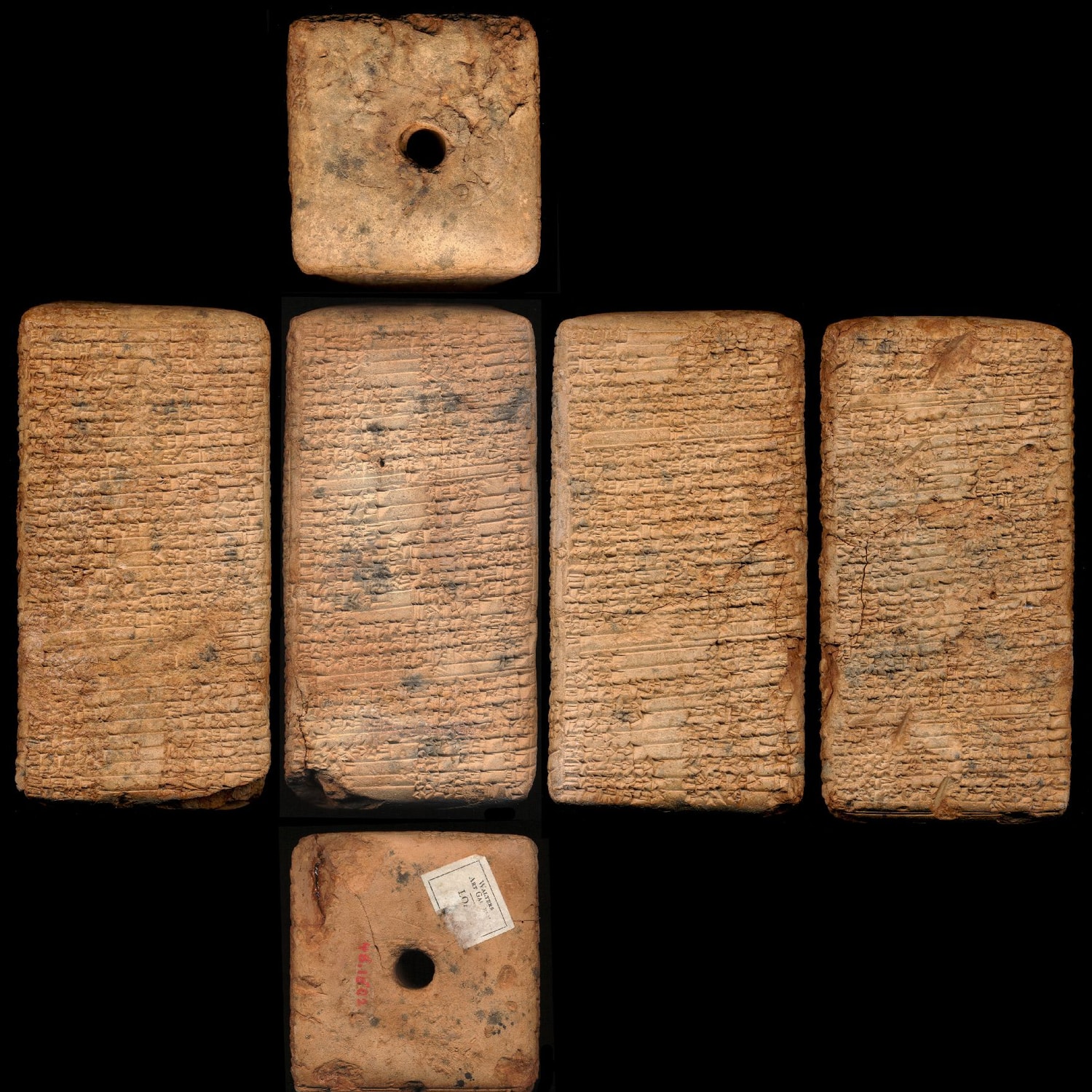
Image via World History Encyclopedia
A 4,600-Year-Old Hymn That Still Sounds Like a Human Voice
Long before scripture was bound in familiar forms, a Sumerian hymn was already doing what religious literature so often does: praising the sacred, shaping communal identity, and turning a physical place into a moral universe. The Kesh Temple Hymn, dated to around 2600 BCE, is often described as the oldest work of religious literature in the world—a praise song honoring a temple and the divine order it represents. It isn’t just old; it’s sophisticated, filled with carefully built images that elevate a local sanctuary into a cosmic landmark.
What makes the hymn feel unexpectedly modern is its sense of persuasion. It doesn’t only describe holiness; it performs it, layering reverence through poetic repetition and vivid metaphor. In a world where city-states competed for status and stability, a hymn like this wasn’t merely private devotion—it was civic glue. It told listeners who they were, why their center mattered, and how the divine and the everyday were supposed to fit together.
Today, when debates flare about where public life ends and spiritual life begins, the Kesh Temple Hymn reminds us that for much of human history the boundary barely existed. The earliest written religious voice we can still hear wasn’t whispering; it was announcing itself to a whole community.
Source: World History Encyclopedia
Read the full story at World History Encyclopedia →
Athens Built Democracy, Then Put Socrates on Trial
Ancient Athens is often introduced as democracy’s birthplace: citizen assemblies, jury trials, and a bold claim that law derives from the people rather than a king. That inheritance is real, but it comes with an uncomfortable footnote that feels as current as any headline about speech, dissent, or political pressure. Athens used its own democratic machinery to try and execute Socrates, arguably its most famous philosopher, on charges that mixed religion, politics, and public anxiety: impiety and corrupting the youth.
Socrates’ trial wasn’t an accident outside the system; it was the system working as designed. Large citizen juries decided guilt and punishment. Persuasion mattered. Reputation mattered. And so did a city’s recent trauma. Athens had lived through devastating war, internal turmoil, and intense suspicion about who could be trusted to shape the next generation. In that climate, a sharp-tongued teacher who questioned assumptions for a living could look less like a civic asset and more like a threat.
The story lands as a reminder that democracy is not automatically a synonym for tolerance. Majorities can be frightened. Institutions can be legally correct and morally wrong at the same time. Athens gave the world a toolkit for self-government—and also a case study in how a society can turn that toolkit against one of its own truth-tellers.
Source: History Collection
Read the full story at History Collection →
That’s the Time Capsule for this Monday. If today’s world feels like it’s arguing over power, belief, and who gets to speak, you’re not imagining it—we’ve been rehearsing these scenes for a very long time.
— Time Capsule Editorial