The Fed held rates, inflation is still above target, and uncertainty is rising — that means the "buy anything AI" trade is over. Smart money is rotating fast toward the companies actually building AI infrastructure: chips, cloud capacity, and mission-critical data tools. Big Tech alone is projected to spend $635B–$665B on AI in 2026 — and not all of it is going where most investors are looking.
We've identified 9 AI stocks worth watching right now — including a lesser-known chip name tied to U.S. AI infrastructure, a cloud player with improving setup, and a data analytics company with government exposure. This isn't hype. It's about following where capital is actually being deployed.
Get the Free Report NowBy clicking the link above, you will receive this free report and a free subscription to the StockEarnings daily email newsletter. You are also agreeing to the terms of our Privacy Policy. Unsubscribe at any time.

Three stories that look unrelated at first glance: a trio of brick towers in rural Vietnam, a brutal amphibious campaign to reclaim Guam, and a German pilot who became a one-man myth. History ties them together with a single question: what do we choose to remember, and what do we let fade?

Image via Atlas Obscura
Vietnam’s Duong Long Cham Towers: A Skyline From a Kingdom Many of Us Never Met
In the rural landscape of Binh Dinh, the Duong Long Cham Towers rise like a set of punctuation marks from another era: tall, brick-built, and quietly confident. Built in the late 12th century during a high point for Champa, they’re not just beautiful ruins; they’re evidence of a sophisticated coastal civilization that traded, worshiped, fought, and built in a style that doesn’t fit neatly into the story many Americans were taught about Southeast Asia.
What makes them feel like an “architectural anomaly” is partly their scale and vertical ambition, and partly how they scramble our mental map of the past. In U.S. classrooms, Vietnam is often introduced at the moment American helicopters enter the frame, as if the country’s story begins when ours does. The Cham towers insist on a longer timeline: centuries of regional power shifts, religious change, and art that traveled across seas long before modern borders existed.
There’s a deeper American parallel here: our habit of turning complex places into single-chapter narratives. Just as Vietnam gets reduced to one war, whole dynasties and cultures across the world get treated like footnotes unless they intersect with Western empires. Sites like Duong Long remind us that history isn’t a straight line leading to us; it’s a crowded room of civilizations, each with its own architecture, ambitions, and memories.
🏺 What It Means Today: If a place like the Duong Long towers feels “surprising,” that’s a clue about the limits of our education, not the limits of Vietnam’s past. I wish American history teaching spent more time on the pre-modern world outside Europe, because it changes how we read today’s headlines about identity, borders, and cultural heritage. These towers aren’t just scenic; they’re an argument against the idea that history only matters when it touches American power.
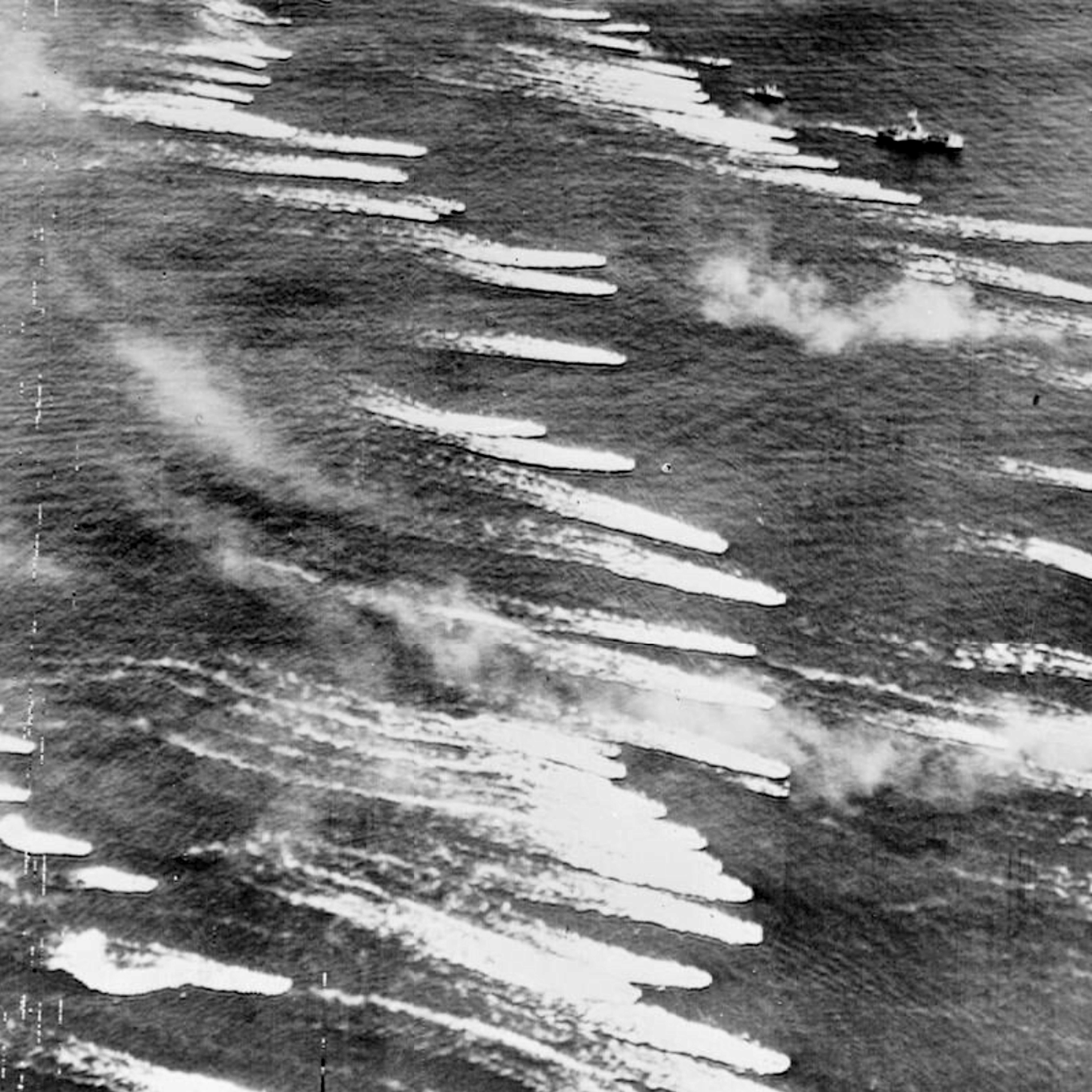
Image via World History Encyclopedia
The Battle of Guam and the Hard Truth About “Taking Back” What You Already Own
In July and August 1944, U.S. forces fought the Battle of Guam to retake the island from Japanese occupation in the Pacific War. Guam had been U.S. territory before the war, captured shortly after Pearl Harbor, and then treated by both sides as a strategic prize: a base, a runway, a stepping-stone across the ocean. The fighting to reclaim it was intense and costly, shaped by the realities of amphibious warfare and the brutal geography of the Pacific campaigns.
What tends to get lost in the big WWII storyline is what it means to “liberate” a place that is already yours on paper. Guam’s people were not abstractions; they lived the occupation and then lived through the recapture, too, as bombs fell and the island’s landscape was transformed to serve military needs. This is a recurring pattern in American history: territories are framed as strategic assets first and communities second, and the language of protection often arrives alongside decisions made far away.
Guam also forces a modern question we keep postponing: what is the relationship between the United States and its territories, really? We tell a triumphant story about reclaiming American soil in 1944, but the political status that shapes life on Guam today remains complicated, unequal, and frequently ignored by the mainland. History doesn’t let us stop at the battlefield; it follows through to citizenship, representation, and whose voices count when national decisions are made.
🏺 What It Means Today: We should remember the Battle of Guam as both a military campaign and a civic mirror. It’s easy to wave a flag over “territory regained” and never ask what obligation comes with that possession, especially when the people affected have limited power in the system that governs them. If we can teach the heroism of 1944, we can also teach the unfinished democratic story that came after it.

Image via All That’s Interesting
The Red Baron: How One Pilot’s Scoreboard Became a Global Legend
Between September 1916 and April 1918, Manfred von Richthofen, the “Red Baron,” shot down 80 enemy aircraft and became World War I’s most famous flying ace. The raw number is part of why his story stuck, but so is the timing: air combat was new, terrifying, and strangely theatrical, with duels unfolding in open sky. In a war defined by trenches and mass slaughter, the fighter pilot offered a different image, one that could be turned into a narrative of individual skill and recognizable rivalry.
That’s the thing about modern warfare and modern media: they hunger for characters. Richthofen became a symbol not just for Germany, but for the emerging 20th-century idea that technology could produce a new kind of knight, even while the same technology made industrialized killing more efficient than ever. He’s remembered in bright colors and clean silhouettes, while the war below him churned through millions of lives in mud, wire, and artillery smoke.
The Red Baron’s afterlife is a useful warning about how we build heroes. The more complicated a conflict is, the more tempted we are to reduce it to a face, a nickname, and a highlight reel. We do this today with “ace” language in everything from drone warfare to cyberspace, where victories are often invisible to the public but still packaged as personal prowess. History teaches that the myth is never neutral: it shapes what we admire, what we excuse, and what we forget to mourn.
🏺 What It Means Today: I think the Red Baron is fascinating, but I’m wary of the way his legend lets us romanticize a war that should feel fundamentally unromantic. When we focus on the scoreboard, we risk turning human lives into points and violence into sport. The better lesson is not that one man mastered the skies, but that modern societies are remarkably skilled at turning killing into a story we can cheer for.
That’s the capsule for today. If you’re looking for a small history exercise, pick one place from this issue and ask: what was happening there 200 years earlier, and what did the people living it think they were building? Answers like that tend to make the present feel a little less mysterious, and a lot more accountable.
— Time Capsule Editorial