Policy is already moving markets in 2026 — trade enforcement, regulatory shifts, and tax positioning are redirecting capital right now. Institutions reposition before the headlines catch up, and the window to act early is closing fast.
Our analysts identified 5 stocks showing real momentum tied directly to current administration policy themes — including the sectors benefiting most from domestic investment trends and regulatory tailwinds. Don't get left behind.
Get the Free Report Now(By following any of the links above, you're choosing to opt in to receive insightful updates from The Investment News Daily + 2 free bonus subscriptions! Your privacy is important to us. You can unsubscribe anytime. See our privacy policy for details.)

Three reminders that history isn’t just dates and battles—it’s also how we look at art, how communities explain themselves, and how a single document can tilt our understanding of a turning point.
/https://tf-cmsv2-smithsonianmag-media.s3.amazonaws.com/filer_public/48/84/4884a7a4-01f3-4618-9003-3e6d7673e627/jan_brueghel_i__peter_paul_rubens_-_sight_museo_del_prado.jpg)
Image via Smithsonian Magazine
When the Sun Goes Strange, Even the Prado Changes Its Light
Spain is preparing for a total solar eclipse, and Madrid’s Prado Museum is marking the moment with a digital intervention that does something museums rarely admit out loud: it changes how we see the old masters. A new animation, “El Prado a la luz del eclipse,” uses A.I. to reimagine paintings by artists like Goya and Velázquez as if their scenes were unfolding under eclipse conditions—that dim, uncanny twilight that makes familiar rooms look like different worlds.
It’s an art project, yes, but it’s also a history lesson in perception. Before electric lighting and smartphone cameras, celestial events were not just spectacles; they were shared experiences that reshaped the mood of a city, a battlefield, a harvest, even a sermon. Medieval chronicles are full of ominous skies and “signs” because people lived closer to the rhythms of the heavens. The Prado’s experiment invites us to consider something subtle: if the light changes, the story changes. And if the story changes, our confidence in what a painting “is about” gets a little more humble.
There’s a modern echo here, too. We’re living through a period when algorithms increasingly mediate what we notice and what we overlook—what feels bright, what feels shadowed, what feels urgent. Taking masterpieces and filtering them through an eclipse is a playful gesture, but it also asks a serious question historians have always wrestled with: how much of the past is the past itself, and how much is the lighting we bring to it?
Source: Smithsonian Magazine
Read the full story at Smithsonian Magazine →
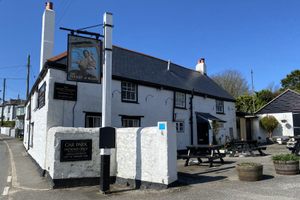
Image via Atlas Obscura
In Cornwall, a Well and a Pub Keep Folklore on Tap
Phillack, in Cornwall, offers a pairing that feels like it could only exist in a place where myth and daily life still share the same lane: St. Piala’s Well and a nearby pub called the Bucket of Blood. Atlas Obscura sketches the local landscape as the kind of community where stories don’t sit behind museum glass—they sit beside you, woven into place names, walking paths, and the way people explain why this corner of the world feels different.
Holy wells are one of those deep-rooted British and Irish traditions that tell you how continuity works. Many were revered long before Christianity, then adopted, renamed, and folded into the calendar of saints and feast days. That doesn’t make them fake; it makes them human. A well can be a water source, a ritual site, a social meeting point, and a map of belief layered over centuries. Cornwall, with its strong regional identity and distinct cultural memory, has long been a place where older customs didn’t vanish so much as learn to coexist.
And then there’s the pub name: Bucket of Blood, a title that practically begs for a tale, whether it’s rooted in an actual incident, a cautionary legend, or the irresistible marketing power of the macabre. That combination—sacred water nearby, a darkly named gathering place next door—is a little snapshot of how communities preserve history when official records are thin. Not every archive is paper. Sometimes it’s a story told at closing time, attached to a building that refuses to let the past go quiet.
Source: Atlas Obscura
Read the full story at Atlas Obscura →
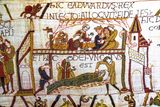
Image via Discover Magazine
A Missing Vatican Letter and the Politics Behind 1066
We tend to learn the Battle of Hastings as a clean turning point: one day Anglo-Saxon England, the next day Norman England. But Discover highlights a fascinating wrinkle—a pope’s lost letter that could sharpen (or complicate) why the Church supported William, Duke of Normandy, in his claim to the English throne. When a single document from the Vatican surfaces or is newly understood, it can reframe the conquest not just as a military invasion, but as an international political project with religious legitimacy stitched into its seams.
In the 11th century, papal backing wasn’t a polite endorsement; it was strategic power. The medieval Church acted like a transnational institution with its own diplomatic priorities, eager to influence rulers, enforce reforms, and shape what counted as lawful authority. If this letter clarifies the pope’s reasoning, it could help explain how William presented his campaign as more than ambition—as a cause with moral and legal weight. That matters because legitimacy is often the real prize in a succession crisis: the sword wins the field, but the paperwork wins the narrative.
History classrooms sometimes treat papal involvement as a footnote to knights and arrows, but it’s closer to a reminder that geopolitics has always been about coalitions. Great turning points are rarely local. England’s future didn’t pivot on the Sussex coast alone; it pivoted in councils, correspondences, and reputations that stretched across the Channel and all the way to Rome. A letter can’t change who won at Hastings—but it can change how we understand what kind of victory it was.
Source: Discover Magazine
Read the full story at Discover Magazine →
That’s the Time Capsule for today. If you find yourself staring at an eclipse photo, a roadside well, or a dusty old letter headline this week, let it be a little reminder: the past is never as far away as it pretends to be.
— Time Capsule Editorial