In 1971, Nixon ended the gold standard in a single 15-minute broadcast — no warning, no debate. Gold tripled in 3 years and rose 20x over the next decade. The people who saw it coming protected their wealth. Everyone else watched their savings quietly erode. History may be about to repeat itself. Trump holds the same executive authority Nixon used — and his own advisors are now openly saying a reversal is on the table.
Reagan Gold Group has put together a free briefing covering exactly what Nixon did, why Trump is the first president positioned to undo it, and the one move you can make right now to be on the right side of what comes next. Free. 30 seconds to request. Don't wait for the Sunday night broadcast.
Get the Free Briefing NowReagan Gold Group does not provide financial, legal, or tax advice. This information is for educational purposes only and should not be considered investment advice. All investments carry risk, including loss of principal. Past performance is not indicative of future results. Consult your licensed financial advisor before making investment decisions. This is an advertisement. If you no longer wish to receive this promotional message, please Unsubscribe. Or write to: 2029 Century Park E Suite 400, Los Angeles, CA 90067.

Wednesday, August 19, 2026 — A Roman firehouse turns up a mosaic (and questions), a siege weapon may have left a signature in bone, and five medieval jobs remind us that history doesn’t vanish so much as it changes uniforms.
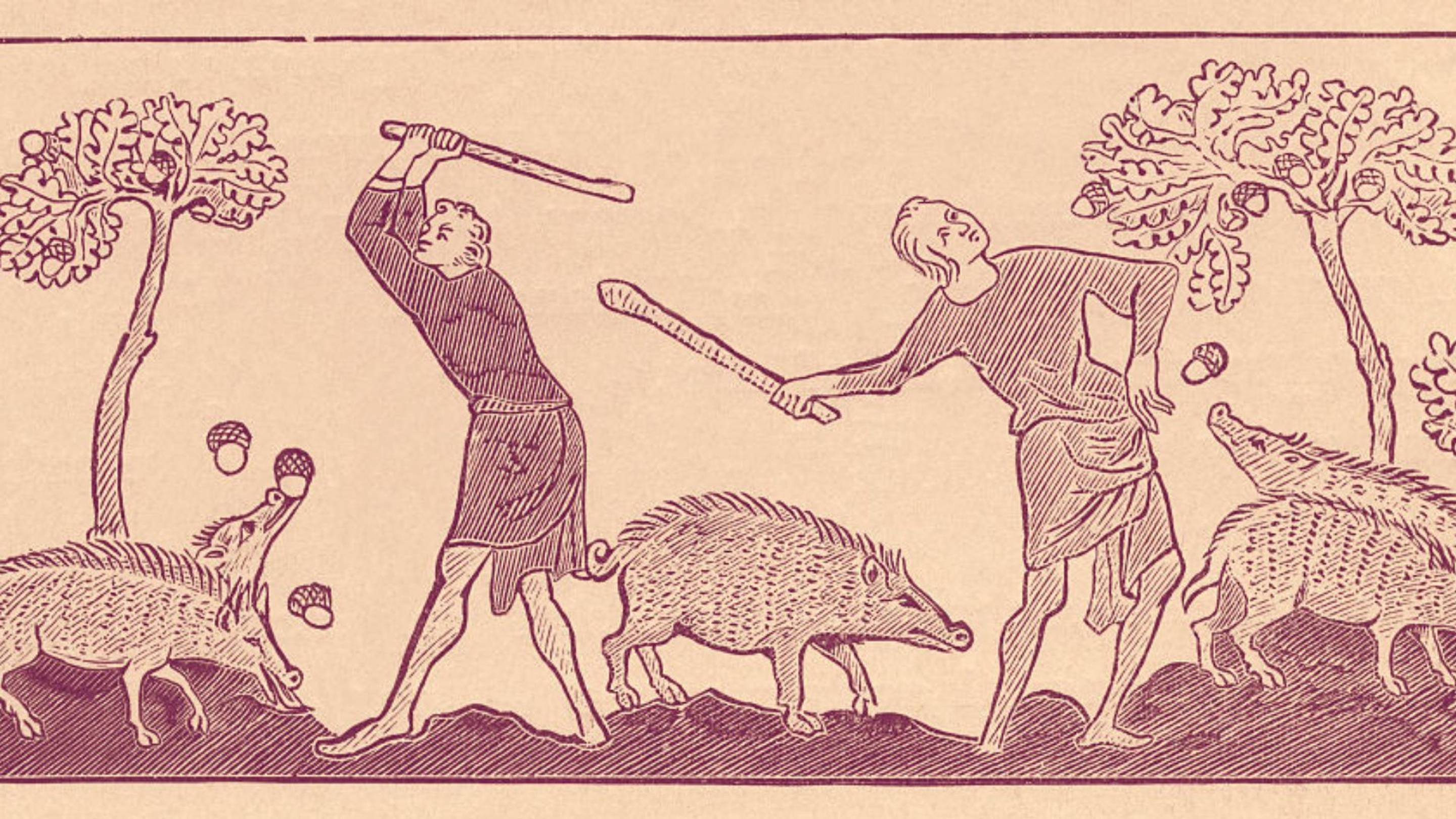
Image via Mental Floss
Five Medieval Jobs Still Clocking In, Centuries Later
It’s tempting to file medieval work under a single mental image: mud, candles, and somebody tanning a hide. But a surprising number of Middle Ages–era occupations didn’t die out—they professionalized, rebranded, or moved behind the scenes. The Mental Floss list is a good reminder that when societies solve the same problems (food, clothing, records, law, public order), they often invent the same roles again and again, just with better tools and new titles.
What’s especially time-capsule-worthy is how these jobs reveal continuity in what communities value. We still need people who preserve documents and memory (think archivists and conservators, heirs to scribes and illuminators). We still rely on specialized makers who understand materials intimately (tailors, cobblers, craftspeople), even in an age of mass production. And we still maintain the human infrastructure of daily life: caring for animals, keeping streets and public spaces functional, and providing niche services most of us never think about until we need them.
The Middle Ages weren’t a quirky detour on the way to modern life; they were a long workshop where institutions and labor patterns took shape. Reading about these jobs feels less like peeking into a vanished world and more like noticing the medieval fingerprints on our own.
Source: Mental Floss
Read the full story at Mental Floss →

Image via Popular Mechanics
A Roman Mosaic Resurfaces—and Points Back to the Night Watch Who Kept the City Alive
Archaeologists have uncovered a Roman mosaic tied to a building associated with the Vigiles, the famous corps that served as ancient Rome’s firefighters and night watchmen. Popular Mechanics frames the find as both a beautiful artifact and a doorway into a civic system that was more organized than we sometimes give the ancient world credit for: teams on call, responsibilities divided, and public safety treated as a round-the-clock problem.
The Vigiles matter because they sit at the crossroads of two Roman anxieties: fire and disorder. Rome was a city built to burn—dense housing, open flames for light and cooking, workshops packed into neighborhoods. Firefighting wasn’t just about heroics; it was bureaucracy, logistics, and prevention. And because they patrolled at night, the Vigiles also became a kind of early urban policing presence, navigating the delicate line between protecting residents and enforcing authority.
The “unsolved ancient mystery” angle is part of what makes this discovery fun: mosaics can be straightforward decoration, or they can be coded signals about who used a space, who paid for it, and what message they wanted to project. Every new floor uncovered in an ancient city is a reminder that the past isn’t fully excavated—and that public safety, then as now, leaves behind a paper trail in stone.
Source: Popular Mechanics
Read the full story at Popular Mechanics →

Image via All That’s Interesting
167 Fractures and a Castle Siege: A Skeleton That May Mark the First Kill of a Super-Trebuchet
At Scotland’s Stirling Castle, researchers studying a medieval skeleton with an astonishing 167 fractures now believe they may be looking at the first known victim of Edward I’s fearsome siege engine, the Warwolf trebuchet. All That’s Interesting reports that the injuries suggest a catastrophic impact consistent with massive artillery—the kind of force that turns a battlefield from a clash of bodies into a contest of engineering.
To place this in its historical frame, the 1304 siege of Stirling Castle was a pivotal episode in the Wars of Scottish Independence. Edward I wasn’t only trying to take a fortress; he was sending a message about inevitability. Medieval rulers understood propaganda long before the word existed: a weapon like Warwolf wasn’t just meant to breach stone, it was meant to break morale. If the identification holds, this one person’s shattered bones become a grim receipt for a new era of siege warfare.
What lingers is the human scale of technological change. When we talk about military innovation, we often drift into specs and superlatives—bigger range, heavier payload, stronger torsion. But the archaeological record pulls us back to consequence. History isn’t only written in chronicles; sometimes it’s written in trauma patterns, in the physics of impact, in the way a body bears witness when a machine changes the rules.
Source: All That’s Interesting
Read the full story at All That’s Interesting →
That’s the capsule for today. If you catch yourself thinking “that could never happen now,” tuck that thought away and look again—history has a habit of sticking around in the jobs we do, the cities we build, and the tools we invent.
— Time Capsule Editorial