Today’s Sponsor:
Everyone's watching the chips — but AI can't run on chips alone. It needs power, cooling, copper, steel, and concrete. That's where the real supply squeeze is happening, and most investors are completely missing it.
We put together a free field guide breaking down the power, equipment, and materials the AI boom can't survive without — and how to think about the companies supplying them right now.
Get the Free Field GuideBy clicking above, you're opting in to receive valuable updates from The Fifth Asset plus 2 bonus subscriptions. Your privacy is important to us. You can unsubscribe anytime. See our privacy policy for details.

Three stories that remind us history isn’t a straight line. It’s a set of well-worn paths: communities organizing for survival, outsiders hired for power, and nations inventing doctrines that outlive the moment that created them.

Image via Discover Magazine
The Texas Cliff That Kept Moving, and the Hunt That Didn’t Stop
There’s a particular kind of evidence that feels almost too vivid to be real: a pile of bones beneath a cliff, accumulating for millennia, telling you not just what happened but how coordinated and intentional it was. In Texas, archaeologists and researchers are reading exactly that kind of record — bison remains deposited below a cliff where Indigenous hunters drove animals over the edge again and again for roughly 3,000 years.
What makes the site especially striking is that the cliff edge itself didn’t stay put. Over centuries, erosion and shifting terrain changed the landscape, yet the hunting practice persisted. That detail matters, because it pushes back against old assumptions that Plains hunting was either purely opportunistic or technologically simple. Repeating a cliff drive over generations implies deep local knowledge, planning across groups, and an ability to adapt strategies as the land literally changed shape.
It’s also a reminder that the popular American story about bison often begins at the end — the 19th-century slaughter and near-extinction — rather than the long eras when bison were part of an Indigenous-managed world of seasonal movement, social coordination, and food security. The bones under that Texas cliff aren’t just leftovers. They’re a ledger of expertise.
Source: Discover Magazine
Read the full story at Discover Magazine →
Gallowglass: When Outsiders Became the Backbone of Irish War
Medieval Ireland was no stranger to shifting alliances, but few groups illustrate the era’s hard pragmatism like the gallowglass: Scottish mercenaries who crossed the water and became a durable force in Irish politics and warfare. They weren’t just hired swords passing through. Over time, they turned military service into land, status, and lasting influence — shaping the island’s balance of power in the process.
The gallowglass story sits at the intersection of clan rivalries and opportunity. Irish lords brought them in to strengthen their position against rivals, and the mercenaries arrived with reputations for toughness and battlefield effectiveness. But the real historical twist is what came after the contract: the pursuit of security and permanence. As gallowglass families established themselves, the line between “foreign mercenary” and “local power broker” blurred, and that blurring changed what conflict looked like in Ireland.
If this feels familiar, it’s because the pattern repeats across history: states and leaders outsource violence or security to specialists, then spend decades managing the political consequences. Once a group’s livelihood depends on conflict — and once they gain land and ties — they’re no longer a temporary tool. They become a stakeholder in the system itself.
Source: Medievalists.net
Read the full story at Medievalists.net →
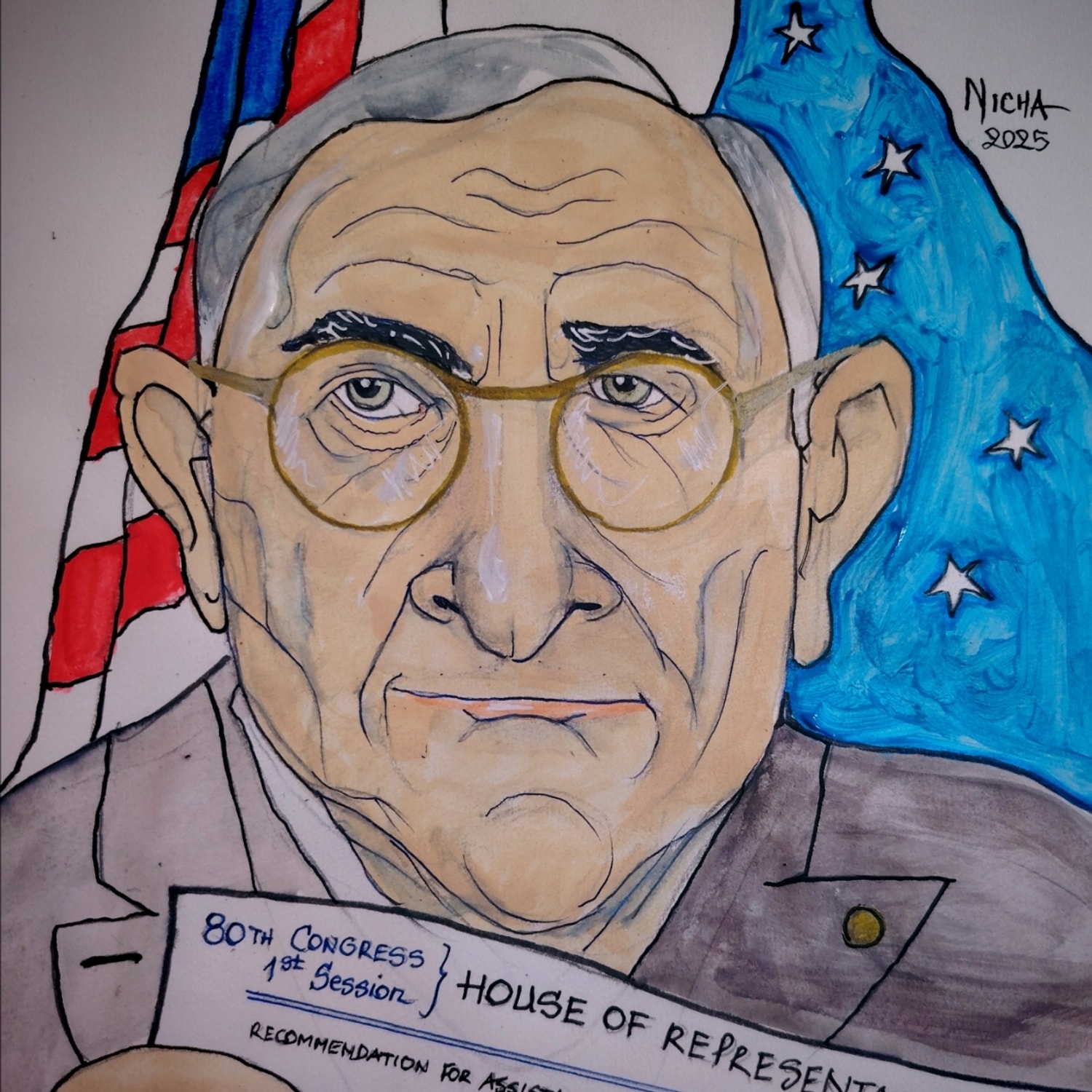
Image via World History Encyclopedia
The Truman Doctrine and the Moment the U.S. Made a Promise to the World
In 1947, the United States took a step that still shapes how Americans argue about foreign policy: it announced a commitment to support “free peoples” resisting subjugation. The Truman Doctrine, born in the early Cold War, wasn’t just a statement about Greece and Turkey. It was the opening sentence of a much longer American story about containment — the idea that communism had to be prevented from expanding, not necessarily rolled back where it already existed.
What’s easy to miss, looking backward, is how much of this was policy invention under pressure. World War II had ended, old empires were weakening, civil conflicts were flaring, and Washington feared that instability would create openings for Soviet influence. The Truman Doctrine framed U.S. involvement as a defense of freedom and democracy, but it also created a durable logic: instability anywhere could be interpreted as a strategic threat everywhere.
That logic became a kind of template, reused and revised by later administrations. You can trace a line from 1947 to debates that still animate the present: When does support abroad prevent a wider crisis, and when does it lock a country into commitments that expand over time? Containment began as a response to a specific postwar moment, but doctrines have a way of outliving the emergencies that produced them.
Source: World History Encyclopedia
Read the full story at World History Encyclopedia →
That’s the capsule for today. If you find yourself looking at a map, a cliff edge, or a headline about “national security” a little differently, history did its job — it widened the frame.
— Time Capsule Editorial