Today’s Sponsor:
You don't need to chase hundreds of tickers — you just need to spot the right signal. The team at Trading Ideas cuts through the noise and zeroes in on repeating patterns that show up before strong market moves.
One of those signals just fired on a company most investors aren't watching. The setup, the data, and the timing window are all inside their latest alert — and it won't be relevant for long.
See the Report & Company Name*We encourage readers to perform their own research and due diligence on any information we provide. By clicking the link you will automatically be subscribed to the Trading Ideas Newsletter.

/https://tf-cmsv2-smithsonianmag-media.s3.amazonaws.com/filer_public/bd/c2/bdc24b8a-9def-4c98-b8d9-ab175c823526/11most2026_angelisland_photo_6_crangelislandimmigrationstationfoundation_1.jpg)
Image via Smithsonian Magazine
America at 250: The “Most Endangered” Places You’ve Never Put on a Road Trip Map
As the U.S. heads toward its 250th birthday in 2026, the National Trust for Historic Preservation has released its latest list of America’s “Most Endangered Historic Places”—and it’s full of sites that rarely make the standard “Founding Fathers and battlefields” tour. The point of the list isn’t nostalgia; it’s triage. These are places facing threats from development, neglect, climate impacts, and simple invisibility—historic ground that can disappear quietly if no one remembers it’s there.
The Smithsonian highlights how wide the list’s definition of “history” really is: not just Revolutionary-era landscapes, but also places tied to civil rights, community building, migration, labor, and everyday life. That range matters, because what we choose to preserve becomes a kind of national syllabus—one that decides whether future Americans encounter history as a narrow parade of famous names or as a sprawling story that happened in ordinary rooms, churches, neighborhoods, and crossroads.
If the 250th anniversary is going to be more than fireworks and reenactments, this list is a useful prompt: What landmarks do we treat as “America,” and which ones do we let slip away because they don’t fit the postcard?
Read the full story at Smithsonian Magazine →
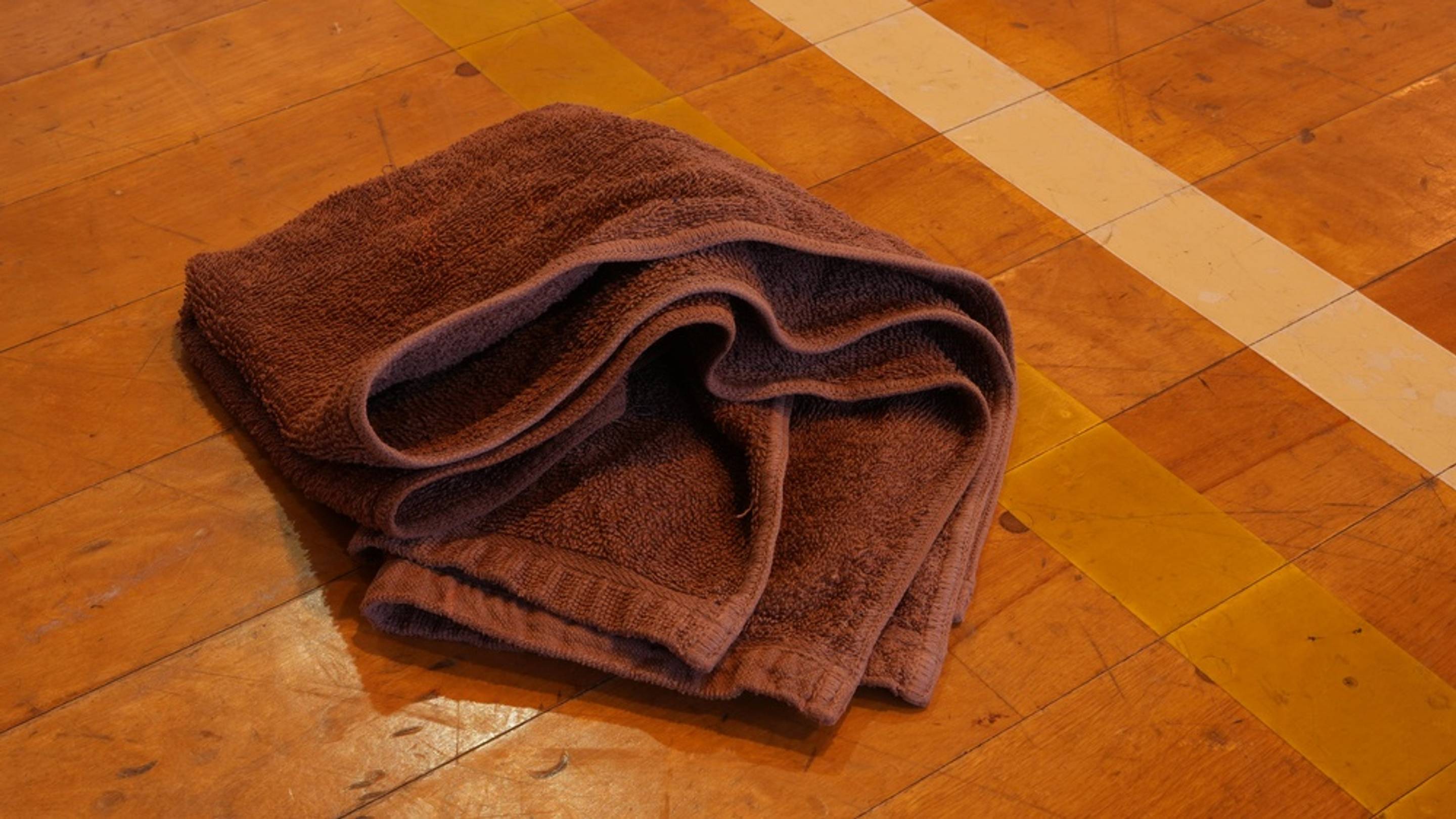
Image via Mental Floss
“Throw in the Towel”: When Quitting Became a Corner’s Job
“Throw in the towel” feels so natural now that we forget it’s not metaphor-first—it’s sport-first. Mental Floss traces the phrase to boxing, where a fighter’s corner could literally toss a towel (or sponge) into the ring to signal surrender and stop a beating. It was a practical act: the people watching most closely—trainers, handlers, seconds—were empowered to end the contest when the fighter couldn’t or wouldn’t.
That origin explains why the phrase carries a particular emotional tone. It’s not just “I’m done.” It’s “someone who cares about me is calling this,” a recognition that grit has limits and that survival sometimes requires an outside voice. In a culture that loves comeback stories, the idiom quietly preserves an older ethic too: there’s courage in knowing when continuing is no longer bravery—it’s damage.
Language keeps these little fossils. Every time we use the phrase in politics, business, or relationships, we’re borrowing a ringside mercy rule that migrated into everyday speech.
Read the full story at Mental Floss →

Image via Discover Magazine
The Great Pyramid’s Quiet Flex: A Design That May Blunt Earthquake Shock
The Great Pyramid of Giza has endured thousands of years of stress—wind, time, human interference, and earthquakes. Discover reports on research suggesting that a “hidden design feature” may help explain its surprising resilience: architectural elements that could weaken or disrupt seismic vibrations as they travel upward, particularly around the King’s Chamber.
The idea is less mystical than mechanical. Instead of imagining the pyramid as a solid, inert mountain of stone, this research treats it as an engineered structure with internal spaces and transitions that may change how energy moves through it. If vibrations are reduced above a certain point, that could mean less destructive shaking where critical chambers and heavy stone assemblies sit—like protecting the building’s most vulnerable “organs.”
It’s a useful reminder that ancient builders weren’t just stacking rocks; they were problem-solvers working with gravity, pressure, and material behavior—often in ways we’re still trying to model. The pyramid’s longevity may be, in part, a lesson in design for uncertainty.
Read the full story at Discover Magazine →
The Roman Forum as a Soundstage: Did Architecture Shape What Politics Could Be?
Political speech is never just about words—it’s about space: where people stand, who can hear, and how power is staged. Archaeology Magazine summarizes reporting on a new study examining whether changes to the layout of the Roman Forum affected political speech. As the Forum evolved over time—monuments added, pathways adjusted, sightlines altered—the “public square” wasn’t merely decorated; it was re-engineered.
In Rome, architecture and authority were constant collaborators. A podium’s height, a speaker’s distance from the crowd, the pinch points where people gathered, and the barriers that redirected foot traffic could all influence what kinds of speeches were possible and who was able to participate. The built environment can amplify some voices and muffle others without anyone ever changing the law.
It’s hard not to see the modern parallel: city halls, protest routes, microphone rules, camera angles, and even where a press conference is held. The Forum suggests something timeless—politics doesn’t only happen in places; it is shaped by them.
Read the full story at Archaeology Magazine →

Image via Atlas Obscura
A Victorian Time Capsule in the Fens: Wisbech & Fenland Museum
Atlas Obscura spotlights Wisbech & Fenland Museum in Wisbech, England—a purpose-built Victorian museum dating to 1847, designed by architect George Buckler on the former site of Wisbech Castle. Museums like this aren’t just containers for artifacts; they’re artifacts themselves, reflecting the 19th century’s confidence that collecting and classifying the world could produce knowledge—and status.
Regional museums have a particular charm: they preserve the texture of local life alongside global curiosities, stitching a community’s story to the wider world. Their displays often reveal as much about Victorian ideas of education and empire as they do about the objects behind the glass.
In an age when cultural institutions are asked to modernize, digitize, and justify every square foot, places like Wisbech & Fenland also raise a quieter question: what do we lose when we stop building civic spaces meant simply for learning, wonder, and the long memory?
Read the full story at Atlas Obscura →
Until tomorrow—keep one eye on the headlines and the other on the history hiding underneath.
— Time Capsule Editorial