History shows a clear pattern: the investors who recognized the exact inflection point in the dot-com boom pocketed 400–800% gains in 18 months. Those who spotted the same moment in cloud computing saw 300–600% returns. Based on 50 years of market data, that same moment is happening right now — and the acceleration phase has already begun.
This free 7-page report reveals where we are in the current megatrend cycle, why the next 18 months are critical, and how to position yourself before the window closes. Don't be the investor who enters too late.
Get the Free ReportBy clicking 'Get the Free Report' you are automatically subscribing to Darwin Investor Network and will receive a free subscription to the Chaikin PowerFeed newsletter. Unsubscribing is easy. Privacy Policy

From German soldiers who weren't quite mercenaries to unlucky Roman numerals, the stories history half-remembered
/https://tf-cmsv2-smithsonianmag-media.s3.amazonaws.com/filer_public/15/6a/156a4923-bf80-47e0-8353-584546bf7130/hessians.png)
Image via Smithsonian Magazine
The German Soldiers Who Weren't Mercenaries (Though Everyone Calls Them That)
We learned about the Hessians as hired guns, foreign mercenaries the British brought over to crush colonial rebellion. Turns out, that's not quite right. Some 30,000 German soldiers fought in the American Revolution, but they weren't freelancers selling their services. They were regular soldiers whose princes had leased entire military units to the British Crown through treaties between sovereigns. The soldiers themselves had no say in the arrangement.
And here's another twist: not all of them were even Hessians. While the largest contingent did come from Hesse-Kassel, German troops arrived from six different principalities across what would eventually become Germany. The British plan was straightforward: deploy these professional European soldiers to quickly overwhelm the ragtag colonial forces. Instead, these men endured years of grinding warfare, suffered thousands of casualties, and watched their quick deployment turn into a long, bitter conflict. About 5,000 never made it home. Another 5,000 chose to stay in America after the war, abandoning their European lives for new ones in the very country they'd been sent to subdue.
The irony runs deep. These weren't heartless mercenaries motivated by profit. They were conscripted soldiers following orders, many of them farm boys who'd never chosen military life. Yet they became the face of foreign intervention in America's founding mythology, proof that King George would hire anyone to crush liberty. History simplified them into villains when they were really just pawns in a larger diplomatic chess game between European powers.
Read the full story at Smithsonian Magazine →
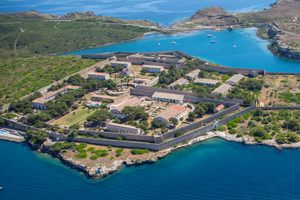
Image via Atlas Obscura
The Island Where Ships Waited Out Death
Hidden in the middle of Mahón Harbour in Menorca sits one of Europe's most haunting monuments to our eternal fear of invisible enemies: the Lazareto de Menorca. Built during the 19th century, this maritime quarantine station occupies its own small island, a deliberate isolation that tells you everything about how seriously Europeans took the threat of disease arriving by ship.
Quarantine stations like this one were where commerce met mortality. Ships arriving from plague zones or suspected infection areas couldn't just sail into port and unload. Instead, they anchored at these islands where passengers and crew waited days or weeks to prove they weren't carrying death with them. The Lazareto de Menorca is one of the largest and best-preserved examples of these facilities, a sprawling complex that could house hundreds of people in various stages of medical observation. The architecture itself reflects the tension between hospitality and fear: substantial enough to house people for extended stays, but remote enough to protect the mainland from contamination.
These quarantine islands were where globalization confronted public health, centuries before we had modern medicine. The word quarantine itself comes from the Italian quaranta giorni, forty days, the length of isolation Venice imposed on ships during the Black Death. Spain's lazaretos represented the same principle carried into the age of empire: the world's goods could travel freely, but disease had to wait at the gates.
Read the full story at Atlas Obscura →
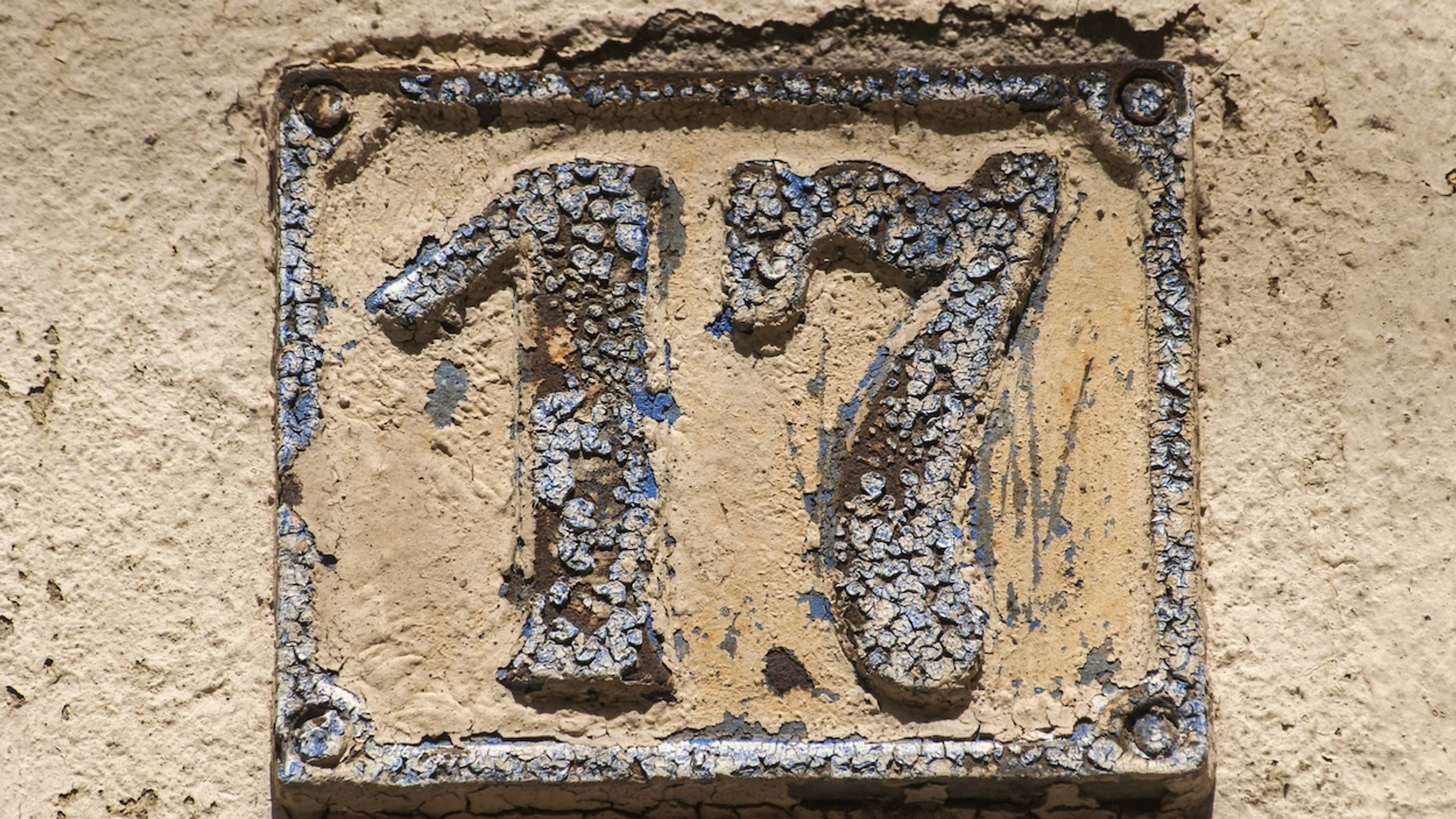
Image via Mental Floss
Why Romans Crossed the Street to Avoid XVII
In Italy today, you won't find a row 17 on Alitalia flights, and some hotels skip from floor 16 to floor 18. The number 17 carries the kind of dread that Americans reserve for 13, but the Italian superstition runs deeper, all the way back to ancient Rome and a peculiar feature of Roman numerals.
Write XVII as Romans did, and you can rearrange those letters to spell VIXI, which in Latin means I have lived, the past tense that appears on tombstones. It's the verb tense of the dead, a linguistic marker that life is finished. The association between XVII and death became so embedded in Roman culture that the number picked up layers of bad luck that persist two millennia later. Add to this the military disaster of the Battle of Teutoburg Forest in 9 AD, where Germanic tribes annihilated three Roman legions, the XVII, XVIII, and XIX. Those legion numbers were never reused, a permanent retirement that marked them as cursed.
What makes this superstition so enduring is how it combines language, military trauma, and numerology into a single cultural fear. The Romans weren't just being irrational. They were living in a world where symbols carried power, where the letters you wrote and the numbers you spoke could invoke forces beyond your control. That a modern Italian airline still honors this ancient dread tells you something about how deep history's roots go, how a Roman soldier's tombstone inscription can still affect where you sit on a flight to Milan.
Read the full story at Mental Floss →
Remembering that history's simplest stories are usually the most complicated, Your Time Capsule editor
— Time Capsule Editorial