In partnership with

Institutional Partner. Cash-Flowing Real Estate. Your Opportunity.

Invest in single-asset private real estate opportunities alongside a $12B AUM owner/operator. Lightstone invests 20% or more of the equity in every offering, with a $100K minimum investment for accredited investors.
Any message that includes model/proforma/targeted figures need a disclosure at the end such as: "This communication is for informational purposes only and does not constitute an offer to sell or a solicitation of an offer to buy any securities. Any such offer or solicitation will be made exclusively through the definitive offering documents. All investments involve risk of loss, including the potential loss of principal. Past performance is not a guarantee of future results. Any targeted returns or projections are forward-looking statements, are based on current assumptions, and are not guarantees of future performance. Actual results may differ materially.

Three stops in the past that feel oddly present: Gettysburg’s internal debate, a possible classroom tied to Aristotle and Alexander, and new clues that Celtic life reached deeper into today’s Poland than we once assumed.
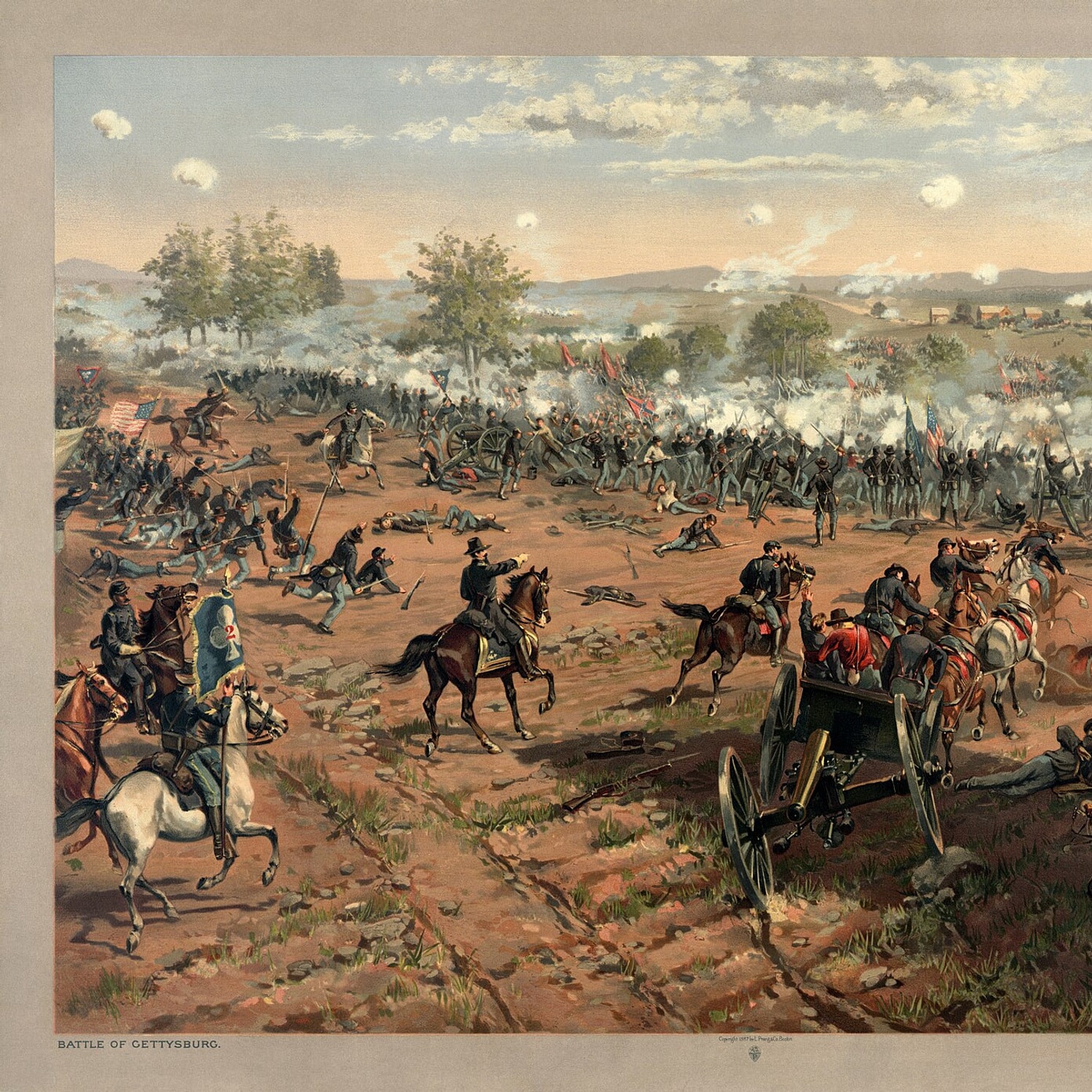
Image via World History Encyclopedia
Gettysburg in Longstreet’s Own Words: A Battle, a Disagreement, and the Anatomy of Blame
If you’ve ever wondered how history gets argued into shape, James Longstreet’s official account of Gettysburg is a front-row seat. Writing as a Confederate corps commander describing July 1–3, 1863, Longstreet doesn’t just narrate movements and orders; he records a strategic tension inside the Army of Northern Virginia. His report underscores that he urged Robert E. Lee to maneuver around Union positions rather than attack them head-on, a preference for repositioning and forcing the enemy to react instead of charging into prepared ground.
That matters because Gettysburg didn’t only become a turning point on the battlefield; it became a turning point in memory. In the decades after the war, Confederate veterans and writers fought over explanations, reputations, and legacies, and Longstreet often found himself cast as the convenient foil to Lee’s near-mythic image. Reading excerpts from the official action report is a reminder that “the story of Gettysburg” is not a single tale but a dossier of perspectives, each one shaped by what the writer saw, what they wanted to defend, and what they feared history might pin on them.
Source: World History Encyclopedia
Read the full story at World History Encyclopedia →
Hunting for Aristotle’s Classroom: A Landscape That Still Teaches
National Geographic asks a deceptively simple question: is this the place where Aristotle taught Alexander the Great? It’s the kind of question that pulls us into the real work of history, where the answer is rarely a clean yes or no. Instead, investigators weigh geography, ancient references, ruins, and the stubborn ambiguity of sites that have been lived in, rebuilt, and repurposed for more than two millennia.
What makes this story feel timely is how much we still crave physical anchors for big ideas. Aristotle and Alexander represent a towering bridge between philosophy and power, between the life of the mind and the life of empire. When we search for their shared classroom, we’re also searching for evidence that ideas have addresses, that education happens somewhere specific, and that a teacher’s influence can be traced in stone as well as in texts. Even if the site can only be called “probable” or “possible,” the pursuit itself is a lesson: history is often a map of best-supported guesses, carefully argued.
Source: National Geographic
Read the full story at National Geographic →
A Celtic Helmet in Poland: When an Artifact Nudges a Map to Redraw Itself
Fragments of a Celtic bronze helmet found at an Iron Age settlement in Poland are the kind of discovery that quietly rearranges what we think we know. The report, relayed via Phys.org and highlighted by Archaeology Magazine, points to evidence at the site of Łysa Góra that Celts may have lived there, not merely traded through or brushed past. One object doesn’t rewrite the whole story on its own, but certain objects arrive with a lot of historical gravity—especially distinctive pieces tied to identity, warfare, and status.
The bigger invitation here is to see ancient Europe less as a set of sealed cultural boxes and more as overlapping neighborhoods. “Celtic” in particular often gets flattened into a single western-European stereotype, when the truth is messier: shifting networks, migrations, intermarriage, imitation, and local communities adopting and adapting styles. A helmet fragment is small, but it speaks loudly about movement—of people, of ideas, of technology—and it reminds us that borders on modern maps can make the past seem more fixed than it really was.
Source: Archaeology Magazine
Read the full story at Archaeology Magazine →
That’s the capsule for today: one battlefield report that shows how memory competes with strategy, one possible classroom that reminds us ideas come from places, and one helmet fragment that nudges an old map into motion. See you tomorrow for more history hiding in plain sight.
— Time Capsule Editorial