Today’s Sponsor:
🎃 The market has its own tricks — and October is full of them. Sudden momentum, unusual activity, and stocks making big moves before anyone else notices. Don't get caught off guard.
GuyStocks delivers real-time momentum alerts 🕷️, flags unusual stock activity 👻, and gives you clear, actionable insights ⚡🔎 — so you're ahead of the move, not chasing it. And it's 100% free to join 🆓.
Join GuyStocks Free TodayBy clicking the button above, you agree to receive emails from GuyStocks.com. You can opt out at any time. — Privacy Policy

Three reminders that history isn’t just wars and speeches. It’s what people ate at dawn, how they lived through contagion, and how states survive moments that look impossible in real time.
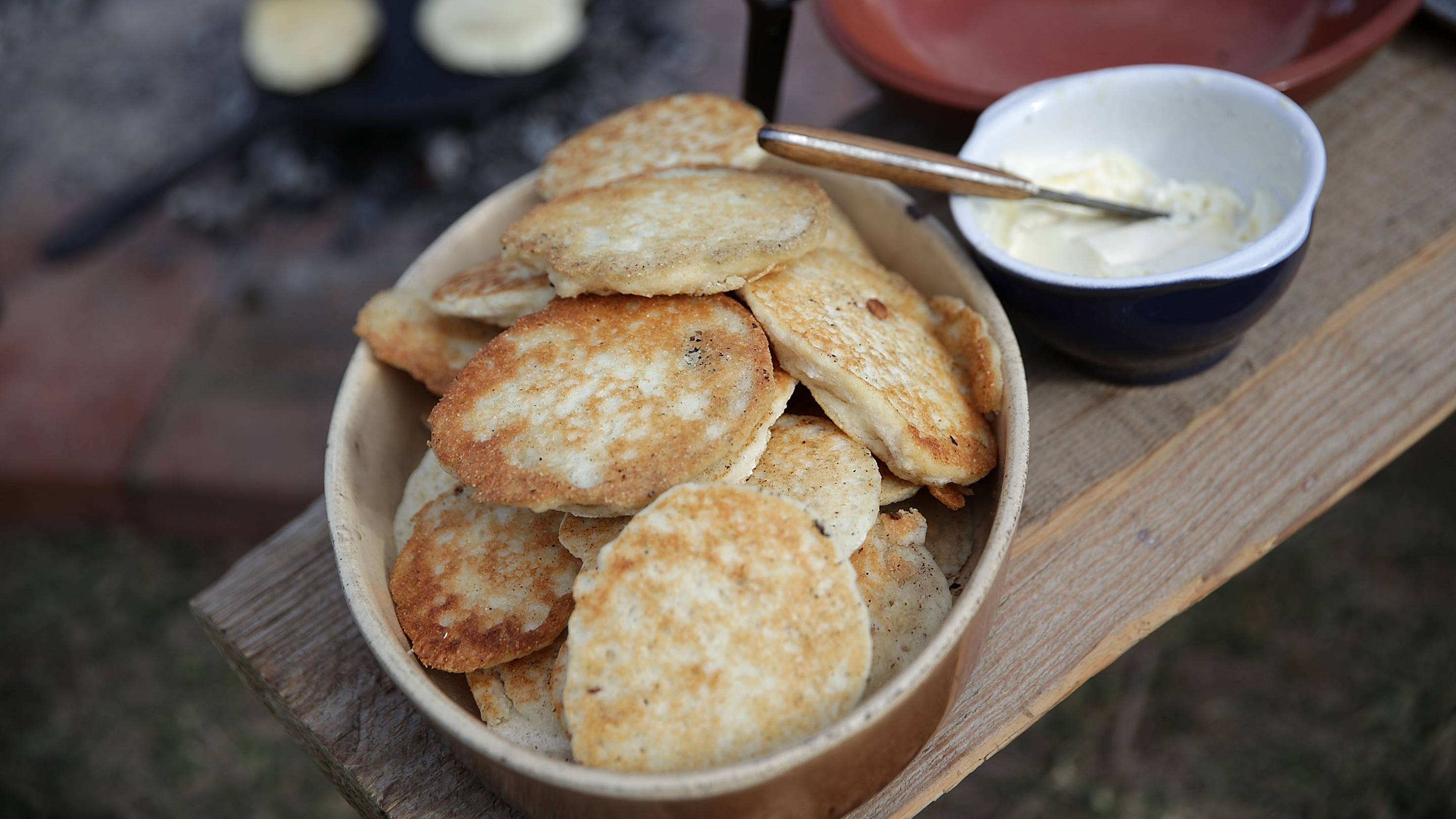
Image via Mental Floss
Before Pancakes Had a Box: Breakfast in Colonial Williamsburg
If you could step into an early-morning kitchen in colonial Williamsburg, you’d notice how much the day began with heat, labor, and whatever the household could reliably produce. Breakfast wasn’t a weekend treat; it was fuel. The Mental Floss piece walks through staples that would have felt familiar in purpose but not in form: porridge cooked at the hearth, simple breads, and hoecakes that could be made quickly on a hot surface. Sweetness, when it appeared, often came from honey or molasses rather than the refined sugars we take for granted now.
What’s striking is how breakfast reflected the colony’s entire food system. Seasonality mattered. Access mattered. A household’s morning table was shaped by what could be grown, milled, preserved, or traded nearby, and by the time it took to turn raw ingredients into something edible before work began. Even “quick” food demanded skills modern kitchens rarely require: managing a fire, timing a pot, and stretching grains or leftovers to feed a range of appetites.
Source: Mental Floss
Read the full story at Mental Floss →
Living Through a Tudor Plague Day: Rules, Rumors, and the Routine of Fear
The Tudor experience of plague wasn’t a single catastrophe so much as a recurring condition of life: an unwelcome visitor that returned, reshaped the calendar, and forced people to improvise rules in real time. History Today’s look at Tudor life in the time of plague highlights how ordinary rhythms were interrupted by extraordinary measures. Communities navigated closures, attempts at quarantine, and the social consequences of being suspected as contagious. In a world with limited medical understanding, people still recognized patterns of spread and tried, with mixed success, to separate the sick from the well.
What makes the Tudor story feel familiar is the blend of official response and household-level coping. Guidance came from authorities, but enforcement and survival happened locally: in crowded dwellings, in workplaces that could not simply pause, and in neighborhoods where information traveled as gossip as often as it did as policy. The article also underscores the emotional landscape of plague times: fear, resignation, and the search for meaning, whether through religion, folk practice, or the hope that the worst had finally passed.
Source: History Today
Read the full story at History Today →

Image via History Extra
Rome’s 197 BC Playbook: When the Enemy Was Bigger, They Got Smarter
In the second century BC, Rome faced a problem that would have rattled any rising power: an ambitious Seleucid king pushing into Europe with the kind of army that looked, on paper, like a force capable of remaking the Mediterranean. History Extra frames the moment in 197 BC as a looming showdown between the Roman Republic and a formidable rival, with the stakes extending far beyond a single battlefield. The question wasn’t only whether Rome could win a fight, but whether it could manage an entire strategic environment that was suddenly tilting against it.
The most revealing part of these Roman “what did they do next?” moments is that they often hinged on choices that don’t look like heroics at first glance. Rome’s strength was rarely just brute force; it was the ability to build alliances, isolate an opponent diplomatically, choose timing and terrain, and treat warfare as a political instrument as much as a military one. The article points to a republic that understood power as something you organize, not simply something you possess.
Source: History Extra
Read the full story at History Extra →
That’s today’s capsule. If you find yourself looking at the morning news and wondering, “Have we been here before?” the answer is usually yes—and the details are where the lesson lives.
— Time Capsule Editorial