History shows a clear pattern: the investors who recognized the exact inflection point in the dot-com boom pocketed 400–800% gains in 18 months. Those who spotted the same moment in cloud computing saw 300–600% returns. Based on 50 years of market data, that same moment is happening right now — and the acceleration phase has already begun.
This free 7-page report reveals where we are in the current megatrend cycle, why the next 18 months are critical, and how to position yourself before the window closes. Don't be the investor who enters too late.
Get the Free ReportBy clicking 'Get the Free Report' you are automatically subscribing to Darwin Investor Network and will receive a free subscription to the Chaikin PowerFeed newsletter. Unsubscribing is easy. Privacy Policy

Friday, July 24, 2026 — Three reminders that history isn’t just what happened; it’s who got to tell the story, who got left out, and what we’re still arguing over centuries later.

Image via History Extra
The Bayeux Tapestry comes (back) to England, and scholars are still reading between its stitches
The Bayeux Tapestry is heading to the British Museum for an exhibition, a homecoming of sorts for a work that has spent most of its long life in France while depicting one of England’s most consequential turning points: the Norman Conquest of 1066. On the surface, it’s a vivid, scene-by-scene epic of power changing hands. But as textile historian Gale Owen-Crocker explains, it’s also a carefully constructed political document — the kind medieval elites used when parchment was expensive, literacy was uneven, and images could do the work of argument.
Owen-Crocker digs into how the tapestry was made and what its choices suggest: which moments get spotlighted, which figures look heroic or suspect, and how small details can serve as commentary. Her provocative point is that the tapestry may contain a hidden “code” about tyranny and injustice — not just a straightforward victory narrative. That’s the part that feels very modern: we’re used to thinking propaganda is loud, but in the Middle Ages it could be quietly sewn into margins, symbolism, and who is granted dignity in the frame.
Seeing it in 2026, it’s hard not to connect the tapestry’s stitched storytelling to today’s battles over who controls public memory. The Bayeux Tapestry reminds us that “history” has always been edited, curated, and designed for an audience — and that a single object can hold more than one message at the same time, depending on who’s doing the looking.
Source: History Extra
Read the full story at History Extra →
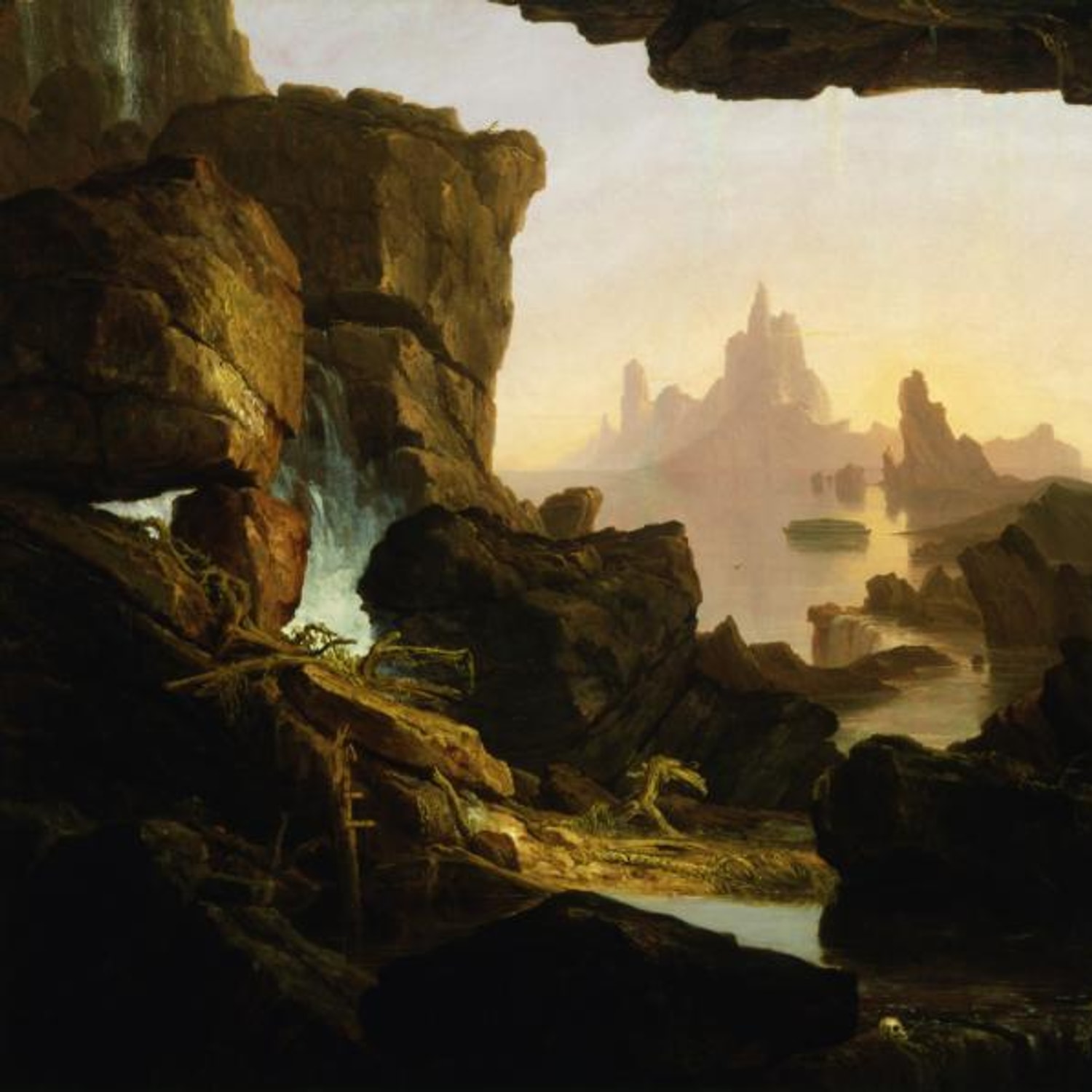
Image via World History Encyclopedia
Before Noah, there was Eridu: an ancient flood story built to explain a fragile world
The Eridu Genesis is often introduced as the oldest Mesopotamian text to describe a great flood — a predecessor to later flood narratives that echo across the ancient Near East. Preserved in fragments and reconstructed by scholars, it sits at the crossroads of creation myth, kingship lore, and disaster memory. In its world, floods aren’t just weather. They’re cosmic events tied to divine decisions and the precarious relationship between humans, rulers, and the gods.
World History Encyclopedia’s overview places the Eridu Genesis in the Sumerian cultural landscape, where river life meant abundance and danger in the same breath. A civilization built between the Tigris and Euphrates depended on water management, but it also lived with the reality that the rivers could erase harvests and cities in a season. When a society faces recurring catastrophe, it tends to build stories that make the catastrophe legible — not just as tragedy, but as a warning, a reset, or a lesson about order.
What makes the Eridu Genesis feel like a time capsule for us isn’t just that it’s old. It’s that it shows how people process disaster through narrative: by explaining why it happened, who was protected, and what the survivors owe the world afterward. Whether we’re talking about floods, fires, pandemics, or financial collapses, we still reach for the same tool Sumer used millennia ago: a story that tries to turn chaos into meaning.
Source: World History Encyclopedia
Read the full story at World History Encyclopedia →

Image via All That’s Interesting
Sue the T. rex: the fossil that became a courtroom drama about land, law, and who owns the past
Sue, the famous Tyrannosaurus rex fossil now towering over visitors in Chicago, didn’t go from badlands to museum hall on scientific excitement alone. As All That’s Interesting recounts, the story included a surprisingly intense legal fight over who actually owned the specimen after its discovery in 1990. The dispute wound through questions of property rights, agreements, and jurisdiction — and it ended with the fossil seized and ultimately sold at auction.
The headline detail that tends to stick is the price tag: $8.4 million in 1997, at the time an astonishing sum for a fossil, with McDonald’s helping the Field Museum purchase it. But the deeper lesson is about how science operates in the real world. Fossils aren’t just scientific objects; they’re also valuable commodities found on specific land, under specific laws, with specific communities involved. That makes them magnets for conflict: between discovery and ownership, public interest and private rights, scientific access and market forces.
There’s a familiar American pattern here. Again and again, the nation has wrestled with who gets to claim what the land holds — whether it’s minerals, artifacts, or human remains — and who is treated as a rightful steward versus an obstacle. Sue’s journey reminds us that “the past” isn’t automatically public property. It becomes public only when laws, institutions, and funding align to make it so.
Source: All That’s Interesting
Read the full story at All That’s Interesting →
That’s today’s Time Capsule. If you find yourself arguing about a headline this weekend, try asking the oldest question in the historian’s toolkit: who benefits from this version of the story — and what details are hiding in the margins?
— Time Capsule Editorial
|
🕰️ Don't Miss a Beat Get exclusive history stories & subscriber-only offers sent straight to your phone. Text-only extras you won't find in the newsletter. Join Our SMS List → |