Today’s Sponsor:
The midterms are behind us — but market uncertainty isn't. Options premiums can look attractive right now, yet the obligations behind them demand equal attention. Assignment risk, capped upside, and capital requirements don't disappear just because the premium looks good.
Our free Income Strategies with Options guide breaks down the mechanics clearly — obligations beside potential income, downside mapped before any trade. The premium is visible immediately; the obligation may arrive later. Read the guide before a tempting quote becomes a costly position.
Send Me the Free ReportBy clicking this link you agree to receive emails from StockEarnings and our affiliates. You can opt out at any time. Privacy Policy.

On this Veterans Day, we’re honoring the Americans who served by looking at how the holiday itself changed over time—then zooming in on a newly surfaced Martha Washington letter and the shipwreck stories that keep reminding us how fragile big plans can be.
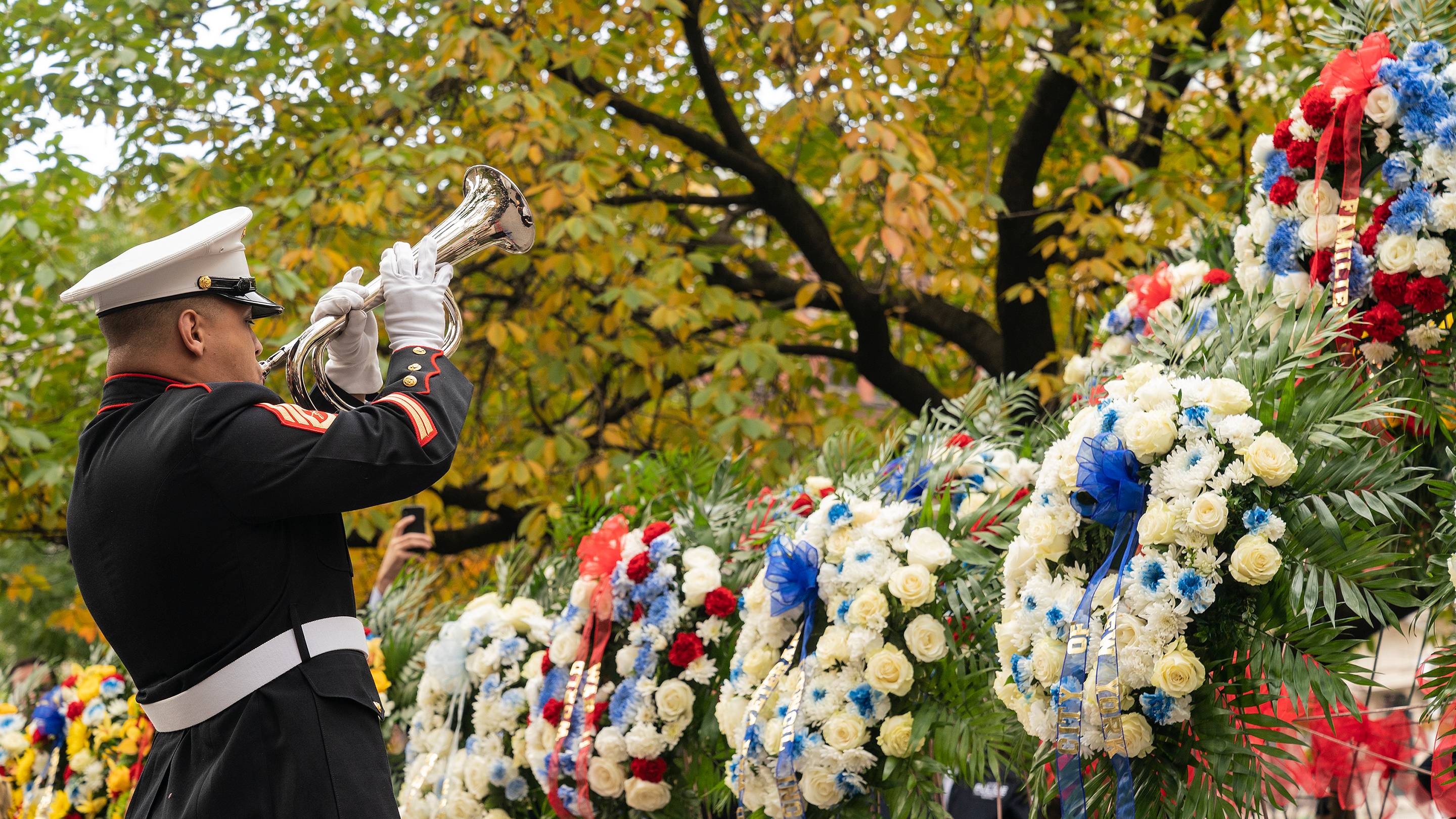
Image via Mental Floss
Armistice Day’s Original Promise—and How It Became Veterans Day
Before it was Veterans Day, November 11 was Armistice Day—a date chosen with surgical precision. World War I’s guns fell silent at “the eleventh hour of the eleventh day of the eleventh month” in 1918, and Americans (along with much of the world) tried to turn that moment into something more than a military milestone. The holiday began as a civic pause: a yearly reminder that peace could be declared, then defended—not just with armies, but with memory.
Over time, the meaning widened. As the United States fought new wars with new generations, the nation’s calendar faced a question that comes up often in American history: do we keep a commemoration tied to one event, or broaden it to reflect a longer national story? Armistice Day eventually evolved into Veterans Day, shifting emphasis from the end of a single war to an acknowledgment of all who served. On a day like today, that change reads less like a rebrand and more like a record of the twentieth century itself—how “the war to end all wars” didn’t, and how Americans kept trying to build a ritual that could hold both gratitude and grief.
In Today’s Time Capsule spirit, it’s worth taking a quiet moment to honor our heroes: not only the famous names or the dramatic battles, but the neighbors, relatives, and friends whose service reshaped their lives in ways the rest of us may never fully see.
Read the full story at Mental Floss →
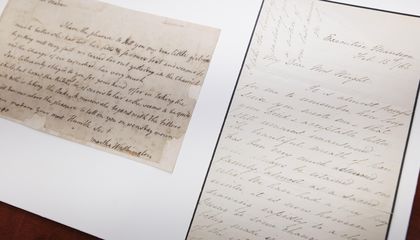
Image via Smithsonian Magazine
A Martha Washington Letter Reminds Us the Founding Era Had Sick Kids, Too
A rare surviving letter from Martha Washington has landed at the Library of Congress, and it pulls us away from marble-statue history into something much more human. Written in 1760, the letter discusses encouraging news about the health of four-year-old Martha Parke Custis—known as Patsy—who struggled with epilepsy. It’s the kind of document that changes the room temperature when you read about it: suddenly the founding era isn’t only political theory and plantation ledgers, but a mother’s worry and a child’s uncertain future.
Epilepsy in the eighteenth century was widely misunderstood and often stigmatized, and treatments ranged from ineffective to harmful. That context matters because it tells us what a family was up against—not just the medical reality of seizures, but the social and emotional burden that came with them. Letters like this are history’s quieter archive: not the big speeches, but the small updates that show what people feared, what they hoped for, and what they counted as “good news” when medicine had fewer answers.
There’s also a broader American pattern here. We often tell early U.S. history as a chain of public events—wars, elections, constitutions—yet daily life kept running underneath it all. This letter is a reminder that the people who later became symbols were first families managing ordinary crises. That doesn’t reduce their historical significance; it sharpens it by making their world feel recognizable.
Read the full story at Smithsonian Magazine →

Image via All That's Interesting
Why Famous Shipwrecks Never Stop Teaching Us the Same Lesson
A list of history’s most famous shipwrecks can feel like a catalog of spectacle—Titanic, Queen Anne’s Revenge, and other doomed vessels whose names still carry a chill. But shipwreck stories endure for a reason that goes beyond drama. They’re time capsules of risk: what people believed about technology, wealth, nature, and fate at the moment a ship left port. When the ship goes down, the era’s assumptions surface.
Across centuries, the details change—wood gives way to steel, sail to steam, charts to radios—but the recurring plot is stubbornly familiar. Overconfidence meets weather. Speed meets ice. War and piracy rewrite the rules of the sea. And sometimes it’s not one grand mistake, but a pileup of small ones: ignored warnings, flawed design, bad luck, leadership under stress. Shipwrecks become famous not only because of who was aboard, but because they expose how thin the line is between “unsinkable” and gone.
What makes these wrecks “haunting” isn’t just the loss; it’s the afterlife. Some become archaeological sites, others legends, others cautionary tales that reshape safety standards. In that way, shipwrecks sit in the same historical category as fires, floods, and factory disasters: tragedies that force societies to decide whether lessons will be learned in policy, or merely retold as stories.
Read the full story at All That's Interesting →
That’s the capsule for today. If you’re observing Veterans Day, I hope you find a moment for gratitude—and maybe a moment of curiosity about how we choose to remember. See you tomorrow with more history hiding in plain sight.
— Time Capsule Editorial