Today’s Sponsor:
Tax season creates hidden market shifts that can mislead investors. Refunds hit accounts, portfolios get rebalanced, and positions move to cover obligations — creating liquidity changes that make small-cap moves appear more meaningful than they actually are.
Our 2026 Market Flow Briefing reveals how tax-season liquidity affects market action, why current moves seem disconnected from fundamentals, and exposes one profitable setup emerging under these exact conditions.
Get the Free Briefing*We encourage readers to perform their own research and due diligence on any information we provide. By clicking the link you will automatically be subscribed to the Stock Wire News Newsletter.


Image via Popular Mechanics
The Great Pyramid’s Quiet Genius: Built Like a Physics Problem, Not Just a Tomb
New research and analysis highlighted this week argues that the Great Pyramid of Giza wasn’t only an architectural flex—it may also be an engineering system designed with surprisingly sophisticated physics in mind. Scientists have been revisiting how the pyramid’s internal chambers and materials interact with things like vibration, pressure, and energy transfer, suggesting the builders may have optimized the structure in ways that go beyond “stack rocks until it looks perfect.”
That’s a familiar story in the history of “ancient tech”: later generations assume early civilizations built by brute force alone, then slowly rediscover that careful measurement, material science, and observational astronomy were often doing more work than we gave them credit for. The Great Pyramid sits in the same long tradition as Roman concrete, Polynesian navigation, and Indigenous irrigation systems—cases where the real marvel is not mystery, but method.
Read the full story at Popular Mechanics →
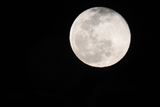
Image via Discover Magazine
Look Up This Week: May 2026’s Rare Blue Micromoon Is About to Peak
Skywatchers are getting a niche-but-lovely treat: a “Blue Micromoon” full moon in May 2026 that will peak soon—and it’ll look slightly smaller than many people expect. “Micromoon” means the full moon is happening when the Moon is near apogee, its farthest point from Earth, so it appears a bit reduced in size and brightness compared with a more famous “supermoon.” “Blue” doesn’t mean the Moon changes color; it’s a calendar quirk—typically the second full moon in a single month (or, in some definitions, an extra seasonal full moon).
Historically, odd moons like this mattered more than we remember. Farming calendars, religious observances, and maritime planning were built around lunar tracking, and “naming” unusual moons helped communities coordinate time before standardized clocks and national calendars. Even now, the language sticks—proof that long before we had apps telling us when to go outside, people were already building shared cultural memory around the night sky.
Read the full story at Discover Magazine →
/https://tf-cmsv2-smithsonianmag-media.s3.amazonaws.com/filer_public/ce/e4/cee42b31-1ef5-4563-ab1e-e5c28b2cb708/george-iii-statue.jpg)
Image via Smithsonian Magazine
A Revolution You Can Touch: A Museum Exhibit Lets Visitors “Topple” George III Again
A new exhibition is bringing one of New York City’s most electric Revolutionary moments back to life: the 1776 toppling of a statue of King George III by angry New Yorkers fired up by independence. The original event wasn’t just symbolic vandalism—it was political theater with real stakes, a public declaration that legitimacy had shifted. In the aftermath, the statue’s lead was famously repurposed into bullets, turning royal iconography into literal resistance.
The Smithsonian notes that the exhibition uses artifacts, immersive environments, and interactive elements—including a chance for visitors to reenact the takedown. It’s a smart reminder that the Revolution didn’t only happen in grand documents and battle maps; it happened in streets and crowds, in public gestures meant to be seen and retold. New York’s role, often overshadowed by Boston and Philadelphia in classroom narratives, comes through here as loud, contested, and deeply physical.
Read the full story at Smithsonian Magazine →
Until tomorrow—keep one eye on the headlines and the other on the footnotes.
— Time Capsule Editorial