While other sectors stall, AI investment is accelerating — showing up in earnings calls, corporate budgets, and real-world deployment. Capital is quietly concentrating around companies with clear demand and long-term relevance, and selective opportunities are forming right now.
A new research brief identifies 2 AI stocks trading under $15 that may be positioned for the next phase of growth — including key developments that could move these names in the months ahead.
Get the Free AI Stocks ReportBy following the link above, you're choosing to opt in to receive insightful updates from Investing Ideas Daily + 2 free bonus subscriptions! Your privacy is important to us. You can unsubscribe anytime. See our privacy policy for details.

Today we’re stepping into three different chambers of the past: Rome’s half-mythic kings, a Stone Age cave that still won’t give up its motive, and an American election that turned political math into national rupture. History doesn’t just tell us what happened; it shows us how people learned to justify power, explain violence, and choose sides.

Image via HistoryExtra
Rome’s Seven Kings: the stories that taught a republic how to think about power
Rome loved to say it hated kings. Yet its earliest identity is wrapped around them: seven rulers whose lives read like legend, morality play, and political instruction manual all at once. Historian Christopher Smith looks at how these king stories functioned less like a reliable timeline and more like a shared memory bank. The details blur, but the lessons stick: what a good ruler should build, what a tyrant will take, and what kind of people Romans imagined themselves to be.
What’s striking is how the kings’ tales become a language for later politics. Romans in the republic period could argue about leaders by reaching back to familiar characters: the builder, the lawgiver, the war leader, the despot. In other words, the kings weren’t only “before” Rome; they were a toolkit Rome used to interpret the present. You can see the pattern in many countries: when institutions feel fragile, people reach for origin stories to explain who deserves authority and what kinds of power should be feared.
Smith’s emphasis on myth and memory is a reminder that history isn’t only archives and dates; it’s also the narratives a society chooses to repeat until they harden into common sense. Rome’s kings helped define Roman identity long after Rome insisted it had moved on from monarchy. That tension between officially rejecting a kind of power and quietly depending on it for meaning is one of the oldest political habits in the book.
Source: HistoryExtra
Read the full story at HistoryExtra →

Image via Popular Mechanics
A cave, a cup made of skull, and a Stone Age question we still can’t answer
Archaeologists exploring ancient caves have uncovered remains that point to a grim episode: human skulls modified into cup-like vessels and bones bearing signs of intensive processing, including boiling. The physical evidence suggests more than a battlefield tragedy or accidental disturbance; it looks like deliberate, systematic treatment of bodies. Yet the most important piece is still missing, because the remains can tell us what happened, not why.
Cannibalism sits at the edge of our imagination, and that’s exactly why it’s so easy to misread. In different times and places, consuming human flesh has been tied to famine and survival, to ritual and warfare, to terror, humiliation, or attempts at spiritual incorporation. The cave evidence raises all those possibilities without settling on one. Skulls turned into cups could be utilitarian in a crisis, symbolic in a ceremony, or meant to send a message to enemies. The bones themselves don’t arrive with an explanation attached.
This story also highlights a larger truth about deep prehistory: we’re often reconstructing human motive from fragments left behind by people who never wrote a word. That makes the science both thrilling and humbling. Every cut mark is a clue, but the line between “eaten to live” and “eaten to mean something” can be hard to draw. And sometimes the most honest conclusion is the one that feels unfinished: the evidence is real, the act was real, and the motive remains an open mystery.
Source: Popular Mechanics
Read the full story at Popular Mechanics →
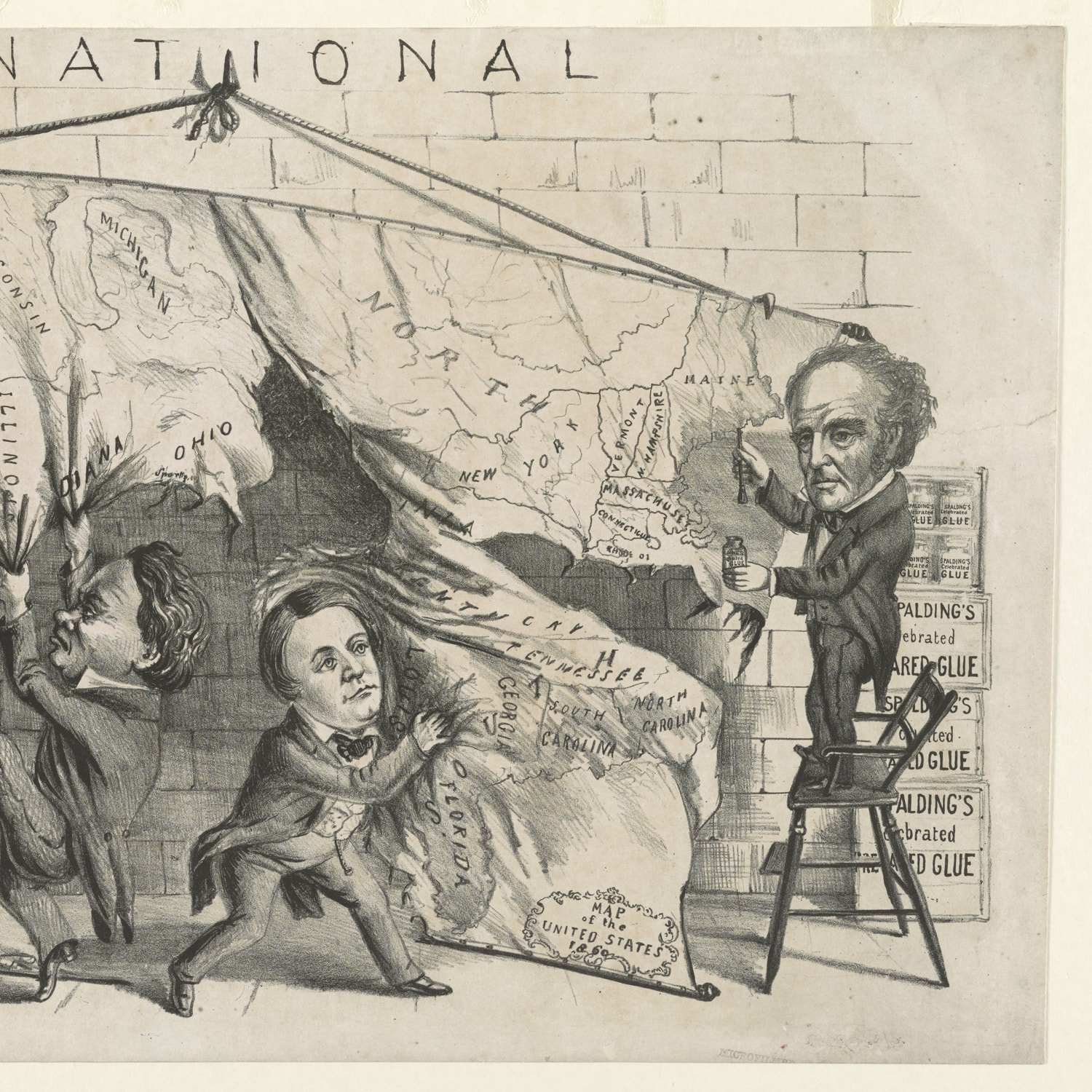
Image via World History Encyclopedia
The 1860 election: when the ballot box became the fuse
The US presidential election of 1860 is often remembered as a prelude to the Civil War, but it’s more accurate to see it as the moment America’s arguments about slavery finally outgrew the old political scaffolding. The nation was profoundly polarized, and the party system that had once contained sectional conflict fractured into regional camps. The result wasn’t just a victory for one candidate; it was a signal to millions of Americans that the country they thought they lived in was no longer negotiable.
World History Encyclopedia frames 1860 as one of the most consequential elections in US history because the stakes were existential. For many white Southerners, Abraham Lincoln’s win represented not simply policy disagreement but a loss of political control they believed was necessary to protect slavery. For many Northerners, the expansion of slavery into new territories threatened the republic’s future and the meaning of free labor. The election revealed a hard truth: when a society cannot agree on who counts as fully human and what rights are protected, “compromise” eventually stops functioning as a civic tool.
The sobering historical pattern here is that democratic mechanisms can become accelerants when legitimacy collapses. Elections are supposed to settle disputes peacefully, but they only work that way if the losers accept the outcome as binding and the winners understand the limits of their mandate. In 1860, the constitutional framework remained in place, but the shared national faith in that framework had already cracked. The votes were counted; then the country started coming apart.
Source: World History Encyclopedia
Read the full story at World History Encyclopedia →
That’s the capsule for today. If you find yourself wondering why modern politics leans so hard on origin stories, why some discoveries make us uncomfortable, or why elections sometimes clarify instead of resolve, you’re already doing the historian’s work. See you tomorrow.
— Time Capsule Editorial