That "Trump Bump" Social Security raise? Already gone. Medicare premiums, gas, groceries — they've swallowed every penny before it hits your account. Meanwhile, your benefits have already lost 13.7% of their purchasing power since 2016, and the system would need to raise checks by 15.7% just to break even. You're getting $81. You needed $296.
Central banks have been quietly buying one specific asset at the fastest pace in 50 years — and JP Morgan now sees it hitting $8,000. Smart retirees aren't waiting on the next COLA. They're protecting what's left right now. Get the free guide and see the 3 steps disciplined retirees are using to outrun the inflation Washington can't stop.
Get the Free Wealth Preservation GuideThis is an advertisement. If you no longer wish to receive our promotionals, please let us know. Or write to: 5005 Lyndon B. Johnson Fwy. Suite 350, Dallas, TX 75244

Friday, September 18, 2026 — Three historical snapshots that feel uncomfortably modern: a split-second decision that becomes a lifetime of rumor, a masterpiece made under protest, and a city turned into an experiment in industrial-scale destruction.

Image via All That’s Interesting
Titanic’s William Murdoch: The Night Watch That History Never Stops Replaying
When the Titanic struck the iceberg, someone had to be the person standing there in the moment where training meets terror. First Officer William Murdoch was on watch the night the ship met ice, and accounts credit him with ordering the evasive maneuvers meant to save the liner. It’s a sharp reminder that famous disasters don’t just “happen”—they arrive through a chain of ordinary duties, tiny timing windows, and human decisions made under pressure.
Murdoch’s story also shows what often comes after catastrophe: the fight over narrative. In the years that followed, his role became tangled in conflicting testimonies and rumors, including dark speculation about his final moments. That blend of heroism, blame, and uncertainty is familiar to anyone watching how modern tragedies get litigated in real time—not just in courts or inquiries, but in headlines, retellings, and pop culture. For Murdoch, the tragedy wasn’t only the sinking; it was how history can harden into a story that leaves little room for the messy truth of a night in the Atlantic.
Source: All That’s Interesting
Read the full story at All That’s Interesting →
Michelangelo’s Dirty Little Secret: He Hated the Sistine Ceiling While Making It
We tend to talk about the Sistine Chapel ceiling like it descended from heaven fully formed, the product of pure inspiration and serene genius. Michelangelo had a different version, and he put it in writing. Around 1509, in the middle of the work, he wrote a poem describing the physical misery of painting overhead: a twisted posture, paint dripping where it shouldn’t, and a frank contempt for the fresco process itself.
What makes the poem feel so modern isn’t just the complaint—it’s the way it punctures the myth of effortless greatness. Michelangelo wasn’t merely creating art; he was laboring, enduring, and resenting the conditions even as he produced something that would redefine Western visual culture. It’s a useful historical corrective in an age that sells us highlight reels: masterpieces often come from deadlines, discomfort, and private doubts, not constant inspiration.
Source: History Collection
Read the full story at History Collection →
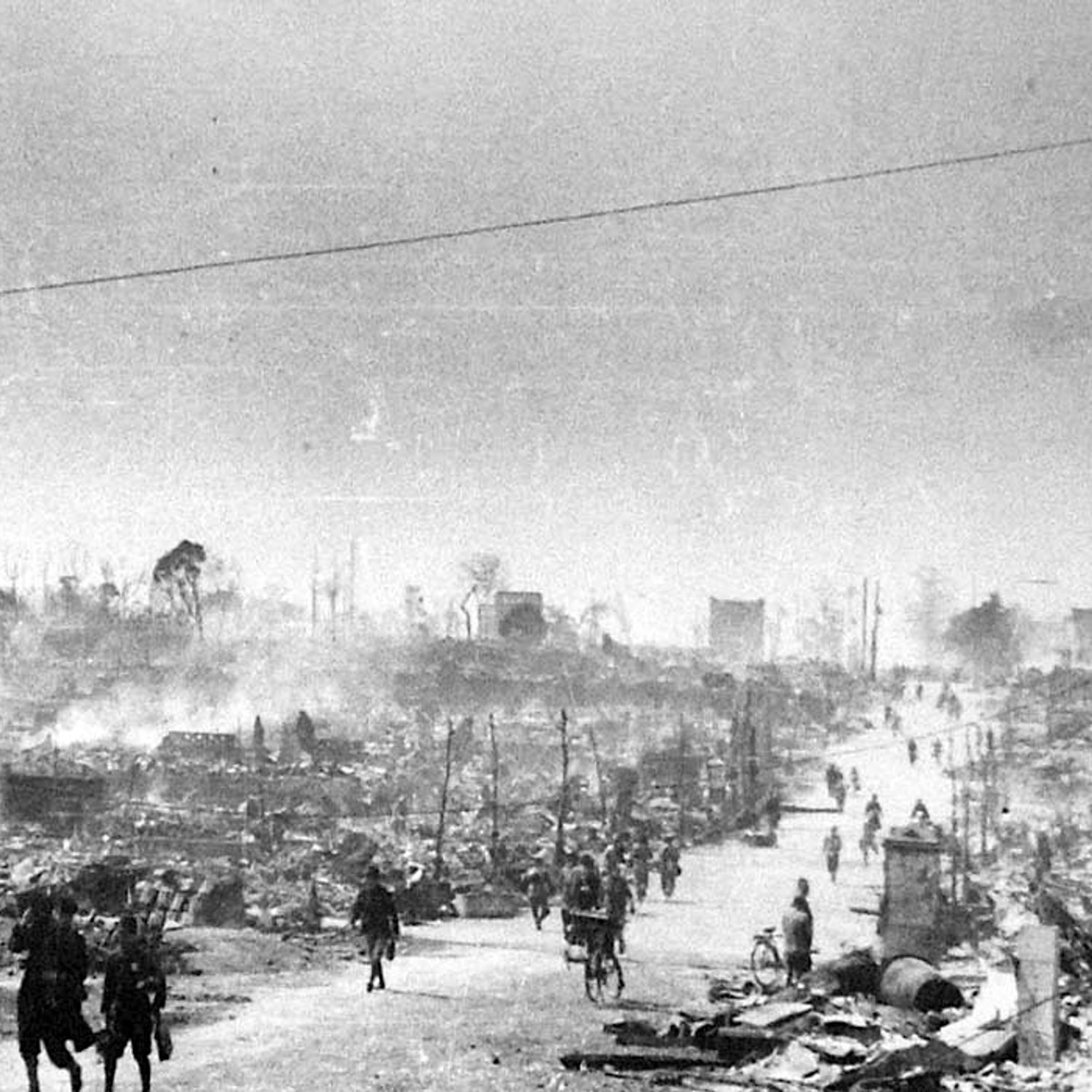
Image via World History Encyclopedia
Tokyo, 1945: The Night the Sky Became a Furnace
When people think of World War II air power, they often jump straight to the atomic bomb. But Tokyo’s destruction was also shaped by something both more familiar and, in its way, more terrifying: fire. The systematic bombing of Tokyo by US aircraft culminated in raids that used incendiaries to ignite massive urban firestorms, aiming to break Japan’s capacity and will to continue the war.
Napalm and other incendiary weapons exploited the reality of the city itself—dense neighborhoods, flammable materials, and tightly packed life. The result was not simply bombing, but a kind of engineered weather, where flames fed on wind and structure until the city became its own accelerant. This history sits at the heart of a recurring American question: what does it mean when technology makes it possible to destroy a city faster than anyone can comprehend, and strategy starts to speak in the language of inevitability?
Source: World History Encyclopedia
Read the full story at World History Encyclopedia →
That’s today’s Time Capsule. If you felt your sense of scale shift a little—from one officer’s split-second orders, to an artist’s aching spine, to a city reshaped by fire—that’s history doing its quiet work: reminding us that big outcomes are built from very human moments.
— Time Capsule Editorial