Forget trendy tech — the biggest income opportunities right now are hiding in plain sight. Our newest research has uncovered three high-yield dividend powerhouses generating billions in free cash flow: an energy infrastructure leader paying a 7.3% yield, a tobacco giant delivering an 8.6% dividend, and a consumer-finance specialist posting a massive 9.2% yield — all with conservative payout ratios built to last.
These cash machines are built to thrive even when markets turn choppy — and smart income investors are positioning right now, before this report goes public. Don't miss your window.
Download Your Free Report NowBy clicking the link above you agree to receive emails from StockEarnings and our affiliates. You can opt out at any time. Privacy Policy.

Tuesday, October 6, 2026 — Three stories where the ground itself kept the receipts: a Revolutionary War grave finally identified, a Civil War river stronghold that reshaped the West, and a Roman war god’s temple turning up where almost nobody expected it.
/https://tf-cmsv2-smithsonianmag-media.s3.amazonaws.com/filer_public/9f/f8/9ff8ea6a-ee2a-4a71-b3ae-277b9efbedd1/assets_ms1995144_000001_photo-2_-a-new-memorial-honoring-at-le-1f8aa4e57be365f2dfea350f2b05f5d0.jpg)
Image via Smithsonian Magazine
An Unmarked Revolutionary War Grave Finally Gives Up Its Names
Nearly 250 years after a hurried burial in Wilmington, Delaware, a long-anonymous grave is becoming something more than a footnote. Researchers have identified 28 Continental soldiers and at least 38 British soldiers believed to have been interred there, and a recent memorial ceremony honored them as individuals rather than as a faceless tally of the dead. In a war we often narrate through famous commanders and iconic documents, this is history leaning back toward the people who did the bleeding.
What makes this kind of identification feel so consequential is how it changes the scale of memory. The Revolutionary War is full of “unknowns” because records were messy, bodies were moved, and communities rebuilt on top of wartime landscapes. When historians and local officials restore names to remains, they’re also restoring relationships: to families who lost someone, to towns that carried a story for generations, and to the complicated reality that both sides’ dead were sometimes laid together when survival mattered more than symbolism.
Source: Smithsonian Magazine
Read the full story at Smithsonian Magazine →
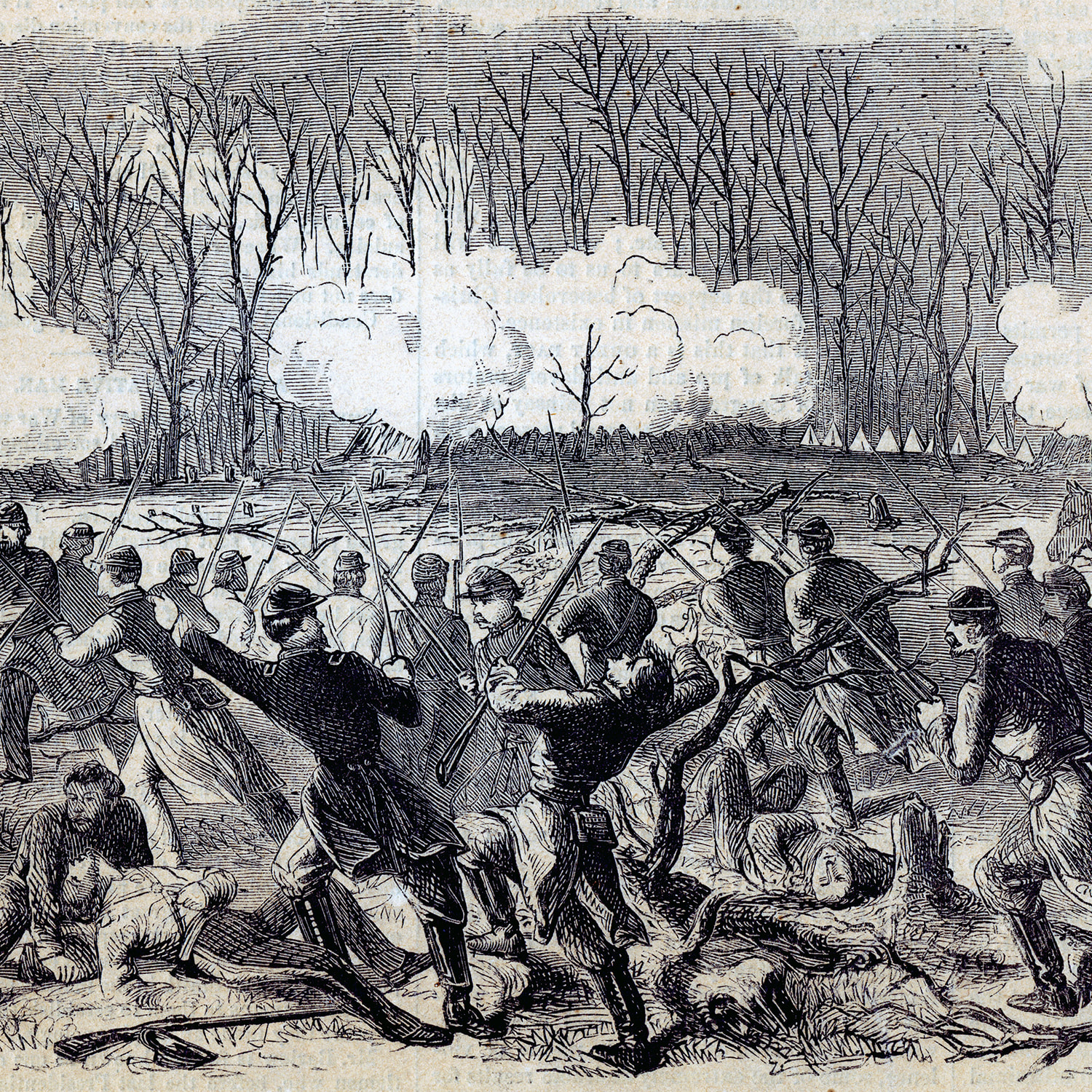
Image via World History Encyclopedia
Fort Donelson and the Union’s River-Key That Unlocked the West
In February 1862, Fort Donelson sat like a padlock on the Cumberland River near the Tennessee-Kentucky border, guarding a watery corridor into the Confederate heartland. Over six days of fighting, the Union victory there did more than add a win to the scoreboard: it pried open a route for federal forces to move deeper into Tennessee and beyond. In the Western theater, rivers weren’t scenery. They were highways, supply lines, and lifelines, and whoever controlled them could change the map without having to conquer every mile of land between.
Fort Donelson also helped define the war’s emerging logic in the West: aggressive campaigns aimed at mobility, logistics, and pressure, not just heroic stands. When one fortified position falls, the next one often becomes untenable; a river stronghold taken can force an entire region to reorganize its defenses. It’s a reminder that wars are frequently decided less by single “great battles” than by the cumulative collapse of options.
Source: World History Encyclopedia
Read the full story at World History Encyclopedia →

Image via All That’s Interesting
A Roman Temple to Mars Turns Up in Germany’s Forests, Quietly Rewriting the Borderlands
Deep in the mountain forests of central Germany, archaeologists have uncovered the remains of an ancient Roman temple dedicated to Mars, the god of war. The structure’s footprint is strikingly solid for something that sat hidden for nearly two millennia: roughly 16 feet long, with stone walls more than a foot and a half thick. Discoveries like this can feel almost impossible because they reveal how much can remain unseen in familiar landscapes—sometimes just inches below the surface.
The bigger story here is what a Mars temple is doing in this particular setting. Temples aren’t just religious spaces; they’re statements. They mark presence, authority, and identity—especially in frontier regions where cultures meet, trade, clash, and borrow from each other. A sanctuary to Mars suggests not only spiritual practice but also the political and military realities of Rome’s northern reach: soldiers, roads, supply networks, local alliances, and the Roman habit of planting symbols of power in places that were never as “outside the empire” as our simplified maps imply.
Source: All That’s Interesting
Read the full story at All That’s Interesting →
That’s today’s capsule: the past isn’t gone so much as waiting—under forests, beside rivers, and in the places we once labeled “unknown.” See you tomorrow with more history hiding in plain sight.
— Time Capsule Editorial