With government debt soaring and inflation still biting, smart investors aren't waiting for volatility to hit — they're preparing now. The Gold Wealth Blueprint breaks down exactly how gold has historically shielded portfolios during periods of fiscal strain and market uncertainty.
Inside, you'll discover why gold moves differently than paper assets, how to use it as a practical hedge, and how to size your exposure without overcommitting. It's concise, actionable, and free — but don't sit on it.
Get the Free Gold Wealth BlueprintBy following the link above, you're choosing to opt in to receive insightful updates from Investor News + 2 free bonus subscriptions. Your privacy is important to us. You can unsubscribe anytime. See our privacy policy for details.

Three dispatches from the past: a pair of letters that foreshadowed civil war, the farm animals that quietly powered a millennium of work, and a Mumbai landmark that still tells time for a city built by many hands.
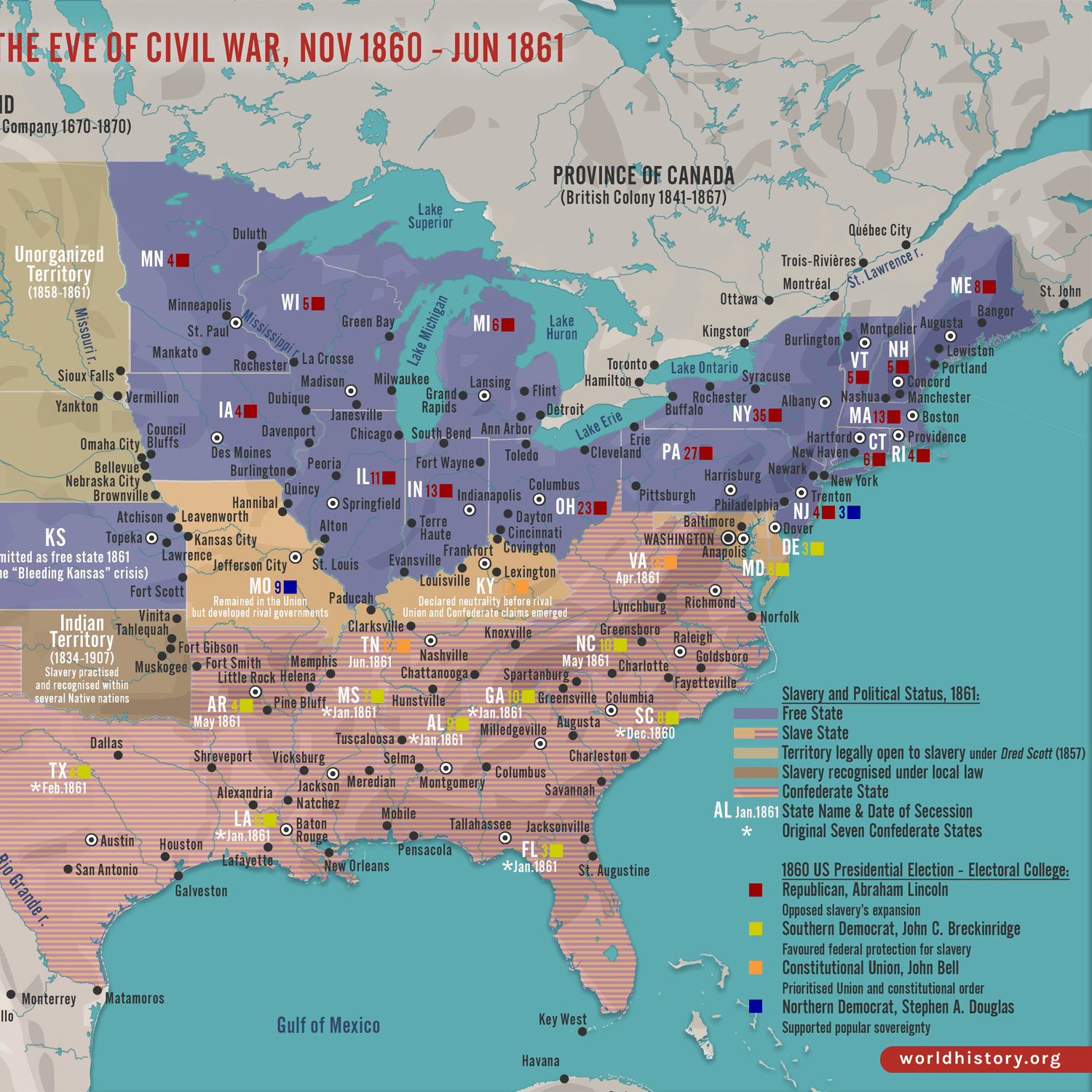
Image via World History Encyclopedia
Before the cannons: two letters that show the Civil War’s fault lines were already mapped
It’s tempting to think the American Civil War arrived like a sudden storm in 1861. But the correspondence highlighted in this account makes the build-up feel more like a long, grinding weather pattern: pressure systems forming, shifting, and colliding over decades. In letters exchanged by A. Nicholas and J.M. McCue, sectional identity isn’t a last-minute invention. It reads like a habit of mind, a way of sorting the nation into “us” and “them” well before shots were fired.
What’s striking is how familiar the underlying mechanics feel. Even at the Constitutional Convention, Americans were already arguing over the balance of power between regions with different labor systems, economies, and political interests. The North-South divide wasn’t only about culture; it was about who would control federal policy, how new states would be admitted, and what kind of future the republic would normalize. These letters are a reminder that wars often begin as paperwork: arguments, compromises, and resentments that accumulate until they stop fitting on the page.
Source: World History Encyclopedia
Read the full story at World History Encyclopedia →

Image via Discover Magazine
The animals that built the medieval economy: cattle first, horses later
When we picture medieval farming, it’s easy to imagine a timeless scene: a plow, a field, and a few indistinct animals doing indistinct work. The bone evidence behind this story tells a more precise, more human tale. Across about 1,000 years, livestock remains reveal how farmers and communities made strategic choices about which animals to raise, how long to keep them alive, and what kind of labor and wealth they could extract from each body.
One of the quiet surprises is longevity: medieval farmers kept cattle alive longer than many of us might expect, suggesting cattle weren’t just meat-on-the-hoof. They were working capital, literally power for pulling and hauling, plus a steady supply of secondary products like milk. Over time, as agricultural techniques and demands shifted, horses increasingly took on more fieldwork, while sheep played a major role in fueling the wool trade. It’s a useful reminder that “technology” isn’t only machines; sometimes it’s an animal, a breeding choice, and a decision about what to feed through winter.
Source: Discover Magazine
Read the full story at Discover Magazine →
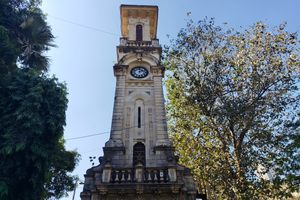
Image via Atlas Obscura
A clock tower at a garden gate: Mumbai’s timekeeping monument to trade, philanthropy, and public space
At the entrance to one of Mumbai’s oldest public gardens and zoo, a clock tower rises like a piece of civic punctuation: a way of saying, you’re entering a shared place. The David Sassoon Clock Tower sits at the threshold of what was once called Victoria Gardens (today Veermata Jijabai Bhosale Udyan), and its presence hints at how colonial-era cities often grew through a mix of imperial branding, local labor, and philanthropic money from prominent families.
Clock towers aren’t just decorative. Historically, public timekeeping has been about coordination: trains, factories, school hours, market routines, and the daily choreography of dense urban life. In port cities like Mumbai, where global commerce met local neighborhoods, “official” time could feel like an instrument of modernity and control, but also a practical public good. The tower’s continued visibility today invites a layered reading of the city’s past: who built the institutions, who benefited from them, and how public spaces outlast the names and regimes that once claimed them.
Source: Atlas Obscura
Read the full story at Atlas Obscura →
That’s today’s capsule. If you find yourself staring at a headline and thinking, “Haven’t we been here before?” you’re not imagining it. History rarely repeats neatly, but it does rhyme in the details we forget to look for.
— Time Capsule Editorial