Today’s Sponsor:
While other sectors stall, AI investment is accelerating — showing up in earnings calls, corporate budgets, and real-world deployment. Capital is quietly concentrating around companies with clear demand and long-term relevance, and selective opportunities are forming right now.
A new research brief identifies 2 AI stocks trading under $15 that may be positioned for the next phase of growth — including key developments that could move these names in the months ahead.
Get the Free AI Stocks ReportBy following the link above, you're choosing to opt in to receive insightful updates from Investing Ideas Daily + 2 free bonus subscriptions! Your privacy is important to us. You can unsubscribe anytime. See our privacy policy for details.

Happy Friday, and wishing you a safe, bright, and genuinely joyful Fourth of July weekend. With the 250th anniversary of the United States on the horizon, this year’s celebrations feel like more than summer tradition—they’re a rehearsal for a national milestone. Today we’re opening the Time Capsule on three Fourth-of-July stories: the flag as a living symbol, the wonderfully strange ways Americans have celebrated, and the surprisingly complicated question of whether we picked the “right” day to mark independence.
/https://tf-cmsv2-smithsonianmag-media.s3.amazonaws.com/filer_public/bf/0f/bf0f1973-e368-46ec-bbbd-dae0ac4a59b8/1_-f31d47e6-236a-46a4-adc3-a53e18f77783.jpg)
Image via Smithsonian Magazine
Old Glory in the Wild: 15 Images That Show How the Flag Became a National Habit
The American flag shows up everywhere on the Fourth—porches, parade routes, ballfields, boats, and backyard fences—and it can feel so routine that we forget how recent some of that ubiquity really is. Smithsonian Magazine’s photo-rich celebration of the stars and stripes is a reminder that the flag isn’t just a static emblem; it’s a changing artifact that Americans have carried into war, protest, mourning, victory, and everyday life. Seen through historic images, the flag becomes less of a decoration and more of a witness.
Historically, the flag’s meaning has always been contested and renewed. In the early republic, allegiance was often local—to a state, a town, a region—and national symbols had to be taught, repeated, and ritualized before they felt natural. Over the 19th and 20th centuries, as the country expanded, fought civil wars, absorbed waves of immigration, and built mass public schooling, the flag grew into a kind of visual shorthand for belonging. That’s part of why, as we near America’s 250th, these images land with extra weight: they show the flag not as one idea, but as a canvas Americans keep rewriting.
Read the full story at Smithsonian Magazine →
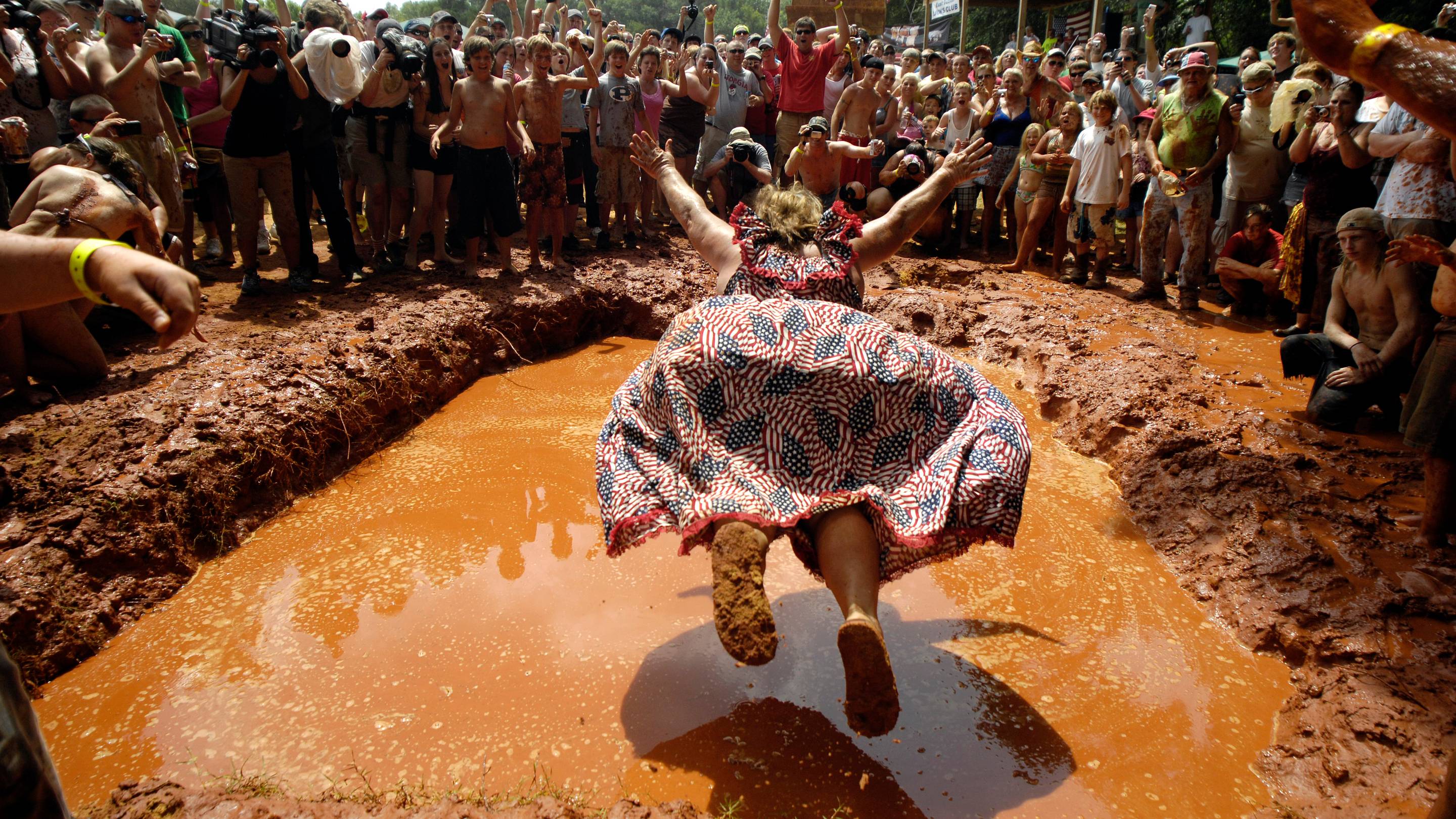
Image via Mental Floss
The Fourth of July Was Never Just Fireworks: America’s Most Unusual Traditions, Revisited
Mental Floss rounds up some of the most unusual Fourth of July traditions in U.S. history, and it’s a delightful reminder that national holidays are always a bit improvised. We like to imagine Independence Day celebrations as timeless—a familiar script of parades, speeches, grills, and skybursts—but Americans have experimented with the Fourth in ways that were sometimes earnest, sometimes absurd, and often very revealing about the era. If you want proof that public memory is something communities actively manufacture, the holiday calendar is a great place to look.
What stands out across these odd traditions is how the Fourth has been used to negotiate identity: who counts as “the people,” what values deserve spotlighting, and which anxieties need defusing through spectacle. The 19th century, in particular, loved a public ritual—orations that doubled as political arguments, civic competitions that turned patriotism into sport, and community traditions that made the nation feel tangible in places far from Philadelphia. Even the strangest customs share a purpose: they turn a big, abstract story into something you can do with your neighbors on a specific day.
Read the full story at Mental Floss →

Image via HistoryExtra
Are We Celebrating Independence on the “Wrong” Day? The Calendar Problem Behind July 4
HistoryExtra poses a question that has nagged historians (and trivia lovers) for generations: is July 4 actually the best date to commemorate American independence? The story hinges on a deceptively simple fact—the Declaration of Independence was approved, debated, announced, printed, and signed on different days, depending on which action you count and which documents you trust. National holidays often look inevitable in hindsight, but they’re usually the product of choices, accidents, and the slow formation of tradition.
In the 1770s and early 1780s, Americans didn’t uniformly agree on what, exactly, they were celebrating. Was it the vote for independence, the public proclamation, or the moment the words became official on paper? Over time, July 4 won out because it attached the holiday to a physical artifact—the printed Declaration with its date—and to a clean story people could repeat. This is how civic memory works: a complicated chain of events gets anchored to a single, teachable moment. And once communities begin celebrating that moment year after year, the ritual becomes its own form of truth.
Read the full story at HistoryExtra →
However you’re marking the Fourth—quiet morning coffee, noisy parade curb, or a simple flag on the porch—I hope it gives you a small sense of connection to all the Americans before us who tried to turn big ideals into everyday life. See you next time in the Time Capsule.
— Time Capsule Editorial