Today’s Sponsor:
America's national debt has blown past $40 trillion — and we're adding another trillion every five months. Interest payments alone now top $1 trillion a year, meaning borrowed money is paying interest on borrowed money. Economists call this a debt death spiral, and your retirement savings could be caught in the middle.
A new free report reveals the three ways governments escape a debt spiral, how purchasing power quietly erodes, and exactly how to move a portion of your savings into a financial safe haven before it's too late. No cost. No obligation. Delivered to your inbox in minutes.
Get the Free Debt Death Spiral ReportThis is an advertisement from American Alternative Assets. If you no longer wish to receive these promotions, unsubscribe here. American Alternative Assets | 21700 W Oxnard St, Suite 850, Woodland Hills, CA 91367.

Monday, October 26, 2026. Three reminders that the past is never really past: it’s under our feet, in our language, and sometimes sealed in ash waiting for new tools to listen again.
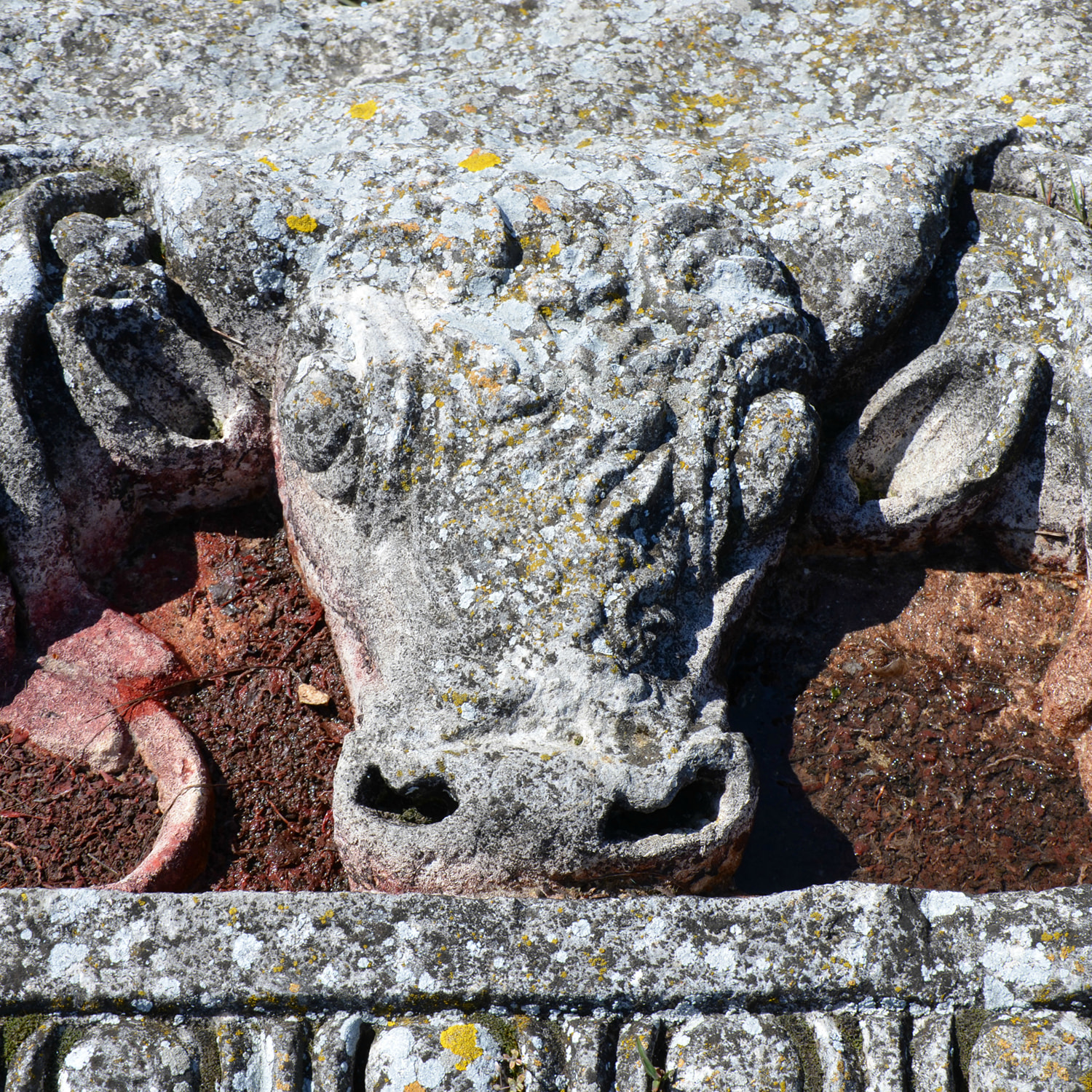
Image via World History Encyclopedia
Rome’s Bulgarian footprint: the empire’s frontier you can still walk today
When people picture the Roman world, they often jump straight to Italy, Gaul, or Britain. But Roman Bulgaria sat right in the empire’s strategic heartbeat: the Balkans, wedged between the Black Sea and the Aegean, with Asia Minor just beyond. This was not a quiet backwater. It was a hinge region where roads, armies, trade, and culture moved constantly, and where the Danube frontier forced Rome to think like a defensive superpower.
The World History Encyclopedia’s tour of ten Roman sites in today’s Bulgaria is a reminder that “Roman” isn’t just a style of ruins; it’s an infrastructure story. Amphitheaters, baths, city plans, fortifications, and long-lived urban centers show how Rome tried to hold territory by building it into something legible and governable. In a place shaped by border pressure and fast-moving threats, stone became policy: walls to slow enemies, roads to move troops, and cities to anchor administration. Visiting these sites is like reading the empire’s playbook in the original margins.
Source: World History Encyclopedia
Read the full story at World History Encyclopedia →

Image via All That’s Interesting
“Run the gauntlet” didn’t start as a metaphor. It started as punishment.
We use “run the gauntlet” casually now, for everything from a tough meeting schedule to navigating online criticism. But the phrase comes from a harsher place: a militarized form of corporal punishment in which an offender was forced to pass between two lines of people who struck them as they went. What’s left in the modern idiom is the structure of the ordeal: forward motion through a corridor of consequences.
The history matters because it shows how language can sanitize what it inherits. Over time, a ritual of pain becomes a figure of speech for “a bunch of hurdles,” and the body disappears from the story. But the phrase’s persistence also reveals something about human social life: groups have long enforced norms through public tests, with onlookers playing an active role. Today’s “gauntlets” are usually reputational, bureaucratic, or psychological rather than physical, yet the old template remains: a narrow passage, a watching crowd, and the expectation that you’ll take your lumps and keep moving.
Source: All That’s Interesting
Read the full story at All That’s Interesting →
AI is reopening Herculaneum’s library, one invisible letter at a time
In 79 AD, Mount Vesuvius didn’t just bury towns. At Herculaneum, it sealed a library at the Villa of the Papyri under ash and heat, carbonizing roughly 1,800 scrolls into fragile black cylinders. For centuries, the tragedy has been that we knew there were texts inside, but any attempt to unroll them risked destroying them. It’s one of history’s cruelest locks: a readable past trapped in an unreadable form.
Now the lock is shifting. Using AI-assisted techniques and “virtual unrolling,” researchers are learning to detect the subtle ink traces and material patterns inside the scrolls without physically opening them. The breakthrough isn’t just technological; it’s historical in the deepest sense. A buried library is more than a collection of words. It’s a snapshot of what people valued enough to copy, store, and live with. If these texts become legible, we don’t just add new titles to a list of ancient works. We restore voices that were mid-sentence when disaster hit, and we get a rarer view of everyday intellectual life in the Roman world beyond the greatest hits.
Source: History Collection
Read the full story at History Collection →
That’s the capsule for today. If you could “virtually unroll” one moment in American history to see what people really thought in real time, which year would you pick—and why?
— Time Capsule Editorial