With government debt soaring and inflation still biting, smart investors aren't waiting for volatility to hit — they're preparing now. The Gold Wealth Blueprint breaks down exactly how gold has historically shielded portfolios during periods of fiscal strain and market uncertainty.
Inside, you'll discover why gold moves differently than paper assets, how to use it as a practical hedge, and how to size your exposure without overcommitting. It's concise, actionable, and free — but don't sit on it.
Get the Free Gold Wealth BlueprintBy following the link above, you're choosing to opt in to receive insightful updates from Investor News + 2 free bonus subscriptions. Your privacy is important to us. You can unsubscribe anytime. See our privacy policy for details.

Three very different mysteries — a playwright’s quiet politics, a capital city’s final catastrophe, and a manuscript no one can read — all ask the same question: what gets smuggled into the record, and what gets erased?

Image via History Extra
Was Shakespeare Signaling a Rebellion? A New Read of Hidden Politics on the Stage
New research argues that Shakespeare may have tucked a pointed political message into one of his most famous plays — not as a loud pamphlet, but as something closer to a knowing wink for the right audience. The claim centers on support for the Earl of Essex, a powerful and controversial nobleman whose career spiraled into open defiance of Queen Elizabeth I. If the argument holds up, it suggests Shakespeare wasn’t just reflecting the politics of his day; he was navigating them with the careful instincts of someone who understood how dangerous a sentence could be.
It’s worth remembering how political theater already was in Elizabethan England. Plays weren’t private readings; they were mass entertainment in a city where rumor traveled faster than official news, and where the state watched closely for sedition. The stage could function like today’s talk shows, satire, and social media threads rolled into one — a place where ideas moved through metaphor because speaking plainly could cost you your livelihood, your freedom, or your life. That’s why the idea of hidden symbols matters: when the law punishes direct criticism, culture becomes a code.
Source: History Extra
Read the full story at History Extra →
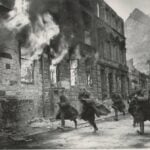
Image via All That’s Interesting
The Battle of Berlin: When a City Became the Last Battlefield of an Empire
In April and May of 1945, Berlin became the war’s brutal endgame — a final, compressed violence that swallowed soldiers and civilians alike. The battle ended with the fall of Nazi Germany and Adolf Hitler’s suicide, but the human cost is hard to hold in the mind: roughly 125,000 civilians died in the fighting and its aftermath. It’s one of those historical numbers that risks becoming abstract until you remember what it represents: households trapped without power, hospitals overwhelmed, streets turned into front lines, and people making impossible decisions by candlelight.
Berlin’s last stand also shows how wars don’t end neatly when the outcome is obvious. Even after Germany’s defeat was militarily inevitable, the regime fought on, pulling the city into a catastrophic siege. History keeps teaching this lesson: leaders who build their legitimacy on total control often struggle to accept any ending other than absolute victory — and when the end comes anyway, they may try to take the world around them down with them. The Battle of Berlin is a reminder that the final chapter of a conflict can be the most lethal, precisely because it’s driven by desperation, fear, and collapse.
Source: All That’s Interesting
Read the full story at All That’s Interesting →
The Voynich Manuscript: 600 Years of Experts Staring at a Page That Won’t Speak Back
The Voynich Manuscript looks like it should yield to effort. It’s handwritten in an unknown script by someone with a steady, practiced hand, and it’s filled with illustrations that feel tantalizingly close to recognizable — plants that are almost botanical, diagrams that are almost scientific, scenes that are almost medical. And yet for roughly six centuries, nobody has been able to read it. Not classicists, not cryptographers, not modern teams armed with computers and statistical tools. It sits in that uncomfortable category of historical objects that refuse to be solved on demand.
Part of what makes the Voynich so fascinating is that it forces humility into the story of knowledge. We like to imagine the past as a puzzle we can always finish if we just bring better methods. But history is also full of lost keys: languages that vanished, codes that depended on a context we no longer share, and texts that might be meaningless by design. The manuscript keeps raising the same questions: Is it an enciphered real text? A constructed language? A clever hoax that simply outlasted its own prank? Or something in between — a work whose meaning depended on a community that disappeared?
Source: History Collection
Read the full story at History Collection →
That’s the Time Capsule for this Thursday. If there’s a thread running through today’s stories, it’s this: the past is never just what was said aloud. Sometimes it’s what had to be whispered, what got buried under rubble, or what was written down in a script no one can quite bring back to life. See you next issue.
— Time Capsule Editorial