In partnership with

Speak naturally. Send without fixing.

Wispr Flow turns your voice into clean, professional text you can send the moment you stop talking. No rough transcription you have to clean up. Actual polished text, ready for email, Slack, or any app.
Speak the way you think. Go on tangents. Change your mind mid-sentence. Flow strips the filler, fixes the grammar, and gives you text that reads like you spent five minutes writing it.

Three reminders that history isn’t just what happened — it’s what was hidden, what was misread, and what we build when we’re trying to remember who we are.

Image via Popular Mechanics
The Wiretap on the Ocean Floor That Worked — Until a Human Weak Link Snapped
For about a decade during the Cold War, the U.S. pulled off a kind of espionage that sounds like science fiction but was more like patient engineering: a listening device installed on a Soviet underwater communications cable. Operation Ivy Bells depended on quiet logistics and a willingness to think three-dimensionally about intelligence gathering. Instead of chasing messages through the air, it went to where the Soviet Union assumed it was safest — deep under the sea, far from prying eyes, in a place where the ocean itself feels like security.
What makes the story sting is that the operation wasn’t undone by Soviet counter-technology so much as by something far older than sonar: personal vulnerability. According to the account, an ex-NSA employee burdened by debt ended up selling the secret, turning an operation built on stealth into a cautionary tale about trust. It’s a pattern you can trace through American intelligence history, from the early Cold War onward: the most elaborate systems tend to fail at the level of incentives, access, and ordinary human desperation.
Source: Popular Mechanics
Read the full story at Popular Mechanics →
Caracol’s Royal Tomb Is Rewriting the Maya Story We Thought We Knew
In Belize’s Chiquibul forest, Caracol has been quietly arguing with textbooks for decades. Archaeologists working at the site keep turning up evidence that complicates the old, tidy story of the Classic Maya — the one that often leans on a familiar set of assumptions about how cities rose, who held power, and what collapse looked like. The discovery of a 1,700-year-old royal tomb adds new weight to that argument, suggesting political reach, ritual practice, and elite networks that don’t fit the simplified version many of us learned.
What’s especially striking is how Caracol forces a wider re-think, not just a single correction. A royal burial isn’t just a dramatic find; it’s a filing cabinet of clues — about trade contacts, legitimacy, violence, diplomacy, and the way rulers wanted to be remembered. And Caracol’s long record of surprises is a reminder that the past doesn’t sit still. Every generation inherits a story about ancient America, then has to revise it when the ground offers up something new.
Source: History Collection
Read the full story at History Collection →
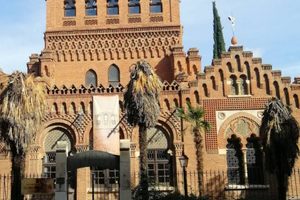
Image via Atlas Obscura
A Palace by the Train Station: Laredo’s Love Letter to Spain’s Layered Past
Step out of the train station in Alcalá de Henares and you can spot it almost immediately: a richly patterned Neo-Mudéjar brick building that looks like it wandered in from another century and decided to stay. Laredo’s Palace isn’t the kind of landmark that hides behind velvet ropes and grand formalities. It feels more like a personal project scaled up to architectural ambition — a place where someone tried, brick by brick, to make history visible.
The style matters. Neo-Mudéjar isn’t just decoration; it’s a revival that points back to medieval Iberia, when Islamic, Christian, and Jewish influences shaped Spanish art and building in ways that can’t be neatly separated. In the 19th and early 20th centuries, revivals like this weren’t only about aesthetics — they were about identity, memory, and which past a modern nation chose to highlight. Seeing a building like this up close is a gentle reminder that heritage is often something people actively construct, sometimes to preserve complexity, sometimes to simplify it.
Source: Atlas Obscura
Read the full story at Atlas Obscura →
That’s all for today’s Time Capsule. If you find yourself wondering which parts of our own era will end up as a footnote, a myth, or a museum label, you’re already thinking like a historian. See you tomorrow.
— Time Capsule Editorial