Today’s Sponsor:
Most traders ignore flat, quiet charts — but one trader hunts for them. He waits for four specific indicators to align, then strikes. Using that method, a $10,000 practice account reportedly grew to $46,479 in just a few months — no new capital, no exotic leverage.
Jim Archer has pulled together the free report that breaks down exactly how it works — the four indicators, the chart setup, and when to pull the trigger. It's yours at no cost, delivered straight to your inbox.
Get the Free ReportPaid advertisement for TradeWins Publishing. By clicking above, you're opting in to free updates from Jim Archer Breakout Alerts; the report is delivered by TradeWins. Results described are the trader's own claims from a practice account. They are not typical and include losing trades. Trading involves risk and you may lose money. Nothing here is investment advice. Unsubscribe any time. See our privacy policy for details.

Today’s artifacts and anniversaries remind us that status symbols, reputation makeovers, and the daily problem of feeding children are as old as history itself.

Image via All That’s Interesting
A Moldovan silver stash with snake heads and noisy buttons, meant to be seen and heard
Archaeologists in Moldova have unearthed a 17th-century silver treasure that feels less like spare change and more like a carefully curated public identity. The find includes a belt clasp decorated with snake heads and a set of buttons designed to make noise, items experts believe would have belonged to someone wealthy and high-status. In a world where clothing could broadcast rank the way a modern title or verification badge might, a belt clasp and jingling buttons weren’t just accessories; they were announcements.
What makes this hoard especially intriguing is the suggestion that the pieces may have carried protective meaning as well as ceremonial flash. Across early modern Europe, people routinely mixed piety, superstition, and fashion: a symbol could be beautiful, expensive, and apotropaic all at once, meant to ward off harm as much as to impress a crowd. Finds like this also hint at the instability of the era. The 1600s in this region were shaped by shifting borders, war, raids, and political upheaval, the kind of conditions that make people bury valuables and never return.
Source: All That’s Interesting
Read the full story at All That’s Interesting →
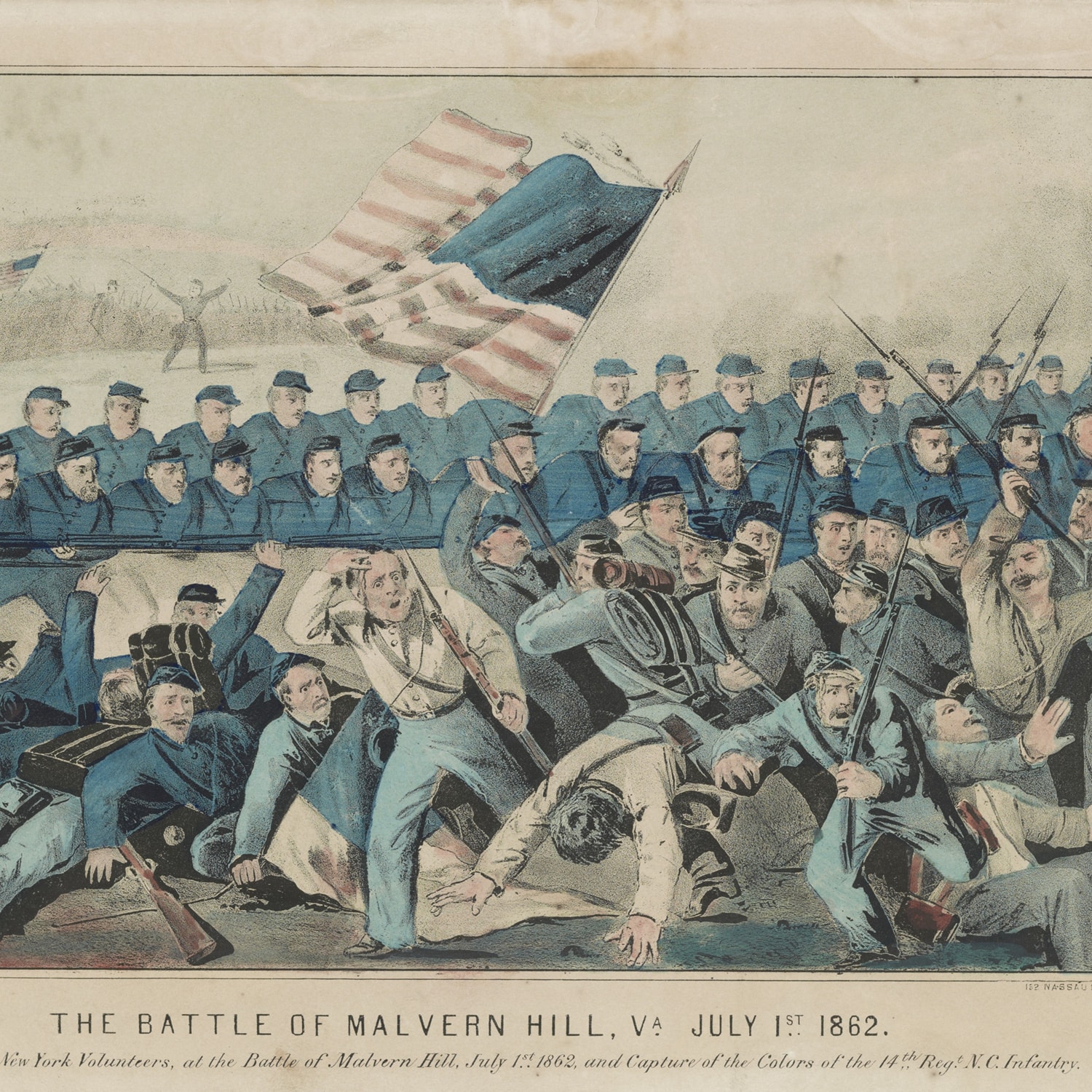
Image via World History Encyclopedia
The Seven Days that turned “Granny Lee” into Robert E. Lee, the Confederacy’s new face
In late June 1862, a week of fighting outside Richmond reshaped the American Civil War and remade a man’s public image. The Seven Days Battles, fought from June 25 to July 1, pitted Confederate General Robert E. Lee against Union Major General George B. McClellan in a violent series of engagements that ended with the Union Army of the Potomac withdrawing from the outskirts of the Confederate capital. For the Confederacy, it was more than a battlefield outcome; it was proof-of-concept that Richmond could be held and that its new commander could take the offensive.
What’s easy to forget is how quickly reputations can flip in wartime. Before this campaign, Lee had been mocked by some as overly cautious and unimpressive, saddled with the cutting nickname “Granny Lee.” The Seven Days did not make him flawless, and the fighting was costly, but it established him as the central military figure of the Confederate cause. That personal reinvention mattered because wars are fought with morale and storytelling as much as with rifles and roads. The public needed a symbol, and the Confederacy found one.
There’s a modern lesson in how the Seven Days fused military action with image-making. Leaders become “inevitable” when a chaotic moment produces a narrative people can repeat: he saved the capital, he seized the initiative, he changed the war. History reminds us to look twice at those turning points and ask what they cost, what they obscure, and how quickly a single week can harden into legend.
Source: World History Encyclopedia
Read the full story at World History Encyclopedia →
What children ate in a Greek colony 2,500 years ago, and what it says about care and hardship
A new analysis of 2,500-year-old remains from Himera, a Greek colony in Sicily, is offering an unusually intimate window into childhood: not grand temples or famous battles, but what growing bodies were actually fueled with day to day. By examining physical evidence preserved in the archaeological record, researchers can reconstruct aspects of diet and early-life nutrition that written sources rarely bother to record. It’s the kind of history that fills in the people most textbooks skip: kids, caretakers, and ordinary households.
Diet studies like this have a way of turning “ancient civilization” into something immediately recognizable. Communities then, like communities now, made choices within constraints: what the land and sea provided, what trade networks could deliver, what social class allowed, and what crises disrupted. When researchers trace differences in what children consumed, they’re often also tracing inequality, health, and the invisible labor of feeding a family. In colonies especially, diet can reveal how settlers adapted old food traditions to new environments, and how quickly “home” became something different.
Himera also sits in a wider story of Mediterranean competition and conflict, where cities could thrive and then be shattered within a generation. That’s part of why these dietary snapshots matter. They capture human continuity inside political instability: even when alliances shift and armies march, somebody is still figuring out what to feed the children tonight.
Source: Archaeology Magazine
Read the full story at Archaeology Magazine →
That’s the capsule for today. If you find yourself looking at a belt buckle, a headline about a general, or a kid’s lunch a little differently after this, history did its quiet work.
— Time Capsule Editorial