It's not gas, groceries, or Medicare premiums. The fastest-rising cost quietly draining American retirees is housing — and Social Security's COLA isn't keeping up. The 2027 adjustment is projected at just 3.9% ($81/month), while rent, property taxes, insurance, and maintenance have surged by hundreds in just two years. Even if your home is paid off, you're still getting squeezed. The Senior Citizens League confirms it: every dollar of Social Security today is worth only 86.3 cents compared to 2016.
Central banks have already responded — buying one specific asset at the fastest pace in 50 years, with JP Morgan forecasting it hits $8,000. Disciplined retirees are making the same move now to protect what they've saved. You're making a decision today whether you realize it or not. Don't leave it to chance.
Get the Free Wealth Preservation GuideThis is an advertisement. If you no longer wish to receive our promotions, please unsubscribe here. Or write to: 5005 Lyndon B. Johnson Fwy. Suite 350, Dallas, TX 75244.

Three reminders from the past: celebrity can be camouflage, nights around a flame can be a language lab, and a cemetery can be a community’s moral ledger.
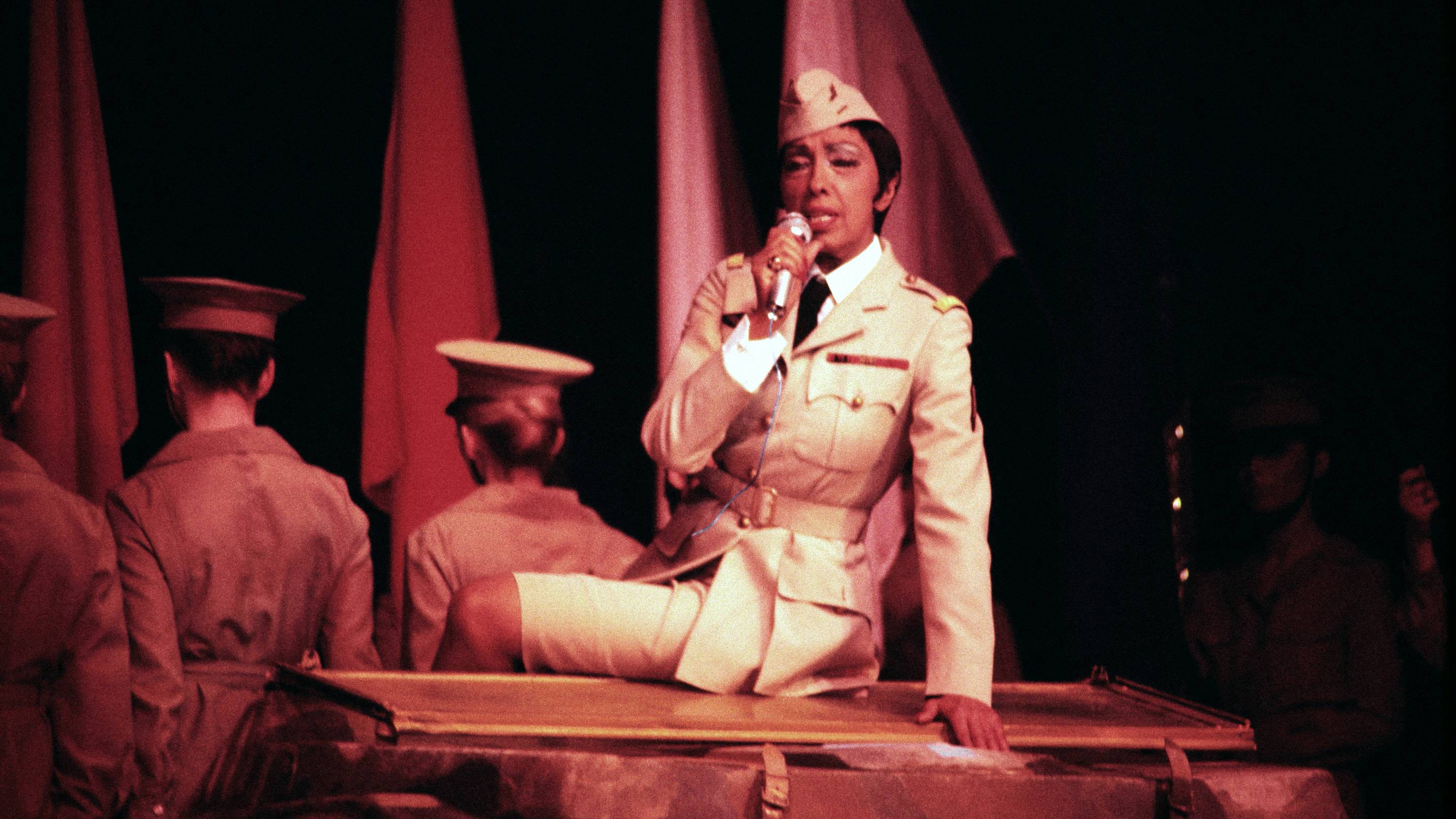
Image via Mental Floss
Josephine Baker’s Double Life: When Celebrity Became Cover for Resistance
Josephine Baker is usually introduced as a sensation: a performer who electrified Paris, a symbol of Jazz Age modernity, an American who found a kind of freedom abroad that Jim Crow wouldn’t allow at home. But in the 1940s, her fame became something else entirely: a shield. According to accounts of her wartime work, Baker used the very things that made her untouchable in polite society—invitations, travel, attention—to move through spaces where information leaked. The glamorous life, it turns out, was an intelligence asset.
In occupied Europe, valuable information doesn’t always come from dramatic break-ins and coded radio bursts. Often it comes from rooms where powerful people relax their guard: receptions, dinners, backstage corridors, embassy parties. Baker moved in those worlds with ease. The reporting highlights how she collected details on Nazi activities and passed them along to the French Resistance, leveraging her touring schedule and public persona to cross borders and mingle with officials in ways that would have been far riskier for an unknown courier.
There’s a historical echo here that feels especially modern: we keep relearning that fame and influence are forms of access—and access is power. Baker’s story also complicates the simplistic narrative of celebrity as mere spectacle. In a moment when Europe was being remade by terror, she treated her platform not as an escape from politics but as a tool within it, putting her chosen home at the center of her loyalty.
Source: Mental Floss
Read the full story at Mental Floss →

Image via Discover Magazine
The First Stage Lights: How Campfires May Have Taught Us to Talk
If you want a new way to picture human language evolving, don’t start with a classroom or a council chamber. Start with a circle of people, a small fire, and the sudden gift of extra hours after sunset. The idea explored in this research-driven piece is beautifully simple: firelight didn’t just warm bodies and cook food. It extended the day, turning night into social time—and social time is where storytelling thrives.
The argument is that once humans regularly gathered after dark, the conversation likely changed. Daylight talk tends to be practical: coordination, work, warnings. But firelit hours invite something else: shared memories, imagined scenarios, explanations, jokes, and stories with characters who aren’t present. Those are exactly the kinds of linguistic workouts that push a language to become more expressive and complex. Narratives require tense, causality, perspective, and the ability to hold an audience’s attention—skills that don’t just reflect language, but can shape it.
It’s a neat reminder that technology and culture are tangled together from the very beginning. Long before smartphones and streaming altered our attention spans, a far older invention—controlled fire—may have reshaped our social rhythms and, through them, the very structure of how we communicate. History often treats language as a mystery that appears fully formed; this view makes it feel more like a habit we practiced into existence, night after night.
Source: Discover Magazine
Read the full story at Discover Magazine →
A Swiss Cemetery Opens: What a Medieval Leprosy Hospital Can Tell Us About Care and Exile
In Schaffhausen, Switzerland, archaeologists have excavated a cemetery connected to a medieval leprosy hospital and chapel, uncovering more than 200 burials. On paper, that’s an archaeological update. In human terms, it’s the return of a community that lived at the edge of town and often at the edge of compassion.
Leprosy hospitals in medieval Europe were complicated institutions. They could be places of care, offering food and shelter when medicine had little to give. They were also tools of separation, reflecting fear of contagion and the social stigma attached to visible illness. A cemetery at such a site doesn’t just preserve bones; it preserves decisions: who was allowed to rest where, what rituals were offered, whether the dead were treated as neighbors or as warnings.
The excavation reported here suggests the scale of the institution and opens the door to more specific questions that archaeology can sometimes answer: signs of disease, evidence of other conditions, patterns in age and sex, and the practical details of burial customs. And it invites a modern parallel we’re still working through: how societies respond when sickness becomes identity. The past doesn’t hand us easy morals, but it does leave us records of who was embraced, who was isolated, and how those choices were justified.
Source: Medievalists.net
Read the full story at Medievalists.net →
That’s the capsule for today. If you found yourself lingering on any one image—a performer passing secrets in plain sight, a circle of faces around firelight, or a quiet cemetery outside city walls—hold onto it. History teaches best when it feels like real people making real choices in real time.
— Time Capsule Editorial