Today’s Sponsor:
Some tickers don't knock — they kick down the door. Volume explodes, momentum ignites, and suddenly everyone wants in. GuyStocks hunts unusual trading activity, fresh catalysts, and emerging small-cap stories before they become the most talked-about ticker on the Street.
Get timely momentum alerts, unusual activity flags, and straight-to-the-point market insights delivered to your inbox. Because "Where did THAT come from?" hits different when it's already on your watchlist.
Join GuyStocks — Get on the Alert ListBy clicking the link above, you agree to receive emails from GuyStocks.com. You can opt out at any time. — Privacy Policy

Three very different artifacts of history — a Christmas war summit, a tiny mountain chapel, and medieval genomes — all point to the same truth: what endures is usually what gets stitched together across distance.
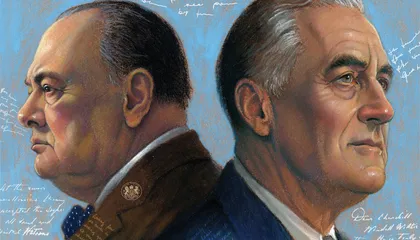
Image via Smithsonian Magazine
The Christmas summit that turned wartime anxiety into a working alliance
In late 1941, Winston Churchill wasn’t just fighting Hitler; he was fighting the clock and the geography of American attention. After Pearl Harbor, the United States understandably snapped toward the Pacific, and Churchill feared Britain would be left to bleed in Europe while Washington focused on Japan. So he pressed for something leaders rarely admit they need: face time. The result was a three-week Christmas-season summit with Franklin D. Roosevelt that helped lock in a shared strategy and a shared political story about why Europe had to remain central.
What makes this episode feel so modern is how much of it was about coalition management, not battlefield maneuvers. Churchill understood that alliances are built in living rooms as much as they are built in treaties — through constant contact, reassurance, and the careful trade of promises that can survive a bad headline. The Smithsonian account shows how persistence itself became a weapon: Churchill kept pushing until the relationship became durable enough to carry the enormous weight of a global war.
If you’re looking for the Time Capsule lesson, it’s this: when a crisis expands, partners don’t automatically stay aligned. They have to be persuaded, repeatedly, that they are still fighting the same war — even when they’re staring at different maps.
Source: Smithsonian Magazine
Read the full story at Smithsonian Magazine →
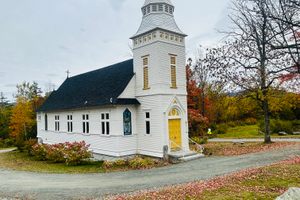
Image via Atlas Obscura
A small White Mountains chapel that holds a big slice of Gilded Age America
St. Matthew’s Chapel in Lisbon, New Hampshire is the kind of place that can disappear in plain sight: a lovingly maintained, picturesque church building tucked into the White Mountains, dating to the 1890s (with some accounts pushing the story even earlier). Atlas Obscura’s entry reads like a reminder that American history isn’t only kept in marble monuments and capital-city archives — sometimes it’s preserved by a community that refuses to let a local landmark become just another vacant lot.
The late 19th century was a boom time for building: rail lines, resort culture, and new wealth reshaped many small towns, especially in scenic regions. Chapels like St. Matthew’s weren’t only religious spaces; they were social anchors and signals of permanence in places where seasons and economies could be fickle. A tidy historic church in a mountain town tells you about settlement patterns, tourism, and the everyday logistics of gathering people together before cars, before interstates, before life got as centralized as it is now.
This is the kind of stop that turns history into something you can stand inside. You don’t have to read a dissertation to feel what it meant to build for the long term in a landscape that can humble you in a single winter.
Source: Atlas Obscura
Read the full story at Atlas Obscura →
What Viking-era DNA is teaching us about migration, language, and identity
A new wave of ancient DNA research is adding surprising detail to the story of the Viking world, and this latest report highlights connections that complicate the old stereotype of Vikings as a neatly defined, isolated “people.” According to The Medievalists, genetic evidence points to meaningful links between Vikings and Anglo-Saxons, suggesting that movement across the North Sea was not just about raids and battles — it was also about families, intermarriage, and communities forming in both directions.
What’s especially interesting here is the way genetics feeds back into questions historians have long debated using texts and linguistics: where Old Norse and related Germanic languages took shape, how populations mixed, and how identity formed in the medieval north. DNA doesn’t replace chronicles or archaeology, but it does provide another ledger of the past — one that records who actually traveled, settled, and had descendants.
The Time Capsule takeaway is a gentle challenge to the way we talk about origins. The medieval world was more mobile than we often imagine, and cultural boundaries were more porous than the stories we inherited. The Vikings didn’t just leave marks with swords and ships; they left them through marriages, marketplaces, and multilingual households.
Source: The Medievalists
Read the full story at The Medievalists →
That’s today’s Time Capsule. If you visited one place from this issue — a wartime residence, a mountain chapel, or a Viking shoreline — what would you want to ask the people who lived there? See you tomorrow.
— Time Capsule Editorial