History shows a clear pattern: the investors who recognized the exact inflection point in the dot-com boom pocketed 400–800% gains in 18 months. Those who spotted the same moment in cloud computing saw 300–600% returns. Based on 50 years of market data, that same moment is happening right now — and the acceleration phase has already begun.
This free 7-page report reveals where we are in the current megatrend cycle, why the next 18 months are critical, and how to position yourself before the window closes. Don't be the investor who enters too late.
Get the Free ReportBy clicking 'Get the Free Report' you are automatically subscribing to Darwin Investor Network and will receive a free subscription to the Chaikin PowerFeed newsletter. Unsubscribing is easy. Privacy Policy

Three reminders that history doesn’t just happen in palaces and parliaments. Sometimes it’s hidden in a graveyard, rolled into a crate on a midnight crossing, or carried on sore feet down a dangerous road.
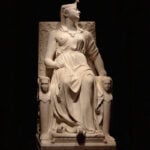
Image via All That’s Interesting
A masterwork by Edmonia Lewis vanished for a century — because it became a horse’s gravestone
In 1876, a sculpture called The Death of Cleopatra stopped visitors cold. Its creator, Edmonia Lewis, was one of the most extraordinary American artists of the 19th century: a Black and Indigenous (Mississauga Ojibwe) woman who built a career in an art world that did not make room for her, and who carved in marble with an eye for emotion that feels almost modern. The piece drew serious attention in its moment, but then something all too familiar happened: the spotlight moved on, institutions failed to preserve the work, and both the art and the artist slipped out of the official story.
What happened next sounds like folklore, but it’s documented: the sculpture disappeared from view for more than 100 years, only to be found serving as a marker on a horse’s grave. That unlikely detour tells a bigger American story about who gets remembered and who doesn’t, and how cultural memory can be less a sturdy archive than a patchwork of accidents, neglect, and rediscovery. When Lewis’ work resurfaced, it didn’t just return an object to the art world; it returned a missing chapter to the history of American creativity and the long fight for recognition.
Source: All That’s Interesting
Read the full story at All That’s Interesting →
The Bayeux Tapestry makes a quiet return to England, 900 years after it was stitched
Few historical objects feel as alive as the Bayeux Tapestry: a long, cinematic strip of stitched scenes that tells the story of conquest, kingship, and propaganda with a clarity that still lands today. This week’s news is the kind historians dream of: after a secret journey across the English Channel, the tapestry is back on English soil for the first time since it was made roughly 900 years ago, on loan to the British Museum. Even the method of travel — discreet and carefully managed — underlines what this thing is: not just art, but a cultural asset with the weight of national myth.
The tapestry is often treated like a neutral documentary, but it’s better understood as a medieval press release: a visual argument about who had the right to rule after 1066. That’s what makes its physical location matter so much. England and Normandy have spent nearly a millennium living with the aftershocks of that conquest, and the tapestry has always been one of the most powerful artifacts in the relationship — a shared inheritance, and a reminder of how stories about legitimacy get manufactured, repeated, and ultimately naturalized.
Source: The History Blog
Read the full story at The History Blog →
Medieval pilgrimages weren’t just spiritual journeys — they were risky travel with very real consequences
It’s easy to picture medieval pilgrimages as a kind of sepia-toned devotion: a staff, a cloak, a holy destination. But the reality was closer to long-distance travel in a world without modern safety nets. A new look at the subject digs into the motivations — faith, penance, hope for healing, social status, even curiosity — and then follows pilgrims into the hazards that came with the choice. Routes to Jerusalem or Santiago de Compostela could involve crowded ships, unpredictable weather, and months of exposure to disease, hunger, and exhaustion.
And then there were the human dangers: bandits on the roads, corrupt officials, scams, and the constant risk of being stranded far from home. That mix of spiritual purpose and practical peril helped create an early version of travel infrastructure: hostels, guides, recognized routes, and the idea that strangers might help one another because they shared a destination and a story. If that sounds familiar, it should. The medieval pilgrimage sits at the crossroads of religion, tourism, and security — a reminder that mass movement of people has always forced societies to invent systems for protection, trust, and accountability, usually after tragedy makes the need impossible to ignore.
Source: Medievalists.net
Read the full story at Medievalists.net →
That’s the capsule for today. If you find yourself wondering how much of what we call history is really just what managed to survive the journey — you’re asking exactly the right question. See you next time.
— Time Capsule Editorial