Today’s Sponsor:
One oil market disruption can trigger a chain reaction — tighter supply, shifting routes, and producers scrambling to adapt. Our research team has pinpointed 3 energy stocks uniquely positioned to benefit from this ripple effect, and each one has a distinct edge as the global energy landscape shifts.
These aren't just bets on higher oil prices. Inside Trading the Oil Supply Shock: Top 3 Energy Stocks Emerging From Global Supply Disruptions, we break down exactly what makes each company stand out — and why now could be the moment to pay attention.
Get the Free ReportBy clicking the link above, you're opting in to receive valuable updates from The Investor Newsletter Daily plus 2 bonus subscriptions. Your privacy is important to us. You can unsubscribe anytime. See our privacy policy for details.

Some days the past feels distant; other days it taps you on the shoulder. Today we’re traveling from the freezing North Atlantic in 1941 to a smoky Tennessee river fort in 1862, then out to prehistoric “megasites” whose very existence became a political inconvenience. Three stories, one reminder: what survives in history is often a mix of grit, luck, and whoever controlled the spotlight.

Image via All That’s Interesting
Unsinkable Sam: The Wartime Legend of a Cat Who Refused to Go Down With the Ship
There are war stories written in steel and gunpowder, and then there are the ones that cling to the edge of the lifeboat. Unsinkable Sam is one of those. According to the tale, this black-and-white ship’s cat survived not one, but three sinkings during World War II, hopping from disaster to disaster like a furry little omen who just wouldn’t cash in his nine lives.
The most cited chapter comes in November 1941, when HMS Ark Royal was torpedoed in the Mediterranean. Sailors reportedly found the cat clinging to wreckage and pulled him aboard. The larger legend claims Sam’s story began earlier aboard the German battleship Bismarck, then continued on the British destroyer HMS Cossack, before culminating with Ark Royal. Whether every link in that chain is airtight or partly stitched together by sailors’ storytelling instincts, the appeal is easy to understand: in a war defined by statistics and mass loss, a single recognizable survivor makes the ocean feel briefly more human.
What I love about this kind of story is how it reveals the emotional infrastructure of wartime. Armies run on supply lines, but people run on meaning. A mascot, a rumor, a lucky charm, a cat hauled from the sea, these become portable hope. Even when the paperwork is fuzzy, the purpose is clear: to give frightened people something small to believe in when the world is too big to control.
Source: All That’s Interesting
Read the full story at All That’s Interesting →
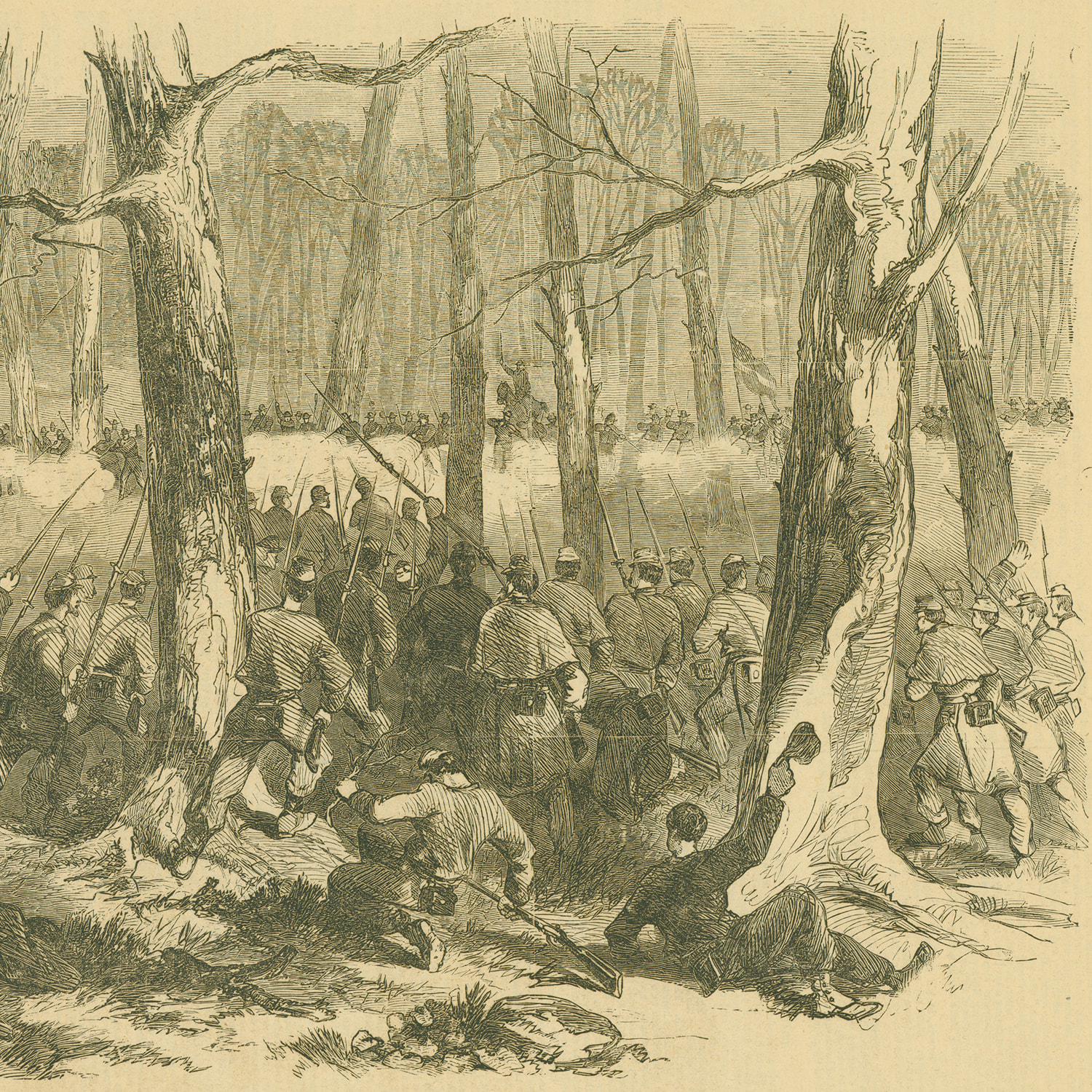
Image via World History Encyclopedia
“No Terms Except Unconditional Surrender”: Grant’s Fort Donelson Report and the Making of a Reputation
Before Ulysses S. Grant became the general who helped decide the Civil War and later a U.S. president, he was a commander writing an official report after a brutal, muddy victory. The Battle of Fort Donelson in February 1862 mattered for more than bragging rights. It cracked open a key Confederate position in Tennessee and gave the Union access along the Cumberland River, a strategic artery into the South.
What stands out in Grant’s account is how matter-of-fact it feels. Official reports are meant to be practical, but Grant’s voice also hints at something personal: an ability to see through chaos and decide what matters next. Fort Donelson included confusing movements, fierce fighting, and moments when the outcome was not guaranteed. Yet by the time the report lands on the page, you can see the emerging pattern that would define Grant’s wartime identity: persistence, clear objectives, and a refusal to treat uncertainty as an excuse.
And then there’s the phrase that stuck: “unconditional surrender.” History sometimes turns on a sentence that travels farther than cannons ever could. That line elevated Grant to national fame because it captured what the North was desperate to hear early in the war: not merely that a battle was won, but that victory could be decisive. In a conflict where compromise had failed over and over, the country was beginning to realize the war would demand harder endings.
Source: World History Encyclopedia
Read the full story at World History Encyclopedia →

Image via HistoryExtra
The “Megasites” the Soviets Didn’t Want You to See: When Prehistoric Cities Become a Modern Problem
If you grew up thinking cities began with places like Uruk in Mesopotamia, the Cucuteni-Trypillia “megasites” might make you do a double take. These prehistoric settlements, spread across parts of modern-day Ukraine, Moldova, and Romania, have footprints so large that some scholars argue they rival the usual contenders for “oldest city.” They force a big question: what if urban life didn’t have a single birthplace, but multiple experiments happening across the ancient world?
The story gets even more intriguing when politics enters the excavation trench. According to reporting on the topic, knowledge of these megasites was suppressed or downplayed under Soviet authorities. That detail matters because it reminds us that archaeology is never just about pottery shards and postholes. It’s also about narratives: who gets credited with “civilization,” which regions are framed as peripheral, and what evidence complicates the state’s preferred storyline.
There’s a familiar historical pattern here. Empires and governments love tidy origin stories because tidy origins justify tidy borders and tidy hierarchies. But the past is rarely tidy. When archaeologists find something that makes the map of “where history began” look different, it can trigger modern anxieties about identity and ownership. These megasites aren’t just ancient neighborhoods. They’re proof that the deep past still has the power to argue with the present.
Source: HistoryExtra
Read the full story at HistoryExtra →
That’s the capsule for today. If you find yourself thinking, “Why didn’t we learn this part in school?” you’re asking the right question. History isn’t only what happened, it’s what got repeated, what got remembered, and what someone once tried to keep quiet. See you tomorrow.
— Time Capsule Editorial