A rare signal just fired. One of Alpha Wire Daily's most reliable indicators — the kind that doesn't trigger often — just flagged a quiet small-cap that's historically appeared right before major announcements, institutional buying surges, and sharp price moves. Most investors haven't noticed it yet.
The team at Alpha Wire Daily put together a full briefing: company name, chart setup, and exactly why this one made the cut. They'd rather send you one email that matters than fifty that don't. This is that email — but it won't stay timely for long.
Read the Free Report + Get Alert AccessWe encourage readers to perform their own research and due diligence on any information we provide. By clicking the link above you will automatically be subscribed to the Alpha Wire Newsletter. Privacy Policy

Three reminders from the archives: conspiracy stories often start with real experiments, small artifacts can redraw big trade maps, and ancient security wasn’t about locks so much as protective presence.

Image via Popular Mechanics
America’s Favorite Vanishing-Ship Story Didn’t Start With Sci-Fi. It Started With Wartime Secrecy.
The so-called Philadelphia Experiment has been passed around for decades like a whispered family legend: a U.S. Navy ship, the story goes, was made invisible in 1943 and even teleported, with catastrophic effects on its crew. Popular Mechanics revisits how this tale persists even after repeated, on-the-record debunking by military officials and historians. What keeps it alive isn’t new evidence so much as the perfect ingredients for an enduring myth: a wartime Navy, classified programs, unfamiliar science words, and a public that knew something secretive was happening out there on the water.
The historical hook is that the Navy really did experiment with technology that could make ships harder to detect—just not in the supernatural sense. During World War II, navies worked on camouflage, radar countermeasures, and degaussing, a technique that reduced a ship’s magnetic signature to help protect it from magnetic mines. Those real efforts created a foggy middle ground where fact could blur into fantasy, especially once the postwar era trained Americans to expect hidden labs and astonishing breakthroughs. In other words, the Philadelphia Experiment functions like a Cold War folk tale: it tells us less about what the Navy did in 1943 and more about how Americans learned to narrate secrecy, technology, and fear.
Source: Popular Mechanics
Read the full story at Popular Mechanics →
Six Copper Bells in Bolivia Ring Out an Old Story About Power, Craft, and Connection
Archaeologists in Bolivia have uncovered a set of six pyramid-shaped copper bells at Yoroma, a site associated with the Yampara. Finds like this can look modest at first glance—small objects, quiet corrosion—but bells are rarely just decoration. Across the ancient Americas, bells could mark status, accompany ceremonies, and signal authority in public spaces. Their sound mattered, but so did the metal itself: copper is technology, labor, and access to networks of knowledge.
The deeper time-capsule angle is how often bells show up at the intersection of ritual and reach. Metal bells can travel with people, with trade, with marriage alliances, with conquest, or with pilgrimage. Their presence raises practical questions—where did the copper come from, who had the skill to shape it, and what did it mean to be the person who could make sound on command? In many societies, controlling rare materials and public rituals is a way of making hierarchy feel natural. A small cache of bells can therefore hint at big patterns: specialization, exchange routes, and the ways communities signaled identity to neighbors near and far.
Source: Archaeology Magazine
Read the full story at Archaeology Magazine →
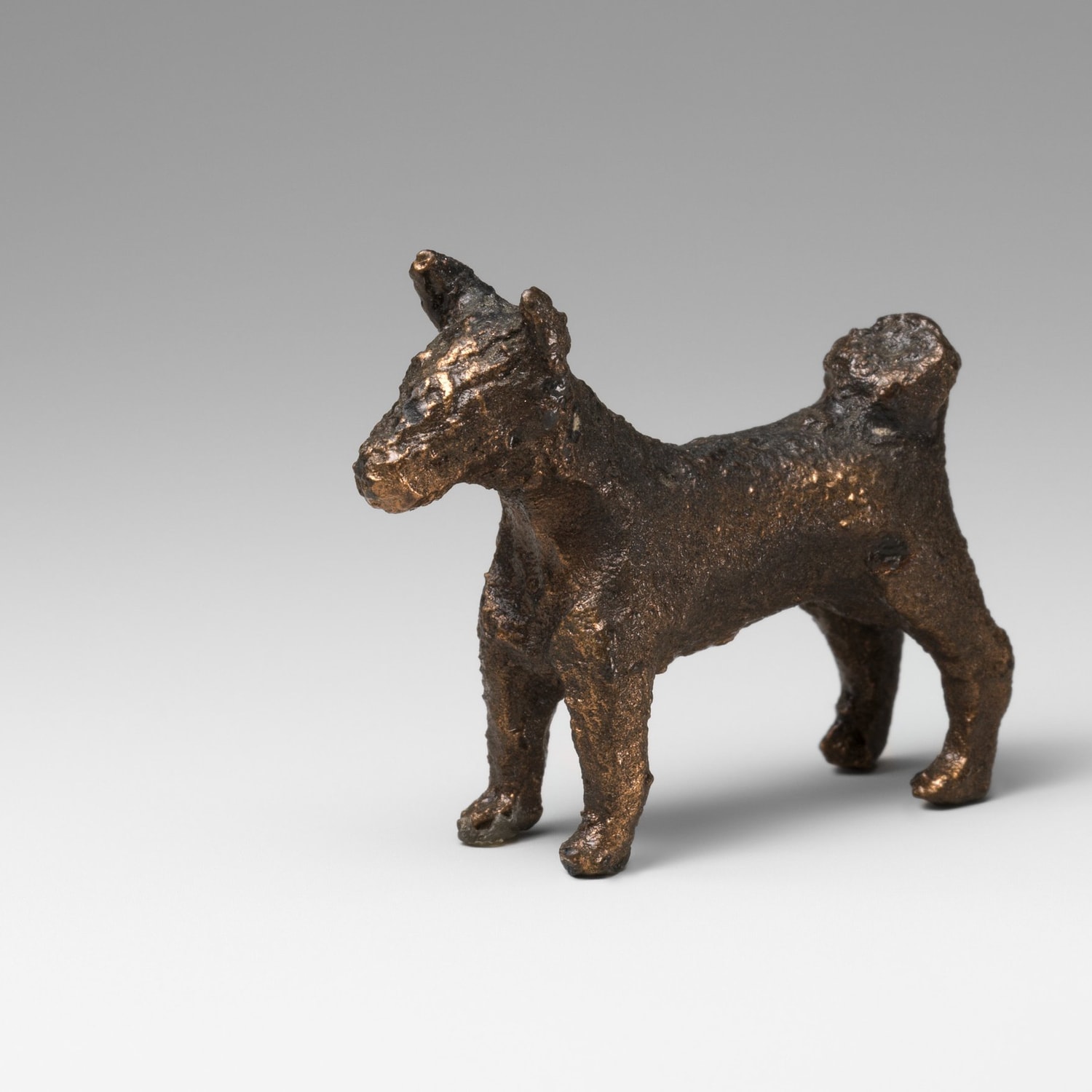
Image via World History Encyclopedia
Before Cameras and Keypads, Nimrud Had Clay Dogs on Patrol
At the ancient Mesopotamian city of Nimrud, archaeologists found five clay canine figurines now known as the Nimrud Dogs. According to World History Encyclopedia, these weren’t cute household knickknacks. They were part of a spiritual security system: protective figures associated with warding off danger, often placed in buildings as guardians. In a world where illness, fire, theft, and political violence could feel both personal and cosmic, protection wasn’t only a matter of walls—it was also a matter of ritual.
It’s easy to read this as superstition and move on, but the historical continuity is striking. Every era builds security with the tools it trusts. Today we outsource some of that trust to devices and data; Nimrud outsourced it to symbolic guardians that made safety tangible. The dogs also remind us that ancient cities were not merely collections of temples and palaces—they were lived-in environments where people worried about the same basic things we do: keeping families safe, keeping the household intact, and persuading an unpredictable world to be just a little more stable.
Source: World History Encyclopedia
Read the full story at World History Encyclopedia →
That’s the capsule for today. If you find yourself pulled toward a mystery, a small artifact, or an old protective charm, try asking the historian’s favorite question: what problem was this meant to solve, and what does that reveal about the world that made it?
— Time Capsule Editorial