The Fed held rates, CPI came in at 2.4%, and analysts still expect 12.5% Q1 earnings growth — but estimates have already been cut across nine sectors and the S&P 500 is stretched above its 5- and 10-year average forward P/E. Trading earnings on headlines alone in this environment is a costly mistake.
The free Earnings Season eBook breaks down the exact pre-report checklist, how to weigh guidance and expectations, and how to read the first reaction after numbers hit — so you're never improvising after the move already started.
Get the Free Earnings PlaybookBy clicking the link above, you will receive this free report and a free subscription to the StockEarnings daily email newsletter. You are also agreeing to the terms of our Privacy Policy. Unsubscribe at any time.

Three history stops for your Friday: South Carolina’s secession vote as a plain-language political document, a Bronze Age burial that rewrites who we imagine as “the” craft expert, and a Renaissance patron who treated beauty like both insurance and influence.
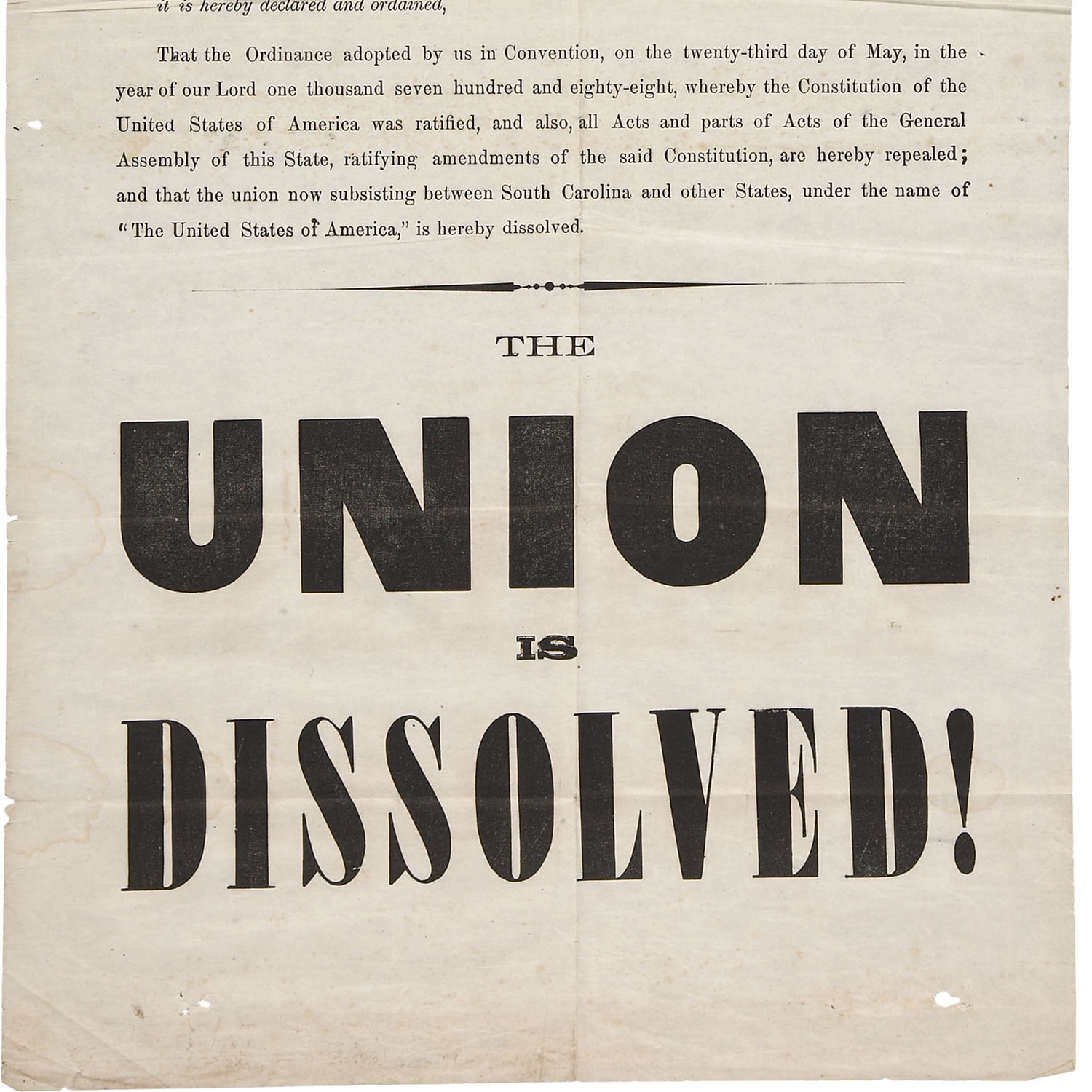
Image via World History Encyclopedia
South Carolina’s Secession Document Wasn’t Vague. It Was a Bill of Particulars.
On December 20, 1860, South Carolina’s delegates gathered in Charleston and voted unanimously to leave the United States. The state’s Declaration of Secession reads less like a romantic breakup letter and more like a lawyer’s brief: a list of grievances meant to justify an extraordinary move. And what stands out, when you read it in full, is how directly it frames the conflict. The document insists the federal bargain has been broken, and it repeatedly returns to one central complaint: the perceived threat to slavery and the refusal of Northern states to enforce laws that protected it.
That clarity matters because it reveals something about how political turning points actually happen. Big ruptures are rarely powered by one emotion. They’re powered by a story people tell themselves about legitimacy: who broke the rules first, who is “faithless,” who is no longer bound. South Carolina’s declaration is steeped in the language of contracts, rights, and obligations, but it’s also a warning about how a society can wrap a moral crisis in procedural arguments. It’s a pattern you can spot across eras: when an institution feels endangered, the public case often centers on process, while the underlying stakes are more fundamental.
Source: World History Encyclopedia
Read the full story at World History Encyclopedia →
A “Shaman” in Gold, Reidentified: DNA and the Bronze Age Woman We Misfiled
A richly furnished burial from around 4,000 years ago, long known as the Upton Lovell “Shaman,” has been reinterpreted after DNA analysis indicated the individual was female. The grave goods are the kind that make archaeologists sit up straight: items suggesting both high status and specialized work, including connections to early metalworking and gold. The headline isn’t just “surprise, it’s a woman.” It’s that a whole job description we assumed belonged to a man is being renegotiated with new evidence.
There’s a familiar rhythm to these discoveries. For generations, when a burial contained weapons, tools, or elite craft materials, the default classification leaned male; when it contained certain ornaments or domestic items, it leaned female. But the past doesn’t organize itself around our modern filing cabinets. In the Bronze Age, status could come from many kinds of power: ritual authority, craft expertise, control of rare materials, or the ability to connect communities through trade and knowledge. A gold worker buried with ceremonial weight suggests a society where technical skill and spiritual meaning were not separate lanes, and where women could plausibly occupy the kind of respected, specialized roles we too often imagine as exceptions.
Source: The History Blog
Read the full story at The History Blog →
Cosimo de’ Medici’s Patronage: When Art Was Reputation Management (and a Political Machine)
Cosimo de’ Medici is often remembered as a generous father of the Renaissance, a man whose money helped turn Florence into a beacon of art, learning, and architectural ambition. But a colder, more human motive sits right alongside the romance: he had reasons to want spiritual cover and public legitimacy. Banking profits raised moral questions in his era, especially around usury, and Cosimo lived in a world where salvation, civic honor, and political survival were tangled together. Funding beauty could also fund forgiveness.
That doesn’t make the art less magnificent; it makes the story more instructive. Patronage worked like a multi-tool. It could ease a conscience, advertise piety, bind artists and intellectuals to a household, and project stability during political turbulence. When you look at it this way, the Renaissance isn’t only a flowering of genius. It’s also a case study in how wealth converts into cultural authority, and how public works can serve private aims. Florence got masterpieces; the Medici got a durable brand.
Source: History Collection
Read the full story at History Collection →
That’s the capsule for today. If you’ve got a moment this weekend, try reading one primary source straight through, even if it’s uncomfortable. History gets clearer when we let people from the past tell us what they thought they were doing.
— Time Capsule Editorial