In 1971, Nixon ended the gold standard in a single 15-minute broadcast — no warning, no debate. Gold tripled in 3 years and rose 20x over the next decade. The people who saw it coming protected their wealth. Everyone else watched their savings quietly erode. History may be about to repeat itself. Trump holds the same executive authority Nixon used — and his own advisors are now openly saying a reversal is on the table.
Reagan Gold Group has put together a free briefing covering exactly what Nixon did, why Trump is the first president positioned to undo it, and the one move you can make right now to be on the right side of what comes next. Free. 30 seconds to request. Don't wait for the Sunday night broadcast.
Get the Free Briefing NowReagan Gold Group does not provide financial, legal, or tax advice. This information is for educational purposes only and should not be considered investment advice. All investments carry risk, including loss of principal. Past performance is not indicative of future results. Consult your licensed financial advisor before making investment decisions. This is an advertisement. If you do not wish to receive messags from this partner, please Unsubscribe. Or write to: 2029 Century Park E Suite 400, Los Angeles, CA 90067.

Three stories that remind us how culture can be weaponized, how science can restore humanity to the distant past, and how social upheaval can hide terrifying crimes in plain sight.
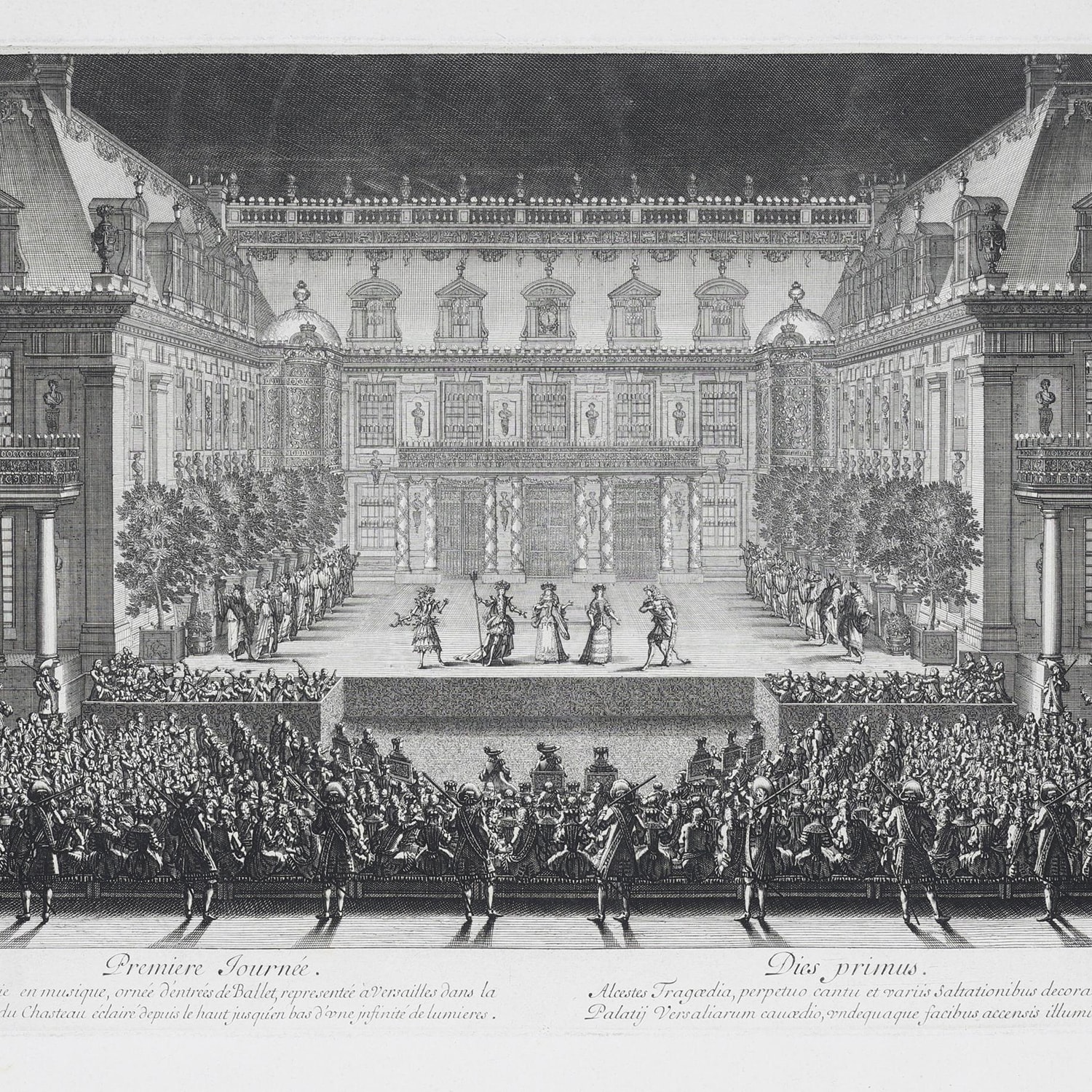
Image via World History Encyclopedia
Louis XIV’s France: When Music Wasn’t Entertainment—It Was Statecraft
In the court of Louis XIV, music wasn’t background noise. It was a governing tool, woven into the most public moments of royal life: grand entrances, diplomatic receptions, religious services, and the daily rituals that turned one man into an institution. The Sun King understood something modern politicians still rely on: people don’t just follow policies—they follow symbols, spectacle, and a sense that power is natural, orderly, and inevitable.
The story is a reminder that “cultural politics” is not a new invention. Louis XIV used composers, performers, and carefully staged ceremonies to communicate stability at home and prestige abroad. Even sacred music could double as messaging: devotion to God and devotion to king were presented as compatible, even intertwined. In an era without mass media, court performances were their own broadcast system, exporting an image of France as refined, disciplined, and dominant.
Source: World History Encyclopedia
Read the full story at World History Encyclopedia →
A Face Returns from the Ecuadorian Andes—and Suddenly the Past Looks Familiar
Archaeologists and forensic specialists have reconstructed the face of a man who lived in Ecuador’s Andes, giving the public something rare: a chance to meet antiquity eye-to-eye. Reconstructions like this are part science, part interpretation, built from skeletal measurements and modern forensic methods. But whatever the margin of uncertainty, the impact is immediate—it turns a distant era into a human story, not just a timeline.
There’s a quiet historical lesson here about whose histories get to feel vivid. For generations, many Americans learned ancient history mainly through Rome, Greece, and Egypt, while the deep past of the Americas was treated as a footnote. A reconstruction from the Andes pushes back on that old imbalance. It invites us to think of ancient American lives as complex, local, and real—people with faces, families, and communities, not just artifacts in a case.
Source: Archaeology Magazine
Read the full story at Archaeology Magazine →

Image via All That’s Interesting
Béla Kiss and the Dark Side of Wartime Chaos
The case of Béla Kiss reads like a nightmare pulled from the margins of World War I: a Hungarian man accused of murdering nearly two dozen women, with bodies concealed in metal drums and grim rumors that earned him the label of a “vampire” killer. The lurid details grab attention, but the deeper history is about conditions that let predators operate—mobility, fear, disrupted communities, and institutions too strained to notice the missing until it was far too late.
Wartime Europe was a landscape of absences: men sent to the front, families displaced, records fractured, neighbors afraid to ask questions. That’s the kind of environment where social accountability weakens and deception becomes easier. Kiss reportedly exploited personal ads and courtship, a reminder that even “modern” forms of connection have long been vulnerable to manipulation. It’s also a sobering lesson in how quickly a society in crisis can normalize mystery and loss—and how that normalization can become cover for the unthinkable.
Source: All That’s Interesting
Read the full story at All That’s Interesting →
That’s the capsule for today. If you caught yourself picturing Versailles, the Andes, and wartime Budapest in the same mental map, that’s the point: history doesn’t live in separate rooms—it echoes across the whole house.
— Time Capsule Editorial