Policy is already moving markets in 2026 — trade enforcement, regulatory shifts, and tax positioning are redirecting capital right now. Institutions reposition before the headlines catch up, and the window to act early is closing fast.
Our analysts identified 5 stocks showing real momentum tied directly to current administration policy themes — including the sectors benefiting most from domestic investment trends and regulatory tailwinds. Don't get left behind.
Get the Free Report Now(By following any of the links above, you're choosing to opt in to receive insightful updates from The Investment News Daily + 2 free bonus subscriptions! Your privacy is important to us. You can unsubscribe anytime. See our privacy policy for details.)

Three reminders that history isn’t just dates and famous names: it’s puzzling evidence in the ground, ordinary houses that absorbed extraordinary moments, and the daily logistics that shaped what people could endure.
/https://tf-cmsv2-smithsonianmag-media.s3.amazonaws.com/filer_public/be/c4/bec43377-d59c-470f-893e-8f099a020aee/dji_0444.jpg)
Image via Smithsonian Magazine
A Skeleton in a Sealed Stone Mystery: Scotland’s Unanswered Question
Archaeologists in Scotland have uncovered human remains inside a carefully built stone structure that doesn’t fit neatly into the usual categories of home, tomb, or storage. The construction itself is part of the intrigue: fitted stone joined with a clay-like material, and features that may have helped retain liquid. It’s the kind of find that makes you realize how much of the past was engineered for purposes we no longer recognize—and how easily we project our own assumptions onto ancient design.
What has researchers stuck isn’t simply the presence of a skeleton, but the why of it all. Was this a practical burial in an emergency, a ritual deposit meant to sanctify a place, or something connected to water, fermentation, or preservation? When archaeologists say they still don’t know, that’s not hedging—it’s a sign the evidence is speaking in fragments. The structure seems intentional, the placement deliberate, but the story connecting those facts has gone missing, leaving a gap that only more context (nearby artifacts, dating, environmental clues) can hope to narrow.
Source: Smithsonian Magazine
Read the full story at Smithsonian Magazine →

Image via Atlas Obscura
Nelson House at Yorktown: A Calm Facade After a Violent Siege
Walk Yorktown’s Main Street and the Nelson House can feel almost too composed—Georgian symmetry, tidy lines, the steady confidence of a building that seems to say nothing much ever happened here. But it did. The house, built around 1730, lived through the Siege of Yorktown, the climactic campaign that effectively ended major fighting in the American Revolution. In a town where history is often told in broad strokes—armies, generals, surrender—this building offers a smaller, more intimate scale: what war looks like when it comes right up to your front door.
The detail that lingers is the physical evidence of conflict. Buildings don’t just “witness” history in a poetic sense; sometimes they keep the receipts in brick and wood. The Nelson House is remembered for damage from cannon fire during the siege, a reminder that even strategic decisions show up as scars on ordinary places. It’s a useful corrective to the way we tend to picture the Revolution as clean and heroic. Yorktown was loud, destructive, and terrifying for anyone caught in it—and the survival of a structure like this becomes its own kind of document.
Source: Atlas Obscura
Read the full story at Atlas Obscura →
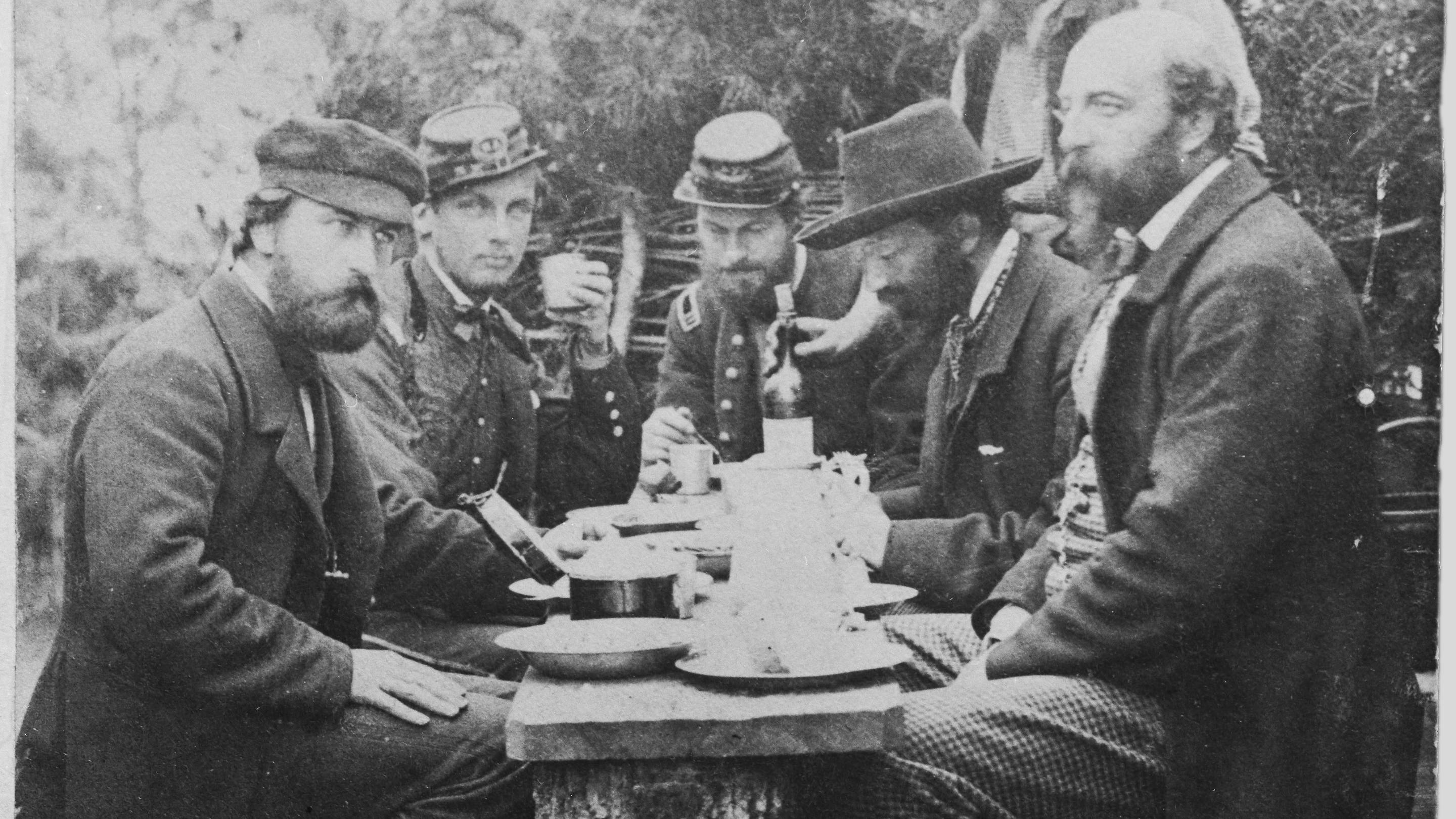
Image via Mental Floss
What Civil War Soldiers Ate: The Daily Rations Behind the Big Battles
Civil War history is often narrated through movement on maps—campaigns, lines, and turning points. But armies don’t march on abstractions; they march on calories. A look at what soldiers actually ate brings the war down to the level of the stomach: hardtack that could crack teeth, salt pork that kept (barely) without refrigeration, coffee that became a morale system, and whatever could be scrounged or traded when official rations ran thin.
The menu also helps explain how disease, desertion, and sheer exhaustion could shape outcomes as much as any commander’s plan. Limited ingredients meant repetitive meals, and repetitive meals meant nutrition problems that weakened bodies already strained by exposure and contaminated water. It’s easy to talk about “endurance” as a character trait; it’s harder—and more honest—to see it as logistics, supply chains, and the improvisation required when those systems failed. Food isn’t a side note to the war. It’s part of the engine that kept it running.
Source: Mental Floss
Read the full story at Mental Floss →
That’s the Time Capsule for today. If you find yourself looking at a quiet old house, a strange feature in the landscape, or even a plain cracker differently now, history did its job—nudging the present into sharper focus.
— Time Capsule Editorial