Today’s Sponsor:
Three under-the-radar small-cap stocks are showing early signs of unusual market activity. Our research team has identified emerging changes in volume patterns and momentum that typically precede broader market attention.
These lightly covered companies are just starting to appear on institutional watchlists. Get our complete analysis covering where the activity is happening, what's driving participation, and our criteria for tracking these emerging setups — releasing in the next 24-48 hours.
Get the Free Research UpdateThis material is shared strictly for educational and informational purposes. We encourage readers to perform their own research and due diligence. By clicking the link you will automatically be subscribed to the Stock News Trends Newsletter. Privacy Policy

From the war that birthed America's revolution to the warrior queen who named California, history's most consequential moments often started with stories we can barely believe.
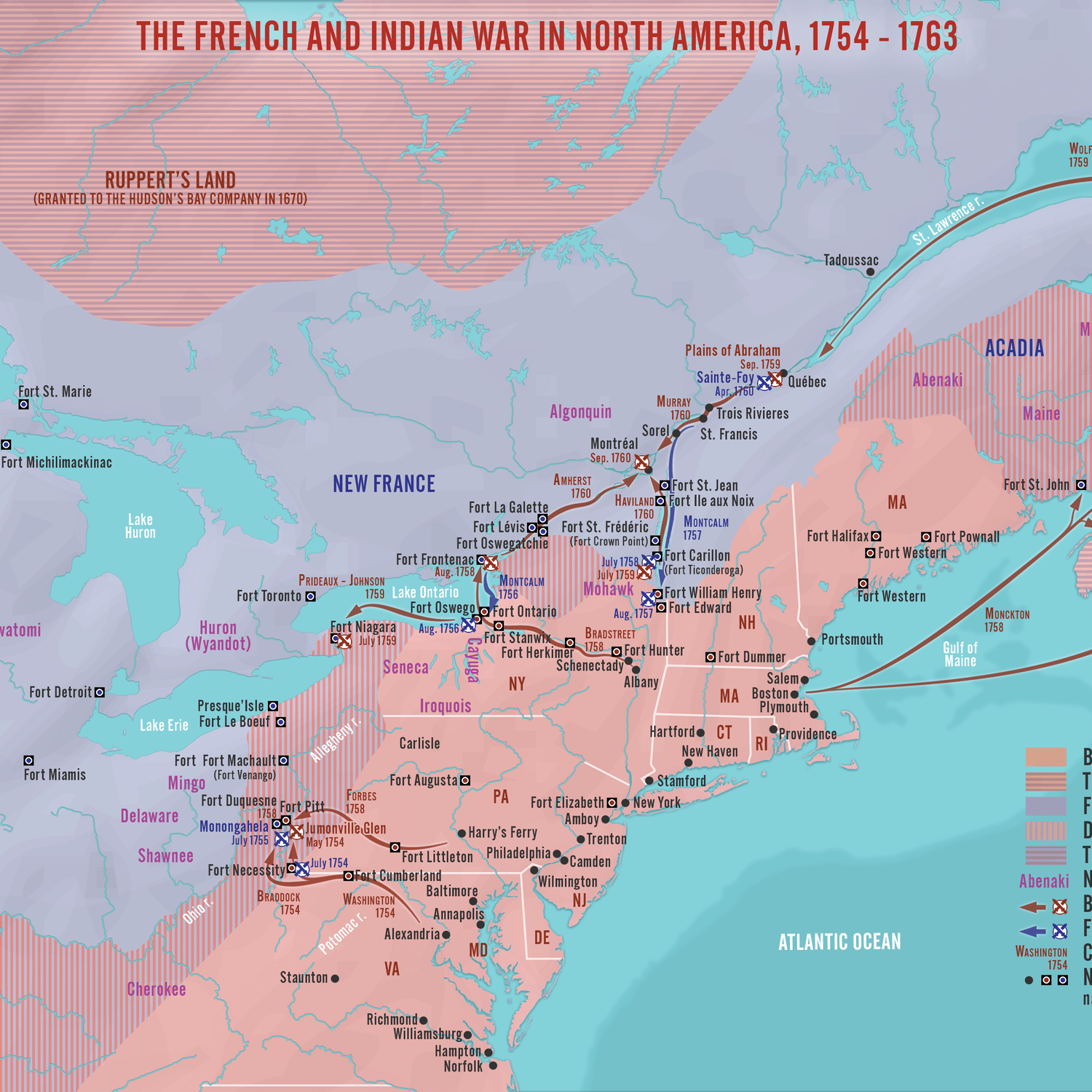
Image via World History Encyclopedia
The War That Made America—And Broke Britain's Bank
Long before Lexington and Concord, another war planted the seeds of American independence in ways the British never saw coming. The French and Indian War (1754-1763) was the final showdown between European empires competing for control of North America, and it transformed the continent. What began with a young George Washington stumbling into a skirmish in the Pennsylvania wilderness escalated into a global conflict that stretched from the forests of the Ohio Valley to the Caribbean to India itself.
Britain won the war decisively, claiming French Canada and land east of the Mississippi. But victory came with a staggering price tag—the war doubled Britain's national debt. Parliament's solution? Tax the American colonies to help pay for their own defense. Those taxes—the Stamp Act, the Townshend Acts, the tea duties—lit the fuse that would explode into revolution just twelve years after the peace treaty was signed. The bitter irony is that many colonists, including Washington himself, had fought loyally alongside British regulars during the French and Indian War, only to find themselves treated as second-class subjects when the bill came due.
The war also removed the French threat that had once made British protection valuable to colonists, leaving them to wonder why they needed London at all. In the grand sweep of history, Britain won the battle but created the conditions for losing the colonies. The war that secured an empire ended up costing them half of it.
Read the full story at World History Encyclopedia →

Image via All That's Interesting
The Warrior Queen Who Named a State Without Ever Existing
California owes its name to a character from a pulpy 16th-century Spanish romance novel—a Black Muslim warrior queen who ruled an island paradise inhabited only by women and gold-hoarding griffins. Queen Calafia, the protagonist of "Las Sergas de Esplandián," was a figure of both fascination and fear in the Spanish imagination: powerful, exotic, and commanding an army of women who rode into battle on wild beasts. When Spanish explorers Hernán Cortés and Francisco de Ulloa reached Baja California in the 1530s and 1540s, they believed they'd found an island (the Gulf of California fooled them). The fictional kingdom seemed to match the landscape before them.
What makes this story remarkable isn't just that conquistadors named a place after a fictional character—it's that they were so steeped in chivalric romances and tales of distant wonders that they expected to find them. These weren't just entertainment; they were quasi-guidebooks for what explorers hoped to discover in the New World. The fact that Calafia was described as Black is especially intriguing, reflecting medieval Spain's diverse cultural influences from centuries of Islamic rule and African contact. She wasn't a villain in the story but a formidable ruler who eventually allies with Christians—a complex character for her time.
Today, California's name is synonymous with the American Dream, with gold rushes and Hollywood, with technology and reinvention. That the nation's most populous state takes its name from a powerful fictional woman—a queen who needed no king—feels accidentally appropriate. Sometimes the stories we tell become more real than the truth we're searching for.
Read the full story at All That's Interesting →
Purple-Wrapped Babies: What Roman York's Tiniest Graves Tell Us About Empire
In ancient Roman York—then called Eboracum, a crucial military garrison at the edge of empire—archaeologists have uncovered something astonishing: two infant burials wrapped in cloth dyed with Tyrian purple and woven with gold thread. This wasn't just fancy fabric. Tyrian purple, extracted drop by precious drop from thousands of murex sea snails, was the most expensive dye in the ancient world. Reserved for emperors and the highest elite, it was literally worth more than gold by weight. To bury babies in it was an almost unthinkable display of wealth and grief.
The discovery raises haunting questions about who these children were. Were they offspring of a Roman governor or military commander stationed in this northern outpost? Perhaps the children of visiting imperial officials? The presence of gold thread alongside the purple suggests resources that would have been extraordinary even in Rome itself, let alone the distant British frontier. What makes the find even more poignant is that these weren't children who lived long enough to accomplish anything—they were loved enough that their parents spent a fortune on their passage to the afterlife.
Roman York was no backwater. As a legionary fortress and eventual imperial capital when Emperor Septimius Severus died there in 211 CE, it connected Britain to an empire that stretched from Scotland to Syria. These purple-wrapped infants remind us that empire wasn't just about conquest and commerce—it was about families far from home, trying to maintain status and tradition while stationed at the world's edge. Their tiny graves, preserved for two millennia, speak to a grief that transcends centuries: the universal heartbreak of parents who couldn't save their children, no matter how much purple and gold they possessed.
Read the full story at The History Blog →
Keep looking back to see forward, The Time Capsule Desk
— Time Capsule Editorial