Today’s Sponsor:
Wall Street analysts are issuing rare downgrades and sell ratings on 20 stocks right now — do you own any of them? When top analysts consistently rate a stock "hold" or "sell," there's a serious problem, and the window to act may be closing fast.
MarketBeat has identified the 20 companies with the lowest analyst recommendations over the last 12 months and compiled them into a FREE report: "20 Stocks to Sell Now." For a limited time, you can claim your copy at no cost.
Get Your Free Report NowBy clicking the button above, you will receive this free report and a free subscription to MarketBeat's daily email newsletter. You are also agreeing to the terms of our privacy policy. Unsubscribe at any time.

Three fresh finds and one haunting biography remind us how much of history is decided by who gets remembered, who gets buried, and who survives long enough to govern.

Image via All That’s Interesting
A 240-Foot Tomb in Mongolia Brings the Xiongnu Back Into the Room
Archaeologists in Mongolia have unearthed an enormous, roughly 2,000-year-old tomb stretching about 240 feet, built with a level of planning that reads like a political statement. The structure reportedly includes two nested burial chambers protected by nine layers of stone, the kind of engineering that doesn’t just keep grave robbers out, but also announces status to everyone living above it. The burial appears to belong to an elite figure of the Xiongnu, the powerful confederation that dominated the Eurasian steppe and helped shape the world on China’s northern frontier.
What makes finds like this feel so alive is the evidence of long-distance connections tucked into the details. The tomb is described as filled with exotic riches, the kind of grave goods that hint at trade routes, diplomacy, raiding, and cultural borrowing across thousands of miles. In American classrooms, we often meet steppe empires only as a vague “threat” on someone else’s border. But the Xiongnu were builders and organizers, too, and a tomb this elaborate is a reminder that power leaves paperwork in capitals, but it also leaves architecture in the earth.
Source: All That’s Interesting
Read the full story at All That’s Interesting →
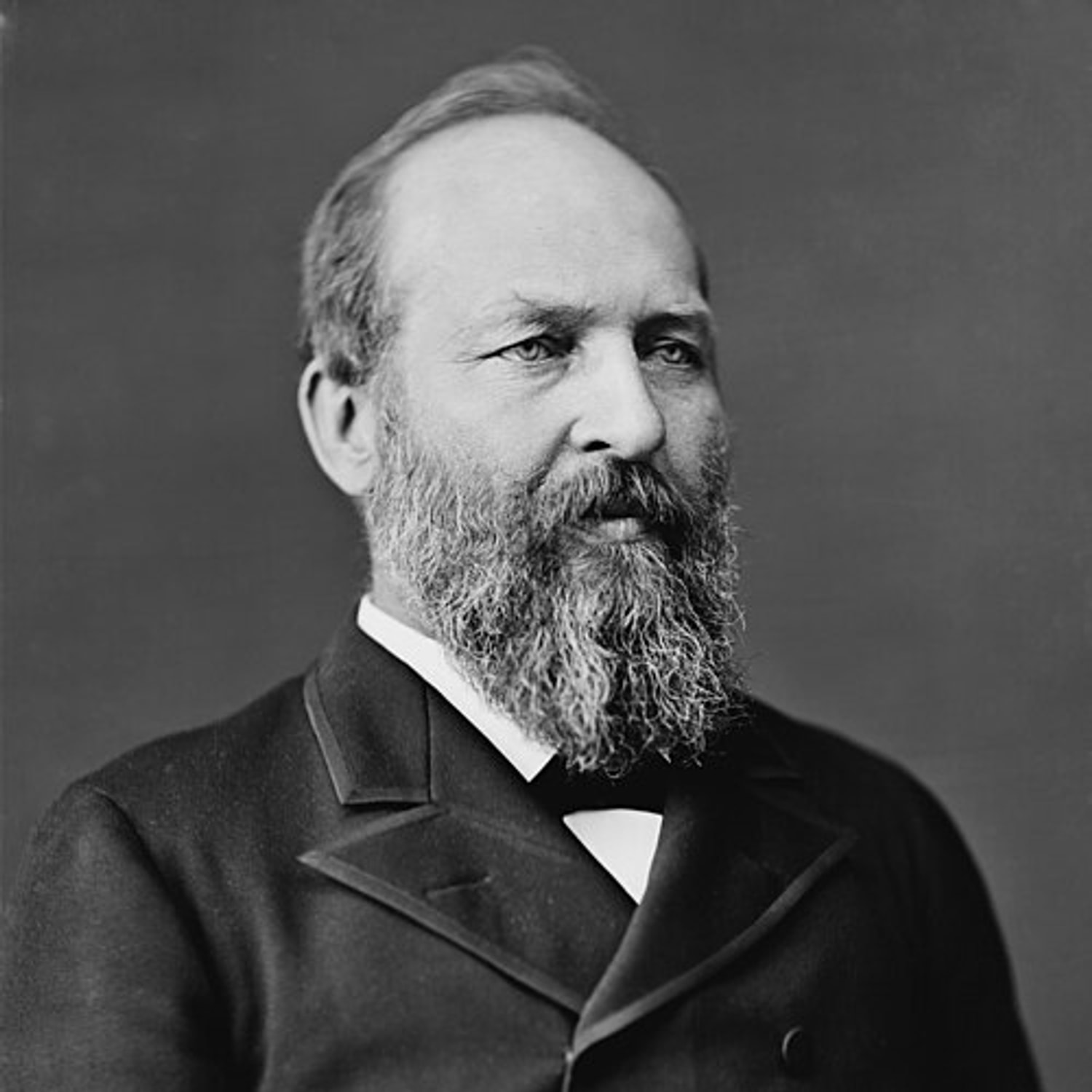
Image via World History Encyclopedia
James A. Garfield’s Story: How One Assassination Reshaped the Modern Presidency
A new retelling of James A. Garfield’s life traces one of the most startling arcs in American political history: born into poverty in Ohio, largely self-made through study and teaching, rising into national leadership almost as if the country kept pulling him into bigger rooms. Garfield became the 20th president in March 1881, only to have his presidency cut short by an assassin’s bullet that summer. He died in September after months of suffering, in an era when medical practice could turn survivable wounds into fatal ones.
The history-class version of Garfield is often a footnote between Reconstruction and the Gilded Age, but his death was a hinge moment. It helped galvanize pressure for civil service reform, pushing the federal government away from the spoils system that treated public jobs like political prizes. In a way, Garfield’s legacy is a reminder that institutions sometimes change most dramatically not when leaders triumph, but when the system breaks in public view and can’t be ignored anymore.
Source: World History Encyclopedia
Read the full story at World History Encyclopedia →

Image via Popular Mechanics
A Viking Couple’s Grave on the Isle of Man Reopens an Old Question: Who Really “Settled” the Island?
On the Isle of Man, two metal detectorists have helped bring to light a rare Viking-age double burial, dated to about 1,100 years ago. Finds like this are more than dramatic headlines; they can act like time stamps for big human movements. The grave is being framed as one of the island’s most significant Viking discoveries, in part because it’s not just evidence of Viking presence, but a more intimate snapshot: a couple laid to rest together, suggesting community, continuity, and a stake in the land.
The Isle of Man sits in the middle of the Irish Sea, a strategic crossroads that has long attracted powers who wanted to control shipping lanes, raids, and trade. That’s why the question of who “settled” it is never just academic. Burials can signal more permanent roots than a passing fleet or a seasonal camp, and they can complicate older stories that paint Viking activity as purely violent or purely transient. The deeper lesson, as always with islands, is that the shoreline keeps changing but the contest over connection and control stays familiar.
Source: Popular Mechanics
Read the full story at Popular Mechanics →
That’s all for today’s Time Capsule. If you only remember one thing, let it be this: the ground keeps receipts, and every excavation or rediscovered biography gives us another chance to notice the patterns we thought were new.
— Time Capsule Editorial