Oil markets are shifting as Venezuela's disruption removes critical barrels while spare capacity shrinks. Supply pressure is building before headlines catch up — and smart traders are positioning now.
Our exclusive briefing reveals three energy stocks emerging from this supply shock, plus the key signals to monitor as this setup evolves. This is about preparation, not prediction.
Get the Free Oil Trading ReportBy following the links above, you're opting in to receive valuable updates from Wealthiest Investor News plus 2 bonus subscriptions. Your privacy is important to us. You can unsubscribe anytime. See our privacy policy for details.

Today’s history lesson travels from an Egyptian oasis to the Mediterranean in 1940 to the wide steppe world of the Scythians, where status, loyalty, and memory left physical traces.
/https://tf-cmsv2-smithsonianmag-media.s3.amazonaws.com/filer_public/a0/4e/a04e2328-f7ae-4afc-9bd5-815c57f68a96/735761382_979443714901375_5840206519074944984_n.jpeg)
Image via Smithsonian Magazine
A Byzantine Town Returns to the Map, One Receipt at a Time
There’s something quietly thrilling about a place that disappears from history not with a bang, but with a slow covering of sand. Archaeologists working in Egypt’s Kharga Oasis have uncovered a 1,600-year-old Byzantine Christian settlement built of mud brick, complete with streets, towers, and a sizable church. It’s the kind of discovery that reminds you how much of the past is still out there, waiting in plain sight for the right light, the right season, and the right patience.
What makes this town feel especially alive isn’t just the architecture; it’s the everyday tools and paperwork. Researchers found grain grinders, an oven, and around 200 ostraca—potsherds and flakes of stone used as writing surfaces for receipts, notes, and daily accounting. If you’ve ever wondered what historians mean when they say “ordinary life is hard to see in the past,” this is the counterexample: a community preserved through the routines that rarely make it into grand chronicles.
The broader historical echo here is how Christianity spread and settled into local landscapes across the late Roman world. Oasis towns sat at the crossroads of agriculture, desert travel, and imperial administration; they were both outposts and hubs. Finds like these help explain how faith communities weren’t just abstract “conversions” on a timeline, but neighborhoods with kitchens, storage rooms, errands, and the constant need to keep track of who owed what.
Source: Smithsonian Magazine
Read the full story at Smithsonian Magazine →

Image via HistoryExtra
The Naval Strike That Helped Britain Survive—and Broke Churchill’s Heart
In July 1940, Britain stood in an unnervingly narrow corridor of options. France had fallen, the future of the war looked bleak, and one urgent question haunted London: what would happen to the French Navy, one of the largest fleets in the world? Winston Churchill’s government decided it could not risk those ships falling into German hands, even indirectly. The result was an attack by the Royal Navy on French vessels at Mers-el-Kébir off the coast of Algeria—an action that killed more than 1,200 French sailors.
The story’s brutal tension is that Churchill reportedly cried afterward. History often files leaders into neat categories—cold strategist, inspiring orator, ruthless realist—but moments like this show the messy overlap. Churchill called the incident “hateful,” yet he also saw it as necessary. In the logic of total war, the tragedy became part of a larger calculation: prove to friend and foe alike that Britain would fight on, no matter the cost.
The older historical pattern is painfully familiar: alliances cracking under pressure, and governments choosing between moral injury and strategic vulnerability. Wartime coalitions are rarely as stable as the posters suggest. From ancient city-states to modern empires, the hardest decisions are often the ones made against yesterday’s partner to prevent tomorrow’s catastrophe. Mers-el-Kébir sits in that grim lineage, a reminder that “winning” can carry a private price even when leaders believe they’ve chosen the least terrible door.
Source: HistoryExtra
Read the full story at HistoryExtra →
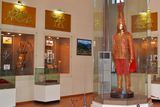
Image via Discover Magazine
An Elite Scythian Burial for a One-Year-Old, and What DNA Reveals About Power
One of the most haunting questions archaeology can raise is also one of the simplest: why would a child be buried like a ruler? New research on Iron Age Scythian graves suggests that high status in some Scythian communities may have been inherited—and the evidence includes a one-year-old given an elite burial. Using ancient DNA, researchers linked relatives buried in different locations, up to roughly 87 miles apart, building a genetic map that matches what the grave goods and burial treatment had been hinting at for years.
For a long time, popular images of steppe societies leaned heavily on the idea of earned prestige: the skilled rider, the brave warrior, the charismatic leader. Those elements mattered, but inherited rank changes the story. If status could be passed down through family lines, then the Scythian world included something more durable than individual achievement: institutions of lineage, obligations, and remembered blood ties strong enough to shape where and how someone was laid to rest.
This is a time-capsule moment because it speaks to a recurring human habit: turning power into something that outlives the person. You see it in dynasties, in aristocracies, in political “families,” and in the quiet social advantages that accumulate over generations. The Scythians left no newspapers and few written records of their own, but their graves and genomes tell a familiar story anyway—how quickly a community can transform prestige into inheritance, and how early in life society can assign someone a place.
Source: Discover Magazine
Read the full story at Discover Magazine →
That’s today’s Time Capsule. If you found yourself lingering on the receipts, the tears, or the tiny grave, you’re doing history the right way: noticing the human details that make the big events real. See you tomorrow.
— Time Capsule Editorial