It's not gas, groceries, or Medicare premiums. The fastest-rising cost quietly draining American retirees is housing — and Social Security's COLA isn't keeping up. The 2027 adjustment is projected at just 3.9% ($81/month), while rent, property taxes, insurance, and maintenance have surged by hundreds in just two years. Even if your home is paid off, you're still getting squeezed. The Senior Citizens League confirms it: every dollar of Social Security today is worth only 86.3 cents compared to 2016.
Central banks have already responded — buying one specific asset at the fastest pace in 50 years, with JP Morgan forecasting it hits $8,000. Disciplined retirees are making the same move now to protect what they've saved. You're making a decision today whether you realize it or not. Don't leave it to chance.
Get the Free Wealth Preservation GuideThis is an advertisement. If you no longer wish to receive our promotions, please unsubscribe here. Or write to: 5005 Lyndon B. Johnson Fwy. Suite 350, Dallas, TX 75244.

Three very different stories, one shared human thread: when people feel cornered, they either build something monumental, gamble everything, or march straight into the seat of power demanding a different deal.
/https://tf-cmsv2-smithsonianmag-media.s3.amazonaws.com/filer_public/eb/84/eb843981-bc89-40b9-a3bb-384c8e813db7/uprising.png)
Image via Smithsonian Magazine
When the Tax Bill Becomes a Tipping Point: The 1381 March on London
A new film, The Uprising, uses a fictional farmer-turned-leader (played by Andrew Garfield) to pull viewers into the gritty reality behind the 1381 Peasants’ Revolt—an event that reads less like medieval folklore and more like a familiar political pattern. England had been battered by plague, war costs, and labor upheaval, and then came repeated poll taxes that landed hard on ordinary people. Thousands of rebels moved on London not to “burn it all down” for sport, but to demand something specific: relief from unfair taxation and the crushing constraints of serfdom.
What makes the revolt so instructive is how quickly a dispute about money becomes a fight over dignity and power. The rebels were responding to a system that treated them as permanently obligated—work tied to land, status tied to birth, policy made far away. For a moment, the movement forced England’s rulers to look directly at people they usually kept at arm’s length. The revolt was ultimately suppressed, and its leaders were hunted down, but the shockwave lingered: serfdom didn’t vanish overnight, yet the old certainties were damaged. History rarely flips in one day, but it does tilt when enough people decide the rules no longer make moral sense.
Source: Smithsonian Magazine
Read the full story at Smithsonian Magazine →

Image via Discover Magazine
The 25-Ton Mystery: How Prehistoric Britain Moved Giants Across the Landscape
Long before cranes, highways, or even written records, prehistoric builders in Britain hauled enormous stones across open country—and new mineral detective work is helping explain how. Researchers traced the towering standing stones known as the Devil’s Arrows in Yorkshire, including a 25-ton giant, to a source about 11 miles away. That might sound modest in the age of shipping containers, but on foot, with primitive tools, and with no modern roads, 11 miles is the difference between local construction and a deliberate, community-wide campaign.
The details matter because they reveal something about intention. Moving stones of that size isn’t just about engineering; it’s about coordination, authority, and shared belief. The investigation also linked a missing stone to a medieval cross, suggesting that later generations repurposed or reinterpreted the site—a reminder that monuments don’t sit still in cultural meaning even when they physically stand in place. The landscape becomes a kind of palimpsest: prehistoric ambition, medieval religion, and modern science all layered on the same ground.
Source: Discover Magazine
Read the full story at Discover Magazine →
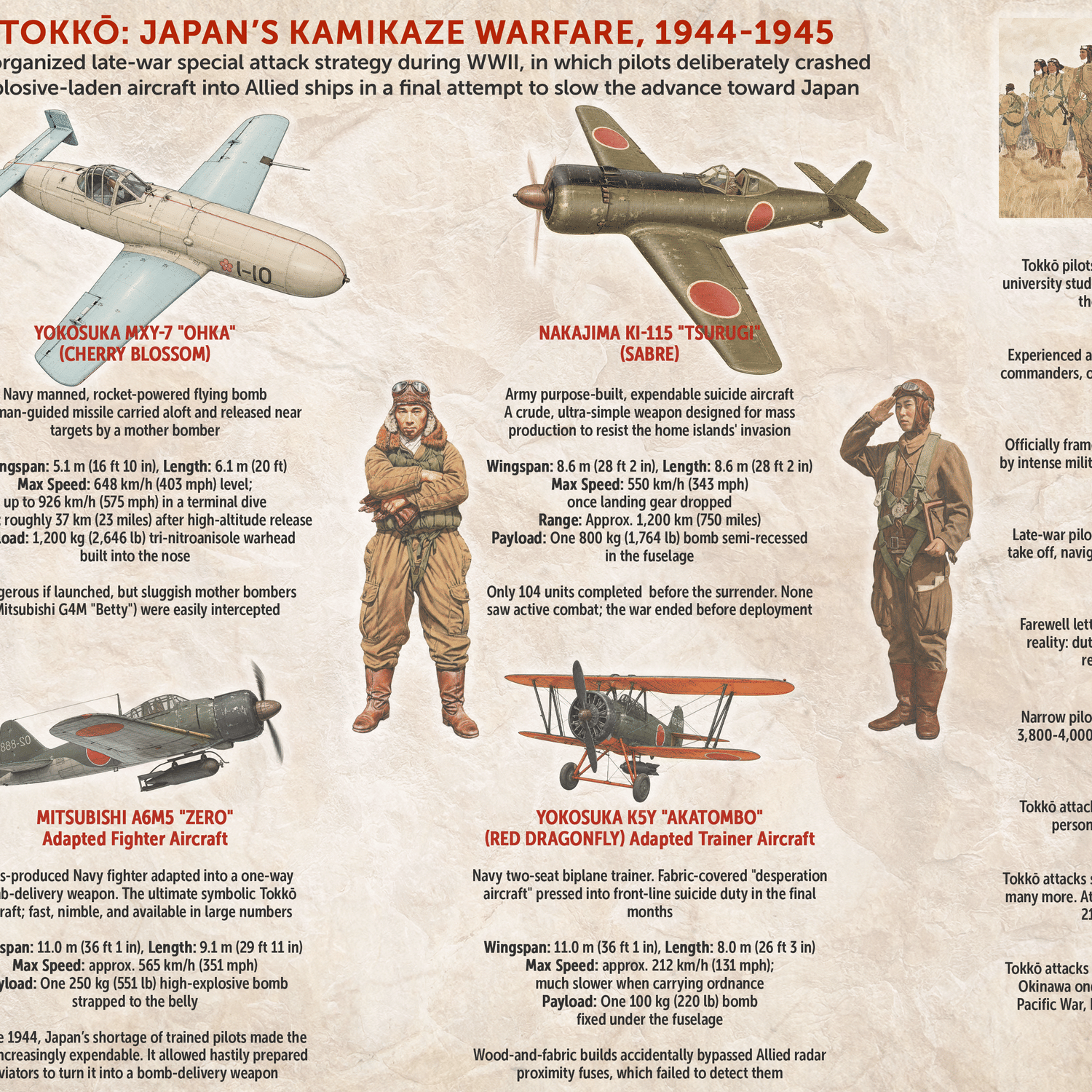
Image via World History Encyclopedia
Kamikaze: The Terrible Logic of Desperation, and Why It Didn’t Work
The kamikaze campaigns of the final year of World War II have often been flattened into a single image: pilots willingly crashing into ships. But the fuller picture is a strategic gamble made under severe pressure—and, as historians note, it failed to deliver the decisive results Japan needed. These were not isolated acts; they were organized attacks using aircraft, piloted rockets, and explosive-laden boats, meant to blunt Allied naval power as the war closed in.
So why did they fail? In part because even extreme tactics can’t outrun material reality. The Allies had increasing numbers of ships, better air defenses, radar, combat air patrols, and the ability to absorb losses while maintaining operational momentum. Kamikaze strikes could be horrifyingly effective in individual moments, but they did not reliably change the strategic math. And there’s a colder lesson here that history keeps offering: when a state reaches for sacrifice as a substitute for capacity—training, production, logistics, and adaptability—it may create powerful symbols, but symbols don’t automatically translate into victory.
Source: World History Encyclopedia
Read the full story at World History Encyclopedia →
That’s the capsule for today. If you felt a theme running through all three stories, you’re not imagining it: societies reveal their deepest priorities in what they ask ordinary people to carry—tax burdens, 25-ton stones, or the weight of impossible missions. See you tomorrow.
— Time Capsule Editorial