Ex-Wall Street banker and CFA© Charterholder Tan Gera turned $57,000 into $1.87 million in 18 months — not by trading blind, but by reverse-engineering the same three-phase playbook BlackRock uses to manage $14 trillion. He rebuilt it for everyday investors with $50k+, and over 4,500 members are already using it in any market condition.
It's called the ABN System — designed to protect your capital when markets crash, generate income whether they rise or fall, and unlock opportunities before they go public. If you're holding digital assets right now, this framework could multiply what you're sitting on.
Copy BlackRock's $14 Trillion Playbook →*Results not typical. This email contains affiliate links. This content is for educational purposes only. The opinions expressed are from DM Intelligence LLC, doing business as Decentralized Masters, who are not licensed financial advisors or registered investment advisors. DM Intelligence LLC is not responsible for any losses, direct or indirect, resulting from the use of this information. Results vary. Success with digital currencies requires time, effort, and involves substantial risk including total loss of investment. Past performance does not indicate future results. All investments are at your own risk. Unsubscribe.

Three quick trips into the past today: Shakespeare’s family grief as historical scaffolding, an Ottoman sultan who tried to rebuild a state before it broke, and the Renaissance stage’s favorite way to puncture a know-it-all.

Image via HistoryExtra
Hamnet and the history hiding inside a novel about Shakespeare’s grief
If you’ve wondered whether Hamnet is “true,” the honest answer is that it’s true the way a good historical drama often is: anchored to a handful of solid facts, then built upward into a house of feeling. We know Shakespeare had a son named Hamnet who died young, we can place the family in Stratford, and we can trace the outlines of a marriage that had long stretches of separation as Shakespeare worked in London. Around those points, the story imagines the private spaces the records don’t preserve: how loss moved through a household, how a couple tried to keep standing, and how an artist might turn pain into art.
That blend is a very old bargain between history and storytelling. Early modern England left us parish registers, legal documents, and a few tantalizing references, but not diaries from everyone who mattered. So when a novel steps in to dramatize what grief might have looked like in the 1590s, it’s doing something historians can’t quite do on the page: giving the emotional weather of a moment. The key is remembering what the book is offering. It’s not a newly discovered set of facts about Shakespeare; it’s a historically informed meditation on what the facts imply.
Source: HistoryExtra
Read the full story at HistoryExtra →
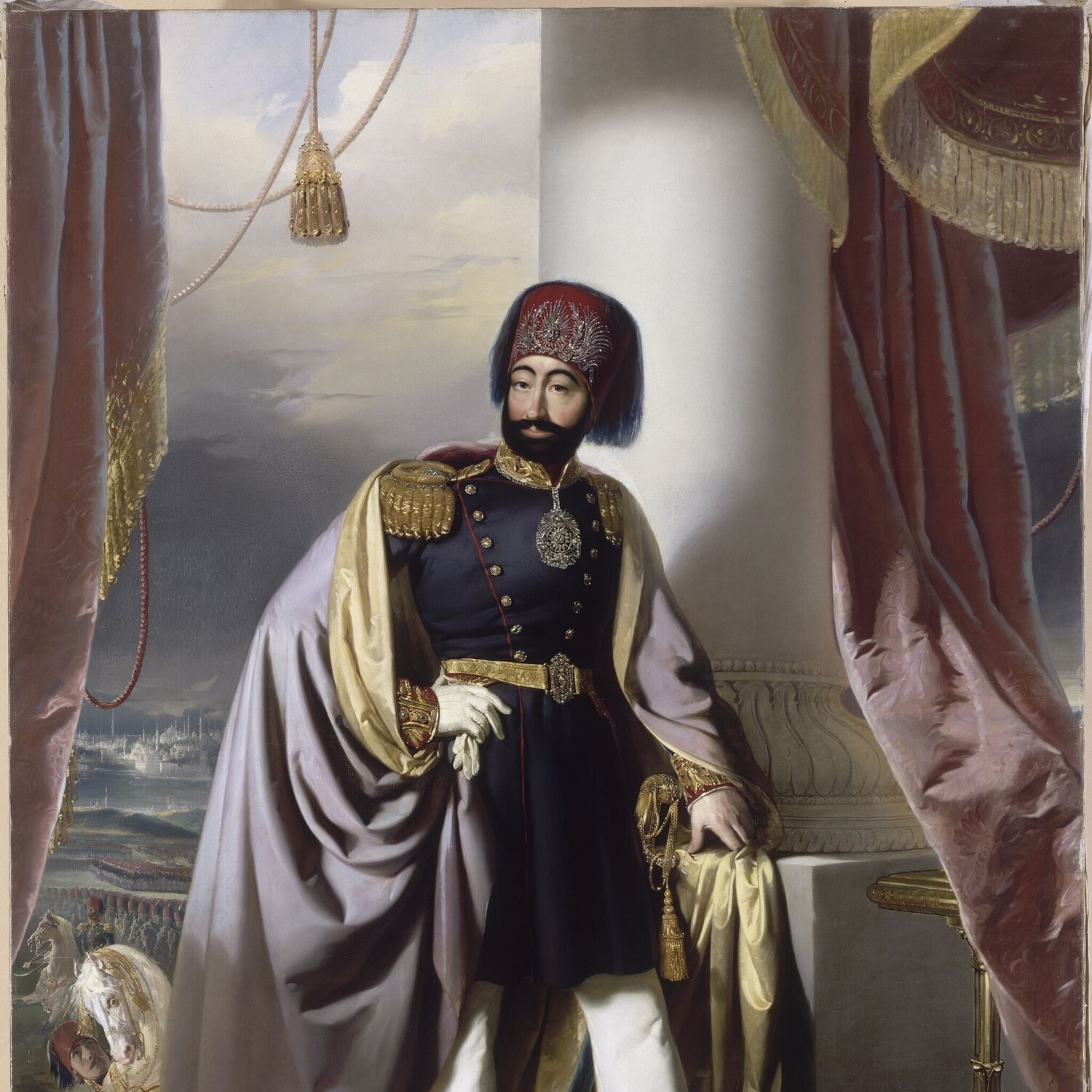
Image via World History Encyclopedia
Mahmud II and the hard truth of reform: you can’t modernize politely
Mahmud II ruled the Ottoman Empire in an era when many states were learning, painfully, that military power and administrative capacity had become inseparable. He’s remembered as a reformist sultan not because he dabbled in change, but because he tried to rebuild the machinery of government and the army when the old systems were failing against new realities. The stakes were existential: without reform, the empire risked losing wars, provinces, revenue, and authority in a cascading spiral.
What makes Mahmud II’s story feel so modern is how recognizable the reformer’s dilemma is. Institutions that once stabilized a society can become obstacles to survival, yet they’re defended by people whose livelihoods and identities depend on them. Mahmud’s program touched everything from military organization to administration, and it came with a political cost. Reform in this setting wasn’t a memo; it was a struggle over who gets to wield force, collect taxes, and define legitimacy.
He also sits at an important hinge point: the Ottoman state was not “asleep” or absent from the modern world, but actively wrestling with it. Mahmud’s reign helps explain how later Ottoman reforms became possible, and why they were so contested. When people talk today about “modernizing” a government as if it’s a simple software update, Mahmud II is a reminder that reforms are often fought like wars because, in a sense, they are.
Source: World History Encyclopedia
Read the full story at World History Encyclopedia →
Renaissance theater had a favorite villain: the pedant who knows everything and understands nothing
Long before the internet gave us new ways to argue in public, Renaissance audiences were already laughing at a familiar figure: the pedant, the pompous know-it-all whose learning becomes a performance rather than a tool for understanding. On Italian stages, this character wasn’t just a random fool. He represented a specific social anxiety about education, status, and the temptation to treat knowledge as a cudgel. The joke was rarely “books are bad.” The joke was “bookish superiority is brittle.”
The pedant’s comedy often worked through language: showy Latin, misapplied quotations, long-winded definitions, and a habit of correcting everyone while missing the obvious. That’s not just slapstick. It’s social critique. In a world where classical learning could open doors to jobs and patronage, the pedant is the dark mirror of the educated class: someone who confuses credentials with wisdom and uses “proper” speech to demand deference.
What’s striking is how durable the type is. Every age creates its own pedants, and every age invents a stage for them. The Renaissance version helps us see that public skepticism toward self-appointed experts isn’t new, and neither is the danger of flattening real expertise into mere pretension. The old plays invite a balanced lesson: laugh at vanity, yes, but don’t forget that societies still need people who actually know things.
Source: The Public Domain Review
Read the full story at The Public Domain Review →
That’s the capsule for today. Tomorrow we’ll open another drawer of the past and see what’s been echoing in plain sight.
— Time Capsule Editorial