Most people wait for headlines. By then, it's too late. Before a ticker heats up, there's a brief signal phase — a quiet shift that appears before the noise. No alerts. No buzz. Just an early tell for those who know where to look.
The FREE Market Signal Brief from the Daily Edge Report breaks down exactly how to spot these setups before they explode into the news cycle. Once the story hits — the early edge is already gone. Don't wait.
Download Your Free Signal Brief NowWe encourage readers to perform their own research and due diligence on any information we provide. By clicking the link above you will automatically be subscribed to the Daily Edge Report Newsletter. To view our privacy policy, visit lifewatermedia.com/privacy-policy.

From frontier mythology to mysterious pots and ancient burial rituals, three discoveries remind us that the past is never quite what we thought it was.

Image via History Extra
The Little House That Hollywood Built: Separating Frontier Fact from Prairie Fiction
With a reboot of Little House on the Prairie making waves, it's worth asking: how much of Laura Ingalls Wilder's beloved frontier saga actually happened? The answer is complicated, much like the American West itself. Wilder's books, written decades after her childhood in the 1870s and 1880s, blend genuine pioneer experience with carefully crafted nostalgia. Her daughter, Rose Wilder Lane, heavily edited the manuscripts, shaping raw memories into narratives that emphasized self-reliance and community spirit during the Depression era when Americans desperately needed that message.
The real frontier was simultaneously harsher and more diverse than the Little House stories suggest. While Wilder's family truly did move across Kansas, Minnesota, and Dakota Territory — often one step ahead of debt and crop failure — their experience was just one thread in a much larger tapestry. The television version that millions grew up watching further sanitized the story, presenting a whitewashed West that erased the Indigenous peoples whose displacement made homesteading possible, the Black cowboys and settlers who built frontier towns, and the Chinese laborers who connected the nation by rail. The Ingalls family existed, but the West they inhabited was far more complicated than either the books or the show let on.
What's fascinating is how these stories have shaped American identity itself. The frontier myth — rugged individuals taming wilderness through hard work — became a foundation of how we see ourselves, even though historians have long documented that frontier success depended heavily on government assistance, community cooperation, and often the exploitation of others. As we revisit Little House again in 2026, perhaps we can appreciate Wilder's artistry while also acknowledging the fuller, messier truth of westward expansion.
Read the full story at History Extra →
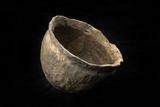
Image via Discover Magazine
The Pot Someone Wanted Found Four Centuries Later
In a Potano village site in Florida, archaeologists have uncovered an intact pottery vessel that appears to have been deliberately buried around 400 years ago — but unlike a burial offering or hidden treasure, no one can quite figure out why someone would carefully inter a simple cooking pot. The find, along with a second unfamiliar vessel style, is rewriting what researchers thought they knew about the Potano people who lived in North Florida before European colonization devastated their population.
The mystery deepens because deliberate burial wasn't random. Someone took time and care to place these vessels in the ground, suggesting ritual significance or intentional preservation. The pots themselves tell stories about trade networks that stretched far beyond what historians previously documented. The unfamiliar vessel style indicates contact with cultures from different regions, while food residue analysis is revealing what the Potano ate and how they prepared meals — details that humanize a people often reduced to archaeological abstractions.
This discovery matters because the Potano, like many Indigenous groups in the Southeast, were largely wiped out by disease and displacement following Spanish contact in the 1500s. By the 1700s, they had effectively disappeared from the historical record. Every artifact that emerges from the soil is a voice speaking across centuries, insisting on being remembered. That someone buried these pots with such care suggests they understood something about preservation and memory that transcends their own moment in time.
Read the full story at Discover Magazine →

Image via Popular Mechanics
560 Servants for the Afterlife: An Egyptian Burial That Breaks All the Rules
Inside a 2,600-year-old Egyptian tomb, archaeologists have discovered a burial ritual so elaborate and unusual that it's challenging everything Egyptologists thought they understood about Late Period funerary practices. The tomb contains 560 unique ushabti figurines — those small servant statues meant to perform labor for the deceased in the afterlife. That number alone is staggering, but what's truly baffling is how these figurines were arranged and what accompanied them, including imported Roman-era pottery that shouldn't technically exist in a tomb that predates Rome's Egyptian conquest by centuries.
Ushabtis were common in Egyptian burials, but 560 unique examples suggests someone of extraordinary wealth or unprecedented devotion to afterlife preparation. Even more puzzling is the presence of what appears to be Roman pottery in a pre-Roman context, which either means the tomb was disturbed and additions made centuries later, or that trade networks and cultural exchange in the ancient Mediterranean were far more complex than current models suggest. Each possibility opens new questions about how ancient peoples interacted across time and space.
The tomb also contained fragments of the Book of the Dead, the ancient Egyptian funerary text meant to guide souls through the underworld. But the arrangement of these texts alongside the figurines doesn't match known patterns. Someone designed this burial with a specific purpose in mind, following rules or beliefs that haven't survived in any written record. It's a reminder that even for civilizations as documented as ancient Egypt, vast portions of daily life, spiritual practice, and individual expression remain lost to us. Every tomb that defies explanation is an invitation to remain humble about how much we think we know.
Read the full story at Popular Mechanics →
Until tomorrow, when we dig a little deeper into yesterday.
— Time Capsule Editorial