Successful investing starts with better research. RushTheStreet cuts through the noise to spotlight companies in AI, small-cap equities, gold & silver exploration, biotech, and high-momentum markets — sectors where timing and insight matter most.
Join a community of informed investors getting free, in-depth research on the opportunities that could matter next. Don't wait for the headlines — get ahead of them.
Get Free Investment ResearchBy clicking the link above, you agree to receive emails from rushthestreet.com. You can opt out at any time. — Privacy Policy

From a panicked Civil War retreat to missing Assyrian monarchs to poetry tucked into pocket change, today’s stories ask the same question: who gets to decide what history remembers?
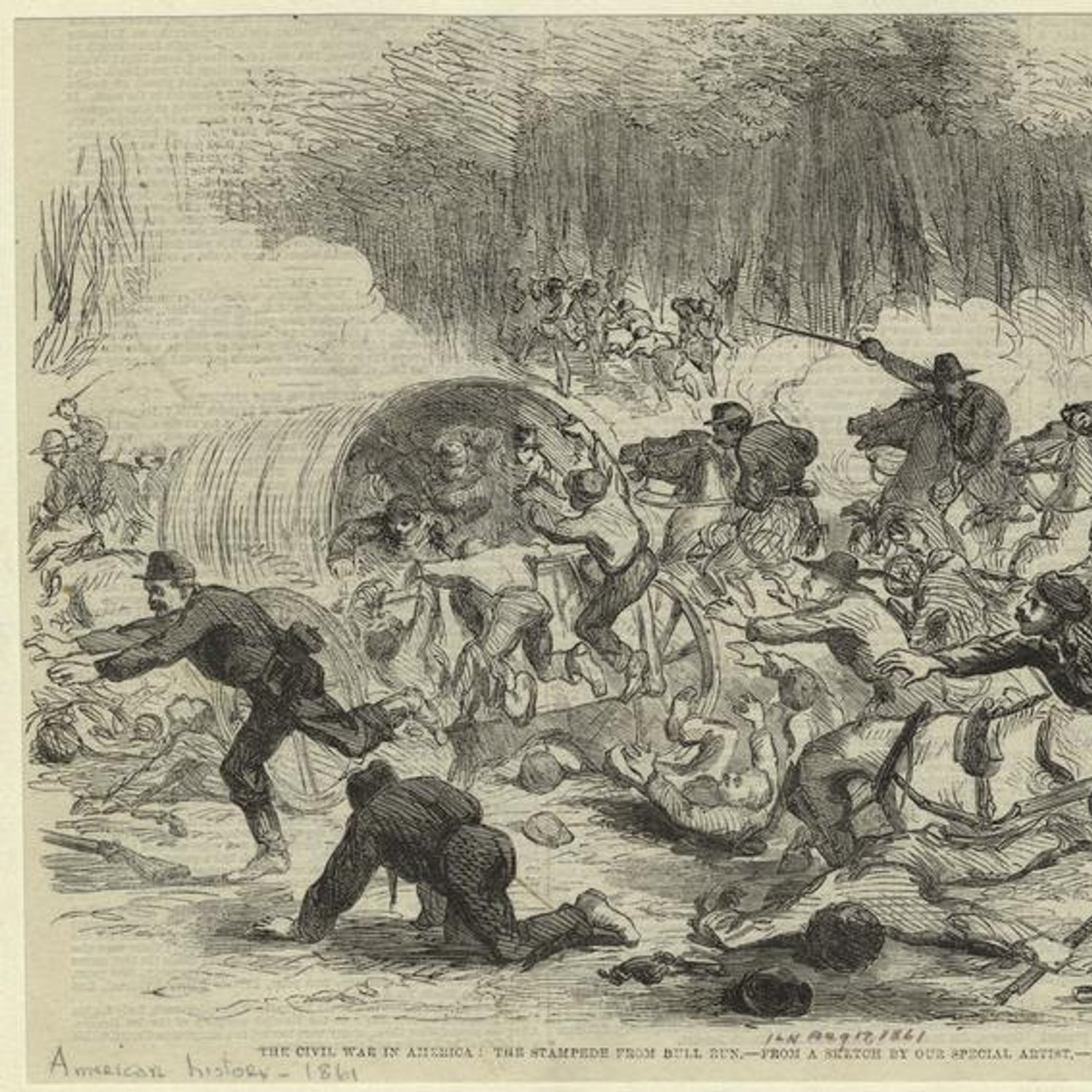
Image via World History Encyclopedia
Bull Run’s Real Lesson: Winning the Field Isn’t the Same as Seizing the Moment
The First Battle of Bull Run in July 1861 is often remembered for the Union’s shock and scramble—a clash that shattered the early-war illusion that the conflict would be quick and tidy. But one of the most interesting angles comes from looking at the Confederate side: even in victory, there was a sense that something crucial slipped away. Accounts like William H. Russell’s made the Union retreat famous, but later critiques homed in on the South’s inability to turn a battlefield win into a war-changing strike.
What’s being argued, in essence, is that the Confederates had an opening to press the advantage—to pursue more aggressively, to amplify the panic, to translate disorder into decisive strategic gain. Yet confusion, exhaustion, and the limits of early-war command and control shaped what was possible. Armies in 1861 were still learning what they were, and generals were learning, in real time, what a modern mass battle demanded: coordination, logistics, and the nerve to act fast when the enemy is off-balance.
There’s a familiar pattern here that shows up across eras: we treat outcomes as inevitable, when in truth they’re often built on fleeting windows. Bull Run wasn’t just a story of a rout; it was a reminder that history doesn’t only turn on who wins, but on who recognizes what the win can buy—and moves before the moment closes.
Source: World History Encyclopedia
Read the full story at World History Encyclopedia →

Image via All That’s Interesting
The Assyrian Kings Who Went Missing: When a Dynasty Rewrites the Family Album
Researchers are revisiting a mystery that feels uncannily modern: evidence suggests three ancient Assyrian monarchs may have been deliberately scrubbed from the official record, as if they never ruled at all. Names like Aššur-uballiṭ, Tiglath-pileser, and Shalmaneser appear to be missing from the polished king lists that later generations treated as authoritative—raising the possibility that successors engineered a kind of ancient cover-up.
In the ancient world, legitimacy wasn’t only enforced by armies; it was enforced by archives. King lists, inscriptions, and monumental texts weren’t neutral summaries—they were political instruments, meant to project order, continuity, and divine favor. If a ruler came to power through an awkward succession, faced internal opposition, or represented a line someone wanted to disown, the temptation wasn’t just to defeat them. It was to erase them.
This is the part that makes the story feel like more than an archaeological footnote. We like to imagine the historical record as a giant ledger that simply accumulates facts. But the record is also a battleground, and sometimes the winner’s prize is not only the throne—it’s the ability to decide whose name gets written down in the first place.
Source: All That’s Interesting
Read the full story at All That’s Interesting →
A Poem You Could Spend: How Qing Coins Turned Everyday Money into Imperial Messaging
It’s easy to think of coins as the most practical objects in history: minted, circulated, worn smooth, forgotten in a drawer. But Qing dynasty coinage shows how even small change can carry big meaning. Researchers and collectors note that Qing coins weren’t just currency; they were coded identifiers, bearing the emperor’s reign title and mintmarks that tied each piece of metal to a particular place in a sprawling empire.
One detail is especially striking: under the Kangxi Emperor, the system could even assemble lines of classical poetry across different mints, turning the national money supply into a kind of distributed text. Imagine the state not only standardizing weight and script, but also weaving cultural authority into the everyday act of buying food or paying a fare. The message wasn’t shouted; it was simply there, handled by millions, reinforcing whose time it was—and whose words framed it.
There’s a gentle lesson here about how power travels. It doesn’t always arrive as a decree or a soldier. Sometimes it arrives as something you carry in your pocket, so ordinary you stop noticing it. And that may be the most effective kind of messaging of all.
Source: History Collection
Read the full story at History Collection →
That’s the capsule for today. If you find yourself holding a coin, reading a headline, or hearing a story told too cleanly, it’s worth asking: what’s being preserved here—and what might have been edited out?
— Time Capsule Editorial