Today’s Sponsor:
History shows a clear pattern: the investors who recognized the exact inflection point in the dot-com boom pocketed 400–800% gains in 18 months. Those who spotted the same moment in cloud computing saw 300–600% returns. Based on 50 years of market data, that same moment is happening right now — and the acceleration phase has already begun.
This free 7-page report reveals where we are in the current megatrend cycle, why the next 18 months are critical, and how to position yourself before the window closes. Don't be the investor who enters too late.
Get the Free ReportBy clicking 'Get the Free Report' you are automatically subscribing to Darwin Investor Network and will receive a free subscription to the Chaikin PowerFeed newsletter. Unsubscribing is easy. Privacy Policy

As we approach another Fourth of July, a look at how Americans have memorialized, named, and retold the story of our founding — from miniature wax figures to town squares across the nation.
/https://tf-cmsv2-smithsonianmag-media.s3.amazonaws.com/filer_public/30/f3/30f3a948-9372-4ea8-8825-6bcc584c53e4/diorama.png)
Image via Smithsonian Magazine
The Revolution in Miniature: How One Artist Spent Years Recreating America's Founding Moment in Wax
If you've ever seen John Trumbull's painting of the presentation of the Declaration of Independence — the one that hangs in the Capitol Rotunda, the one that's been reproduced on everything from currency to coffee mugs — you know it's imposing. The canvas is twelve feet by eighteen feet. But artist Bartlett M. Frost had a different vision: he wanted to bring that same scene to life, just... smaller. Much smaller. Using painstakingly crafted miniature wax figures of the Founders, Frost created a three-dimensional diorama that captures Trumbull's iconic moment when the Declaration's drafting committee presented their work to the Continental Congress.
The project, which has been newly conserved and is now on display at the National Museum, represents more than just artistic skill — it's a window into how Americans have long felt compelled to make the founding tangible, to bring those distant figures down from the walls and into something we can almost touch. Trumbull himself wasn't present at the actual moment (he was serving in the Continental Army elsewhere), and his painting, completed decades later, took artistic liberties with who was standing where. Frost's diorama, in turn, is an interpretation of an interpretation — a reminder that every generation reshapes the founding story to fit their own needs and understanding.
What's striking is the obsessive detail: each tiny figure is rendered with period-accurate clothing, each face modeled on historical descriptions and portraits. It's the kind of project that could only come from someone deeply invested in making history feel real, in closing the gap between the marble-statue version of the Founders and the actual humans who sweated through that Philadelphia summer of 1776.
Read the full story at Smithsonian Magazine →
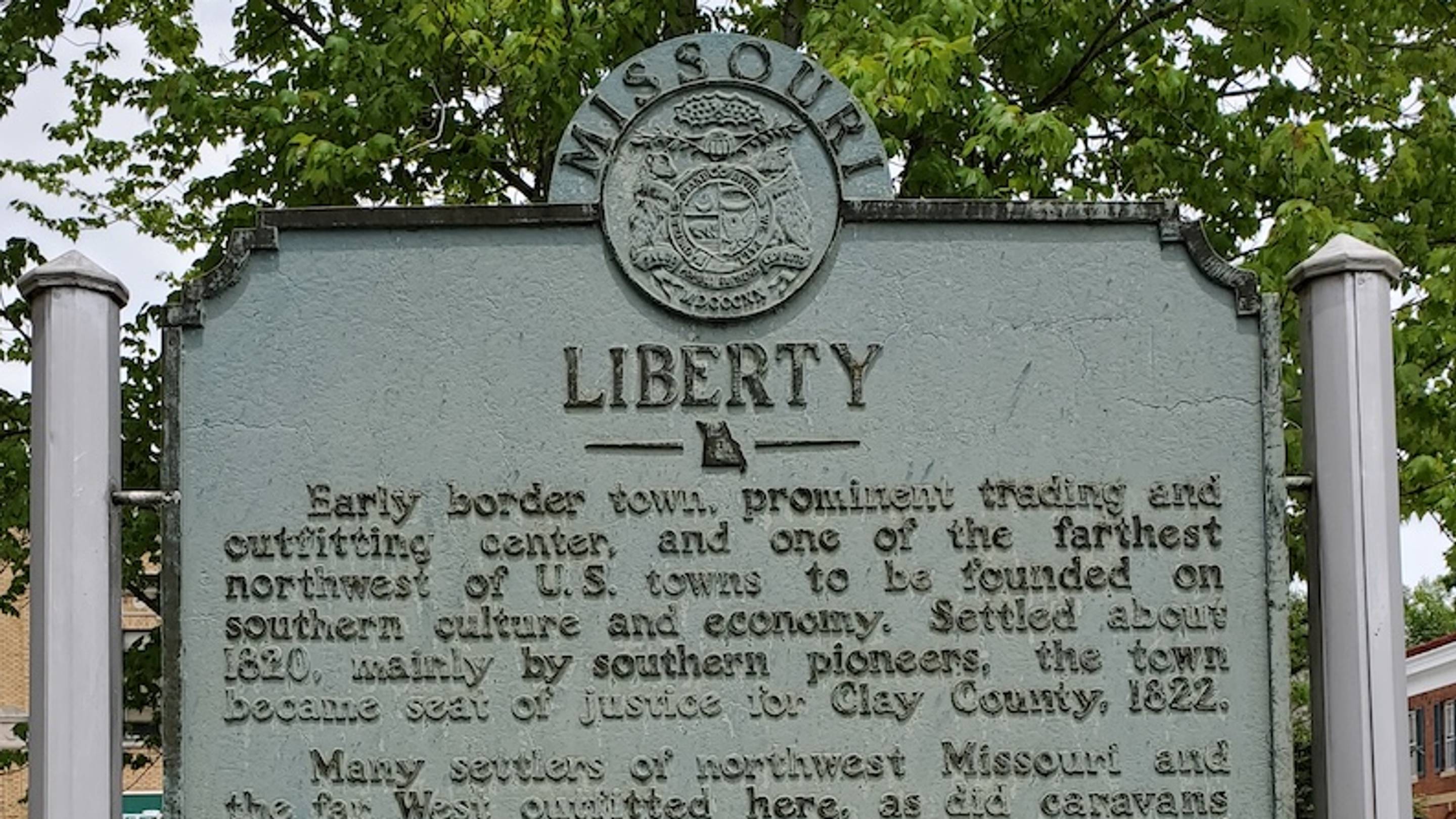
Image via Mental Floss
From Liberty to Independence: The Map of American Aspiration
Drive across America and you'll encounter them: Liberty, Missouri. Independence, Kansas. Freedom, Pennsylvania. Patriot, Indiana. These aren't just names pulled from a hat — they're breadcrumbs in the story of how a new nation tried to define itself, one town charter at a time. A new survey examines seven U.S. towns with particularly patriotic names, and the histories behind them reveal patterns about when and why Americans chose to wrap their communities in the flag.
Many of these towns were named during periods of national soul-searching or expansion. Liberty, Missouri, founded in 1822, came during the Era of Good Feelings when nationalism was having a moment. Independence, Kansas, popped up in 1869, just after the Civil War when the word "independence" was being renegotiated in the context of emancipation and Reconstruction. Some towns chose patriotic names as sincere expressions of pride; others were more calculating, hoping a star-spangled name might attract settlers or suggest stability to nervous investors in a volatile frontier.
What's most interesting is what these names tell us about American civic religion — the way we've turned abstract concepts like liberty and freedom into actual places you can live, where you pick up mail and pay property taxes. It's a peculiarly American impulse: the belief that if you name something after an ideal, you might just live up to it. Whether that's worked out is another question entirely, but the names remain, painted on water towers and printed on welcome signs, a permanent reminder of what each generation hoped their little corner of the country might become.
Read the full story at Mental Floss →

Image via HistoryExtra
Thirteen Colonies, One Revolution: A New Podcast Revisits How Britain Lost America
The American Revolution is one of those historical events that everyone thinks they understand until they actually dig into it. A new four-part podcast series from HistoryExtra, hosted by Professor Adam IP Smith, takes on the ambitious task of examining how thirteen British colonies became the United States of America — and in doing so, challenges some of the neat narratives we inherited from elementary school textbooks.
Professor Smith's approach is particularly valuable because he treats the Revolution not as inevitable or foreordained, but as a contingent, messy, often contradictory process. The series explores the economic tensions that predated the famous tax protests, the ways loyalist Americans (who made up a significant portion of the colonial population) have been largely written out of the story, and how a rebellion that started with calls for British rights somehow transformed into a revolutionary break for independence. It's a reminder that the Founders didn't set out on July 4, 1776, with a clear blueprint — they were improvising, arguing, and often contradicting themselves as they went.
The timing of the series is notable as we approach another Fourth of July. We tend to treat the Revolution as a settled story, its meanings fixed and its lessons clear. But every generation has reinterpreted 1776 through its own lens — sometimes as a story about liberty, sometimes about property rights, sometimes about democracy, sometimes about who counts as "We the People." A podcast that returns to the actual complexity of the Revolutionary era offers something increasingly rare: a chance to see the founding not as a monument to admire from a distance, but as a human drama full of difficult choices, unintended consequences, and questions that still haven't been fully answered.
Read the full story at HistoryExtra →
History isn't just what happened — it's what we choose to remember, and how we choose to tell it. Happy almost-Fourth.
— Time Capsule Editorial