Today’s Sponsor:
Markets are shifting — and most investors are missing it. The free Market Shift Report + Real-Time Watchlist breaks down exactly what's moving right now: policy impacts on economic trends, the return of supply-chain concerns, and what mixed consumer signals mean for the next quarter.
This complimentary report is only available for a limited time while these patterns are still developing. Don't get caught flat-footed — access it now before it's gone.
Get the Free Market Shift ReportWe encourage readers to perform their own research and due diligence on any information provided. By clicking the link above, you will automatically be subscribed to the Market Crux Newsletter. Privacy Policy

Three history threads for a Tuesday: Churchill’s complicated relationship with D-Day, a runestone in Ontario that carries a prayer across centuries, and an elite Celtic burial that reminds us how status gets staged—even in death.

Image via HistoryExtra
Churchill and D-Day: The Prime Minister Who Couldn’t Look Away—or Let Go
As anniversaries of D-Day roll around each year, the story often hardens into a familiar shape: a grand plan, a resolute coalition, an iron-willed British prime minister. But Richard Dannatt and Allen Packwood pull us back into the messier reality—Winston Churchill’s evolving perspective on the invasion, and what it meant for a leader carrying the weight of earlier disasters and the fear of another.
Churchill was not simply a cheerleader for the landings; he was a strategist shaped by scars. The specter of Gallipoli in the First World War—where he was politically blamed for a catastrophic campaign—never fully left him. That memory mattered in 1944, when the success of an amphibious assault would hinge on weather, secrecy, coordination, and sheer human luck. Dannatt and Packwood describe a Churchill who pushed, questioned, worried, and tried to influence details—sometimes to the frustration of commanders who needed clarity more than drama.
The piece also captures a more intimate side of wartime leadership: the way a big historic moment can be both inevitable and terrifying to the people responsible for signing off on it. D-Day is often told as a single day of decision, but Churchill’s role reminds us it was also a long season of persuasion, doubt, and negotiation—and that even the most celebrated leaders can be torn between boldness and dread when the stakes are measured in lives.
Read the full story at HistoryExtra →
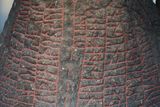
Image via Discover Magazine
A Runestone in Ontario, a Swedish Prayer, and the Strange Afterlife of Old Scripts
Near Wawa, Ontario, a buried runestone is raising an irresistible question: what does it mean when a European medieval-looking script shows up in North America—and appears to preserve the Lord’s Prayer? The artifact may contain what could be the continent’s longest runic inscription, and reportedly the only known one here to record the prayer in Swedish, turning a local find into a wider conversation about migration, memory, and the stories communities choose to carve into stone.
Discover’s reporting points to a likely date in the 1800s rather than the Viking Age, which is exactly what makes it historically rich. The 19th century was a period when many immigrant communities worked hard to keep language and identity intact while building new lives. Runes—even if they evoke ancient Scandinavia—could have functioned as a deliberate symbol: a way to reach backward for continuity while living in a place that demanded reinvention.
If the dating holds, the runestone becomes less a headline about “Vikings in North America” and more a window into how people curate heritage. A prayer etched in runes is not just text; it’s a statement about belonging, devotion, and cultural endurance. And the fact that it was buried adds one more layer: whether for protection, privacy, or simple circumstance, this is history literally kept underground until someone thought to look.
Read the full story at Discover Magazine →
A Celtic Power Player’s Final Statement, Found in Germany’s Taunus Mountains
Archaeologists in the Taunus mountains near Bad Camberg have uncovered an elite Celtic grave with exceptionally rich goods—a discovery that reads like a checklist of Iron Age status. Gold items, chariot remains, and other high-value objects point to a person (or family) with resources, connections, and the kind of authority that needed to be seen and remembered.
TheHistoryBlog highlights what these grave goods signal beyond simple wealth. In many Celtic societies, the chariot wasn’t just transport; it was a public marker of rank, mobility, and power—the hardware of leadership and spectacle. Burials like this one remind us that political life wasn’t only negotiated in councils or battlefields, but also performed through ritual: who gets buried with what, and what story the community tells about that person’s place in the social order.
Finds like this also complicate the old cartoon version of “Celts” as a single, uniform culture at the edge of “civilization.” The material evidence points to intricate networks—trade, craft specialization, regional style, and shared symbols of elite identity. A grave can be a biography, but it’s also propaganda: a final, carefully staged message about who mattered, and why.
Read the full story at The History Blog →
That’s the capsule for today—three reminders that history isn’t just what happened, but what people feared, cherished, and chose to leave behind.
— Time Capsule Editorial