Today’s Sponsor
Tax season creates hidden market shifts that can mislead investors. Refunds hit accounts, portfolios get rebalanced, and positions move to cover obligations — creating liquidity changes that make small-cap moves appear more meaningful than they actually are.
Our 2026 Market Flow Briefing reveals how tax-season liquidity affects market action, why current moves seem disconnected from fundamentals, and exposes one profitable setup emerging under these exact conditions.
Get the Free Briefing*We encourage readers to perform their own research and due diligence on any information we provide. By clicking the link you will automatically be subscribed to the Stock Wire News Newsletter.

The Washington Examiner was out this morning with a fascinating historical dispatch that puts our current military recruitment challenges in stark perspective. Their "On This Day" series, tracking events leading up to America's 250th anniversary, highlighted an urgent plea sent out on April 8, 1776 — exactly 250 years ago today — desperately requesting seamen for the Continental Army as Washington prepared to defend New York.
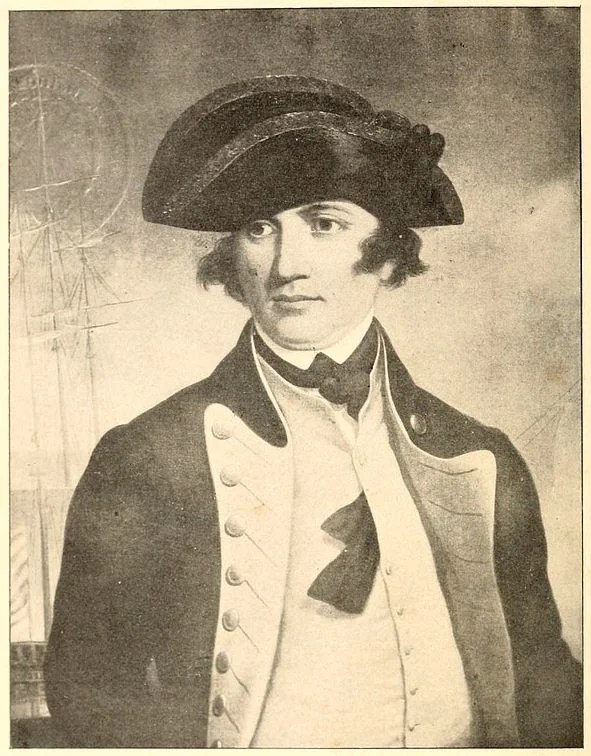
Image via Washington Examiner
Washington's Desperate Naval Recruitment Crisis of 1776
The situation was dire. British naval forces were massing in New York Harbor, and Washington knew that without adequate naval support, his Continental Army would be sitting ducks on Manhattan Island. The general faced a classic military nightmare: fighting a superior naval power while lacking the very sailors needed to contest control of the waterways. The urgent request went out to coastal communities, shipyards, and anyone with maritime experience, as Washington's staff scrambled to cobble together enough naval capability to have even a fighting chance against the Royal Navy's inevitable assault.
What makes this historical moment particularly poignant is how it captures the improvised, desperate nature of America's early military efforts. This wasn't the polished war machine we imagine from history textbooks — it was a ragtag operation begging for volunteers who knew which end of a ship was which, hoping somehow to stand against the world's dominant naval power.
✍ My Take: This 250-year-old crisis illuminates a truth that every generation of American leaders eventually confronts: you can't defend a nation without people willing to serve in its armed forces. Washington's frantic search for seamen echoes today's military recruitment challenges, where all branches struggle to meet quotas in an era of low unemployment and cultural shifts away from military service. The parallel runs deeper than mere numbers. Then as now, America faced adversaries with seemingly insurmountable advantages — Britain's naval supremacy in 1776 looks remarkably similar to China's growing military capabilities today. Washington understood that technological and numerical superiority could be offset by resourcefulness, local knowledge, and sheer determination. His willingness to put out an "all hands" call for sailors reflects the same principle that built American military doctrine: when you're outgunned, you'd better be more creative, more motivated, and more willing to take calculated risks. What Washington couldn't have foreseen is how prescient his naval focus would prove to be. Though he'd lose New York anyway later that year, the Continental Navy's harassment of British supply lines and the crucial French naval intervention at Yorktown would ultimately prove decisive. Sometimes the desperate measures you take in crisis become the foundation for eventual victory. The lesson for today's military planners is clear: you work with the force you can build, not the force you wish you had. Washington's seamen request reminds us that American military history is largely a story of making do, adapting quickly, and turning necessity into innovation — qualities we may need again sooner than we think.
Read the full story at Washington Examiner →
History doesn't repeat, but it certainly echoes — and sometimes those echoes carry wisdom we desperately need to hear.
— The Time Capsule Editor